Introduction to Electrochemistry (Leaving Cert Chemistry): Revision Notes
📚Revision Notes
Introduction to Electrochemistry
Historical background
The fascinating story of electrochemistry begins in 18th century Italy with a remarkable discovery by Luigi Galvani, a professor of anatomy at the University of Bologna. In 1771, Galvani was conducting experiments on a dead frog when he made an unexpected observation that would change our understanding of electricity forever.
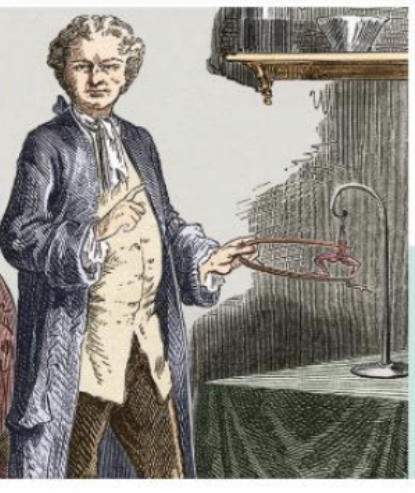
During his dissection work, Galvani noticed something extraordinary. When an exposed nerve in the frog's leg was touched by two different metals - the iron from his scalpel and the copper from a hook - the dead frog's leg suddenly twitched! This surprising result led him to repeat the experiment using different metal combinations, including a brass hook, with the same remarkable outcome.
Note
Galvani's famous frog experiment was a turning point in scientific history. The simple observation that a dead frog's leg would twitch when touched by two different metals in the presence of moisture revealed the fundamental connection between chemical processes and electrical phenomena.
Galvani initially thought this movement was due to some sort of "animal electricity" that came from the frog itself. However, this explanation would soon be challenged by another brilliant Italian scientist.
Alessandro Volta's breakthrough discovery
Alessandro Volta, working at the University of Pavia in Italy, had a different theory about Galvani's observations. Volta realised that the electricity wasn't coming from the frog at all. Instead, he understood that the electricity was being generated by the two different metals when they came into contact with the liquid material in the frog's leg, which acted as a conductor for the electric current.
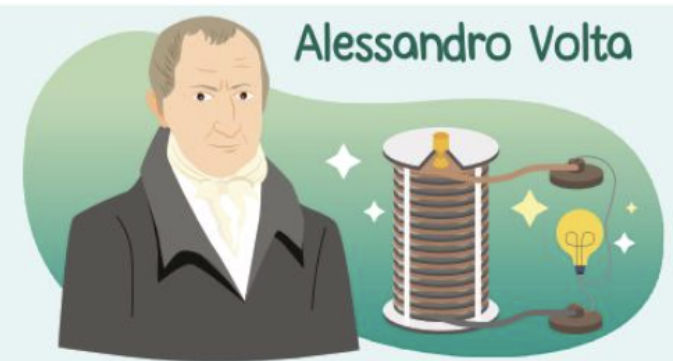
Building on Galvani's work, Volta made a revolutionary breakthrough in 1800. He constructed the world's first battery, which he called a "voltaic pile".
Example
Volta's Voltaic Pile Construction:
This ingenious device consisted of:
- Metal discs made of zinc and copper
- Pieces of cardboard soaked in salt solution
- The components stacked alternately on top of each other
When a wire was attached to the top and bottom of this pile, an electric current flowed. Volta had successfully created the first practical method for generating electricity using chemical reactions!
What is electrochemistry?
Electrochemistry is the branch of chemistry that studies the relationship between chemical reactions and electricity. This field explores how these two fundamental processes interact and influence each other.
Note
The term "electrochemistry" combines "electro" (relating to electricity) and "chemistry" (the study of matter and its interactions). This field bridges the gap between physical and chemical sciences, showing how electrical energy can be converted to chemical energy and vice versa.
Two main areas of electrochemistry
Electrochemistry can be divided into two key areas that represent opposite processes:
1. Chemical reactions producing electricity This involves using chemical reactions to generate an electric current. Examples include:
- Galvanic cells
- Batteries (like Volta's pile)
- Fuel cells
2. Electricity causing chemical reactions
This involves using an electric current to bring about chemical changes. This process is called:
- Electrolysis
Important
These two areas demonstrate the reversible nature of the relationship between chemistry and electricity - reactions can produce electricity, and electricity can drive reactions. This reversibility is fundamental to understanding how rechargeable batteries work.
Why study electrochemistry?
Understanding electrochemistry is crucial because it helps us:
- Comprehend how batteries and fuel cells work
- Learn about the reactivity series of metals (their tendency to be oxidised)
- Understand rechargeable battery technology like lithium-ion batteries
- Explore how electricity can be used to cause desired chemical changes
The foundation of electrochemistry lies in recognising that chemical reactions involving different metals and conducting solutions can generate electrical energy - a discovery that has revolutionised our modern world.
Summary
Key Points to Remember:
- Galvani's discovery: Dead frog's leg twitched when touched by two different metals, leading to the discovery of bioelectricity
- Volta's breakthrough: Realised electricity came from metal contact, not the frog, and invented the first battery (voltaic pile) in 1800
- Electrochemistry definition: The study of the relationship between chemical reactions and electricity
- Two main areas: Using reactions to make electricity (batteries) and using electricity to cause reactions (electrolysis)
- Key principle: Different metals in contact with conducting solutions can generate electric current through chemical reactions