The Greek and Roman Gods (Leaving Cert Classical Studies): Revision Notes
📚Revision Notes
The Greek and Roman Gods
Understanding the pantheon through art and literature
The Greek and Roman gods formed a complex family system that ancient cultures used to explain natural phenomena, human behaviour, and social order. These deities were adopted by the Romans from Greek traditions, though they often received new names while maintaining their essential characteristics and stories.
Note
The study of Greek and Roman mythology provides insights not only into ancient religious beliefs, but also into how these cultures understood the world around them and structured their societies.
Identifying major gods in artistic representations
Ancient artists depicted gods with specific attributes - symbolic objects or features that made them instantly recognisable to viewers. Learning these visual clues is essential for understanding classical art and literature.
Important
When studying classical art, always look for the specific attributes that identify each god. These visual symbols were standardised across the ancient world and remain consistent in artistic representations today.
The twelve olympians and their symbols
Example
Identifying Zeus in Art:
Look for these key attributes:
- Thunderbolt (his primary weapon)
- Eagle (his sacred bird)
- Throne (showing his royal status)
- Sceptre (symbol of authority)
- Bearded, regal appearance
Zeus (Jupiter) served as king of the gods and ruler of the sky. Artists portrayed him as a bearded, regal figure holding a thunderbolt, often accompanied by an eagle and seated on a throne with a sceptre. His majestic appearance reflected his supreme authority over both gods and mortals.
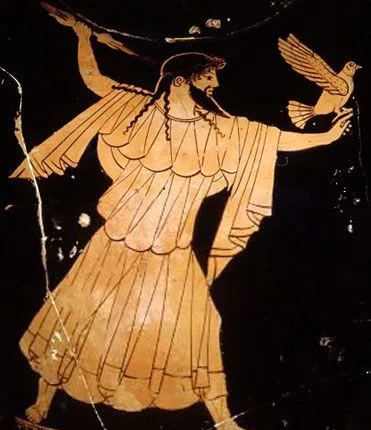
Hera (Juno) appeared as queen of the gods, typically shown wearing a crown and accompanied by her sacred peacock. She carried a sceptre and was frequently depicted beside Zeus, though their relationship was often troubled due to his numerous affairs. Hera is depicted on the left below.
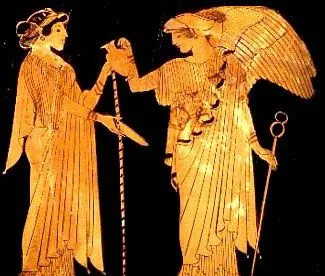
Athena (Minerva) represented wisdom and strategic warfare. She wore a distinctive helmet and carried a spear, with her aegis (shield) bearing the head of Medusa. The owl, symbol of wisdom, was her sacred animal.
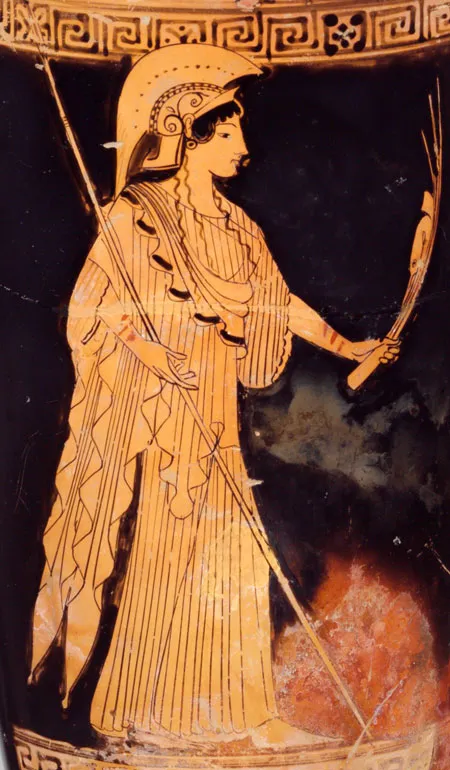
Apollo embodied multiple domains including the sun, music, and prophecy. Artists showed him as a youthful figure with a lyre, wearing a laurel wreath, and carrying a bow. His beauty and artistic talents made him a favourite subject for sculptors.
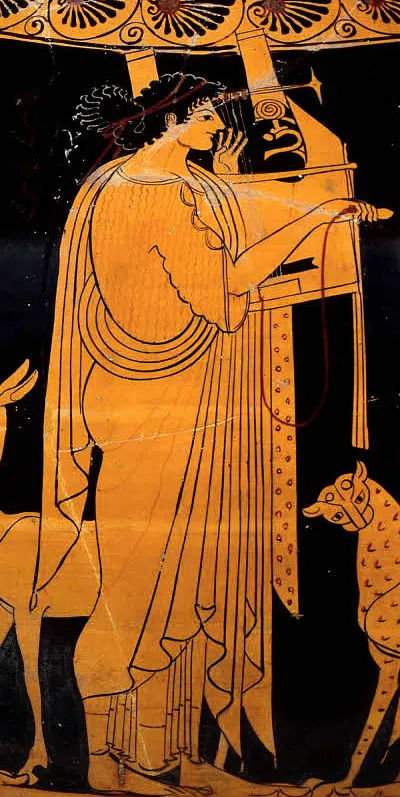
Artemis (Diana) governed hunting and the moon. She appeared with her bow and arrows, often accompanied by a stag or hunting dogs. As a virgin goddess, she was typically shown in hunting attire.
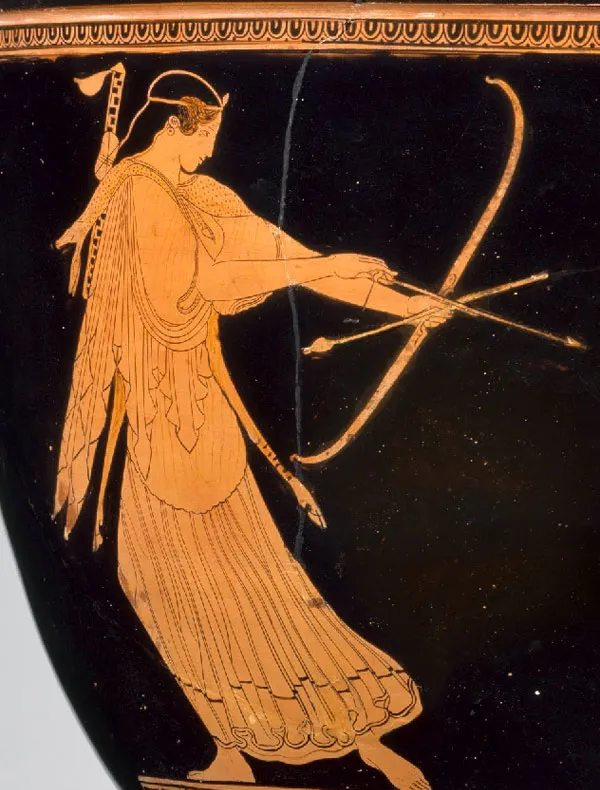
Ares (Mars) personified the violent aspects of war. Unlike Athena's strategic approach, he represented brute force and aggression. Artists depicted him in armour with spear and shield, usually appearing youthful but fierce.
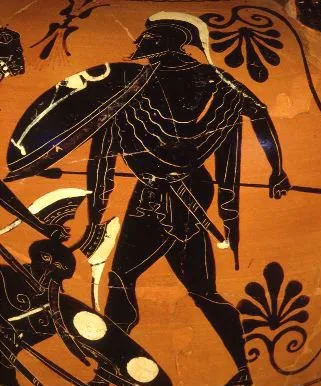
Aphrodite (Venus) embodied love and beauty. She was often shown nude or semi-nude, accompanied by doves and holding a mirror or apple. Her beauty was considered incomparable among the gods.
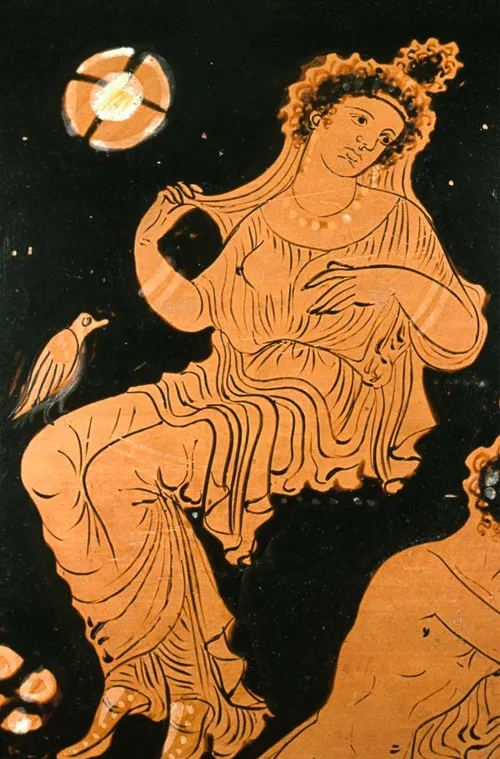
Hermes (Mercury) served as divine messenger and guide. His winged sandals and winged helmet enabled swift travel between worlds, while his caduceus (staff with serpents) marked his role as herald.
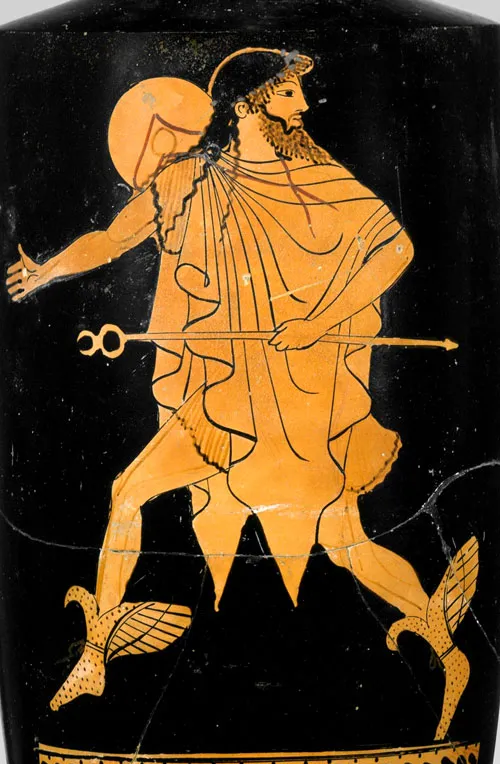
Poseidon (Neptune) ruled the seas and earthquakes. His trident was his primary attribute, and he was often shown with horses and dolphins. Ancient peoples feared his power to cause devastating earthquakes and storms.
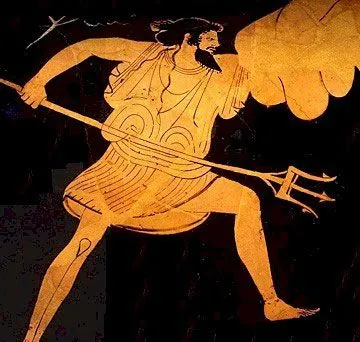
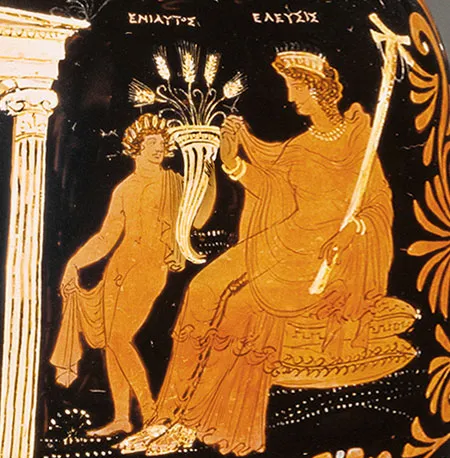
Demeter (Ceres) governed agriculture and fertility. Artists portrayed her with sheaves of wheat and a torch, symbolising the growth of crops and her search for her daughter Persephone. She is shown on the right below.
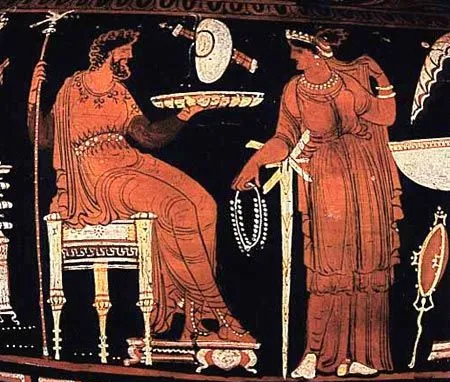
Hades (Pluto) ruled the underworld and the dead. He appeared on a dark throne, holding a sceptre, often accompanied by Cerberus, the three-headed dog who guarded the entrance to his realm. He is pictured here with Persephone.
Greek and Roman name correspondences
The Romans adopted Greek religious traditions but gave the gods Latin names that often reflected Roman values and concerns. Understanding these name pairs is crucial for reading classical texts from different periods.
Important
Essential Name Pairs to Memorise:
- Zeus → Jupiter
- Hera → Juno
- Athena → Minerva
- Ares → Mars
- Artemis → Diana
- Aphrodite → Venus
- Hermes → Mercury
- Poseidon → Neptune
- Demeter → Ceres
- Hades → Pluto
The major correspondences include Zeus becoming Jupiter, Hera becoming Juno, Athena becoming Minerva, and Ares becoming Mars. Interestingly, Apollo retained his Greek name in Roman tradition, showing his particular importance to both cultures.
Additional important pairs include Artemis/Diana, Aphrodite/Venus, Hermes/Mercury, Poseidon/Neptune, Demeter/Ceres, and Hades/Pluto. The wine god Dionysus became Bacchus, the forge god Hephaestus became Vulcan, and the hearth goddess Hestia became Vesta.
As Ovid noted in his Metamorphoses, Roman poets showed these deities "acting under Roman names, but [with] roles same as Greek originals," demonstrating how cultural adaptation preserved essential characteristics while allowing for local interpretation.
Divine relationships and domains
The olympian gods formed a complex family network centred around Zeus, whose numerous relationships generated much of classical mythology. Understanding these connections helps explain many ancient stories and religious practices.
The ruling family
Zeus/Jupiter stood at the pantheon's centre as king of the gods, controlling sky, law, and justice. As husband of Hera and father to numerous divine children including Apollo, Artemis, Athena, Hermes, and Dionysus, his relationships drove many mythological narratives.
Note
Zeus's numerous affairs and children weren't just scandalous stories - they served to explain the origins of many gods and heroes, connecting the divine realm to the human world through genealogy.
Hera/Juno served as goddess of marriage and family, though ironically her own marriage was troubled by Zeus's constant infidelities. She was particularly protective of women and vengeful towards Zeus's lovers and illegitimate children.
Poseidon/Neptune was Zeus's brother, ruling the seas and earthquakes. His domain made him both essential for trade and travel, yet feared for his destructive potential.
Hades/Pluto ruled the underworld as the third brother, married to Persephone (Demeter's daughter). This marriage explained the seasonal cycle through the myth of Persephone's annual return to earth.
Divine children and their specialties
Athena/Minerva sprang fully grown from Zeus's head, making her a virgin goddess associated with wisdom and strategic warfare. Her unusual birth reflected her role as embodiment of divine wisdom.
The twins Apollo and Artemis (Diana) were children of Zeus and the titaness Leto. Apollo governed the sun, prophecy, and music, while Artemis ruled hunting and the moon, creating complementary opposites.
Ares/Mars represented war's destructive side and was lover to Aphrodite, creating a symbolic union between love and conflict that fascinated ancient writers.
Example
Divine Relationships Example: The Seasonal Myth
The relationship between Demeter (agriculture) and her daughter Persephone explains the changing seasons:
- Spring/Summer: Persephone returns to earth, Demeter rejoices, crops grow
- Fall/Winter: Persephone returns to Hades in the underworld, Demeter grieves, plants die
This family relationship provided ancient peoples with an explanation for natural phenomena they observed but couldn't scientifically understand.
Aphrodite/Venus was born from sea foam according to Hesiod, though sometimes described as Zeus's daughter. She married Hephaestus but had affairs with Ares and others, embodying love's unpredictable nature.
Hermes/Mercury served as Zeus's son and divine messenger, guiding souls to the underworld and facilitating communication between divine and mortal realms.
Demeter/Ceres controlled agriculture and fertility, with her grief over Persephone's abduction explaining seasonal changes and harvest cycles.
Dionysus/Bacchus was Zeus's son by the mortal Semele, governing wine, theatre, and religious ecstasy. His dual divine-mortal nature made him particularly relevant to human experience.
Approaches to understanding the gods
Ancient and modern thinkers have developed various ways to interpret the nature and purpose of these divine figures, ranging from literal belief to symbolic interpretation.
Mythological explanations
Early Greek poets like Hesiod provided systematic accounts of divine origins. His Theogony traced the genealogy from primordial Chaos through Gaia (Earth) and the Titans to the Olympian gods, offering a cosmic history that explained how order emerged from primal chaos. As Hesiod wrote, "First of all Chaos came to be," establishing the foundation for all subsequent divine generations.
Homer's Iliad and Odyssey presented gods as essentially anthropomorphic beings - possessing human emotions and personalities but with greater power. These epics showed deities directly intervening in human affairs, reflecting ancient beliefs about divine involvement in everyday life.
Philosophical critiques
Some ancient thinkers questioned traditional religious narratives. Xenophanes (6th century BC) criticised anthropomorphism, arguing that gods were merely "projections of human qualities" rather than genuine divine beings. He suggested that if animals could conceive of gods, they would imagine them in animal form.
Note
Philosophical criticism of traditional mythology wasn't rejection of religion entirely, but rather an attempt to understand divine nature more rationally and move beyond simple anthropomorphic explanations.
Plato took a different approach, suggesting that gods represented eternal ideals or perfect forms, while acknowledging that traditional myths might be misleading or require allegorical interpretation.
Roman adaptations
Roman writers developed their own approaches to understanding divine nature. Ovid's Metamorphoses presented gods as "agents of transformation," using them to explain natural phenomena through stories of change and metamorphosis. This approach made mythology a tool for understanding the physical world.
Cicero's On the Nature of the Gods explored rational and philosophical interpretations, examining Stoic, Epicurean, and Academic approaches to divine nature and demonstrating how educated Romans engaged with traditional religious concepts.
Divine purposes in society
The gods served multiple functions in ancient society:
- Natural explanation: They provided understanding of phenomena like storms (Zeus), seasonal changes (Demeter/Persephone), and earthquakes (Poseidon)
- Moral order: Zeus served as guarantor of justice and proper behaviour, while other gods upheld specific values
- Social integration: Festivals, temples, and civic rituals centred on divine worship helped unite communities and establish shared identity
Note
Understanding these social functions helps explain why mythology remained important even as philosophical and scientific thinking developed - the gods served practical purposes beyond simple religious belief.
Exam tips for success
Important
Essential Exam Strategies:
When answering questions about Greek and Roman gods, focus on their key attributes for identification in artistic representations. Remember that Zeus is associated with the thunderbolt, Poseidon with the trident, and Apollo with the lyre and laurel wreath.
Practice matching Greek and Roman names quickly, as this often appears in multiple-choice questions or short-answer sections. Create mental connections between the cultures and their naming preferences.
Always connect divine domains to family relationships when discussing the pantheon. Zeus stands at the centre, with other gods branching out through various family connections that explain their roles and interactions.
Use primary source quotes to support your answers:
- Hesiod: "Chaos came to be" for discussions of origins
- Homer: gods are "like men, but greater in power" for anthropomorphic characteristics
- Ovid: gods bring transformation to explain natural phenomena
When discussing different approaches to divine nature, reference specific thinkers like Hesiod for mythological explanations, Homer for personality depictions, Ovid for Roman adaptations, and Cicero or Xenophanes for philosophical critiques.
Summary
Key Points to Remember:
- Greek and Roman gods are the same deities with different names, maintaining identical roles and characteristics across cultures
- Each god has specific attributes (symbols) that make them identifiable in art and literature
- The pantheon forms a family network centred on Zeus/Jupiter, with relationships explaining many mythological stories
- Ancient sources offer different approaches - mythological (Hesiod, Homer), philosophical (Xenophanes, Plato), and Roman (Ovid, Cicero)
- Gods served practical purposes: explaining natural phenomena, providing moral guidance, and unifying society through shared worship