The Life of Alexander (Leaving Cert Classical Studies): Revision Notes
📚Revision Notes
The Life of Alexander
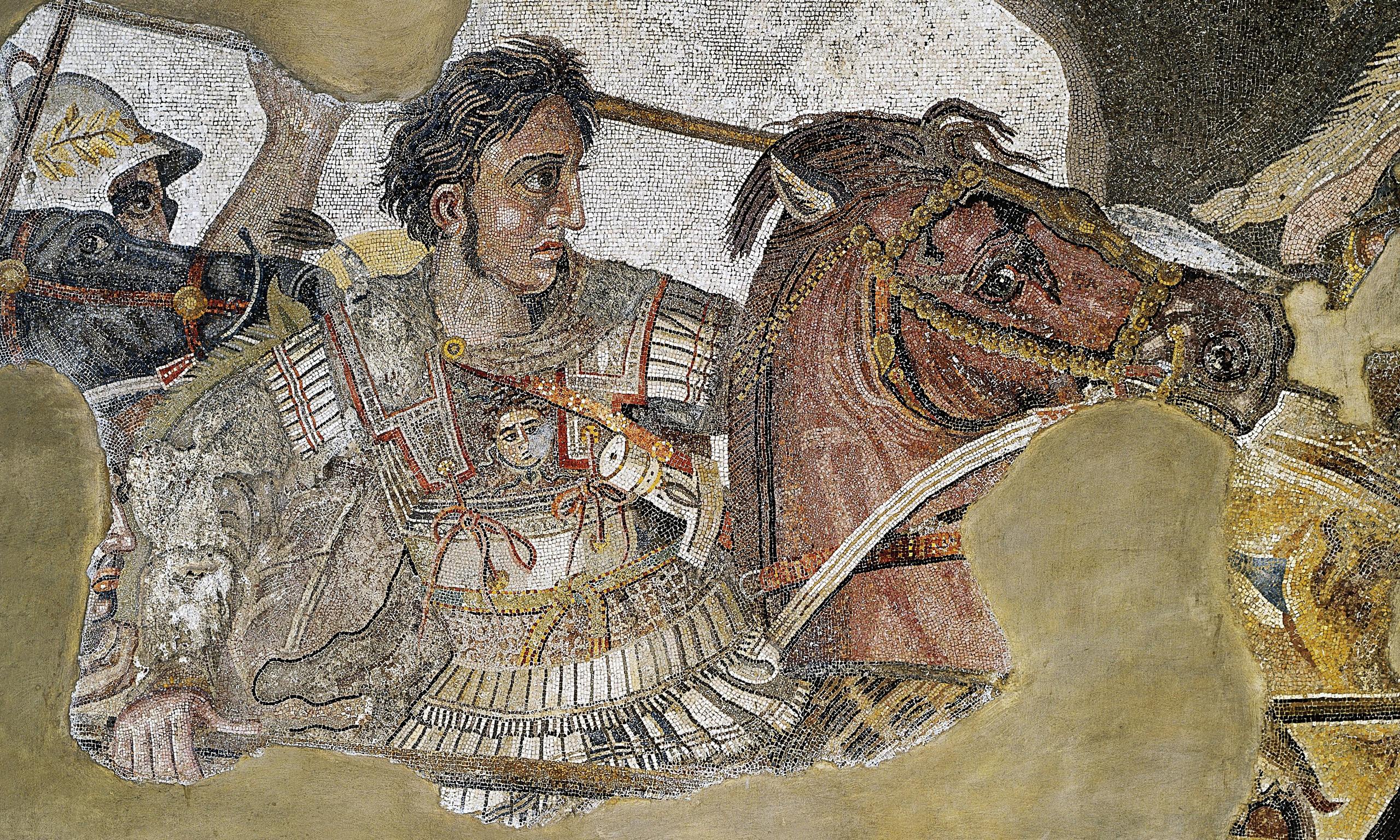
Early life and education
Alexander was born in 356 BC in Pella, the capital of Macedonia. His parents were King Philip II and Queen Olympias, and according to legend, he could trace his ancestry back to the heroic figures Zeus and Achilles. This mythical lineage would later play an important role in how Alexander saw himself and his divine destiny.
His education was exceptional for the time. Alexander was tutored by the famous philosopher Aristotle, who taught him philosophy, science, politics, and literature. The influence of Homer's Iliad was particularly strong, inspiring Alexander's later desire for glory and conquest. This classical education shaped his worldview and gave him the intellectual tools he would later use as both a military commander and ruler.
Note
Alexander's education under Aristotle was crucial in shaping not just his military genius, but his approach to ruling diverse peoples. Aristotle taught him about different forms of government, natural sciences, and ethics - knowledge that would prove invaluable when governing his vast empire.
Even as a young boy, Alexander showed remarkable courage and leadership abilities. At just 12 years old, he successfully tamed Bucephalus, a wild horse that no one else could handle. This early achievement was seen as a sign of his exceptional character and natural leadership qualities.
Rise to power
Alexander's path to the throne came earlier than expected. In 336 BC, his father Philip II was assassinated, making Alexander king of Macedonia at the young age of 20. This sudden transition thrust him into a position where he needed to quickly establish his authority and deal with the challenges facing the Macedonian kingdom.
Important
Alexander's swift and brutal response to the Theban revolt in 335 BC revealed a crucial aspect of his character. By completely destroying Thebes, he demonstrated that he would use extreme measures to maintain control - a pattern that would continue throughout his reign.
One of his first major tests came when the city of Thebes attempted to revolt against Macedonian rule in 335 BC. Alexander's response was swift and brutal - he crushed the rebellion completely and destroyed the city as a warning to other Greek states who might consider similar rebellions. This decisive action established his reputation as a leader who would not tolerate opposition.

The Persian Campaign (334-323 BC)
Alexander's most famous achievement was his conquest of the vast Persian Empire, which lasted from 334 to 323 BC. This campaign transformed him from a Macedonian king into the ruler of one of the largest empires in ancient history.
Key battles and victories
Battle of the Granicus (334 BC) marked Alexander's first major victory against Persian forces. This battle was significant because it secured his foothold in Asia Minor and demonstrated his bold tactics, including a daring river crossing and cavalry charge that broke the Persian line.
Example
The Battle of Issus (333 BC): Strategic Brilliance
At Issus, Alexander faced King Darius III directly despite being heavily outnumbered. The key to his victory lay in:
- Terrain advantage: The narrow coastal plain negated Persian numerical superiority
- Tactical formation: Alexander positioned his phalanx in the centre while leading the Companion cavalry on the right flank
- Psychological warfare: By targeting Darius personally, Alexander knew that the Persian king's flight would collapse enemy morale
- Result: Complete victory with the capture of the Persian royal family
Siege of Tyre (332 BC) showcased Alexander's determination and engineering capabilities. The island city resisted for seven months, but Alexander's forces built a causeway to reach it. When the city finally fell, Alexander ordered a brutal massacre as punishment for their resistance.
Battle of Gaugamela (331 BC) was the decisive encounter that effectively ended Persian power. Despite facing a Persian army with numerical superiority and war chariots, Alexander employed brilliant tactics. As the ancient historian Arrian recorded: "At Gaugamela, Alexander aimed directly at Darius himself, knowing that victory lay in the enemy king's flight." Alexander's strategy worked perfectly - when Darius fled, the Persian army collapsed.
Conquest of Persepolis (330 BC) represented the symbolic heart of the Persian Empire. Alexander burned the ceremonial capital, possibly as revenge for the Persian destruction of Athens during the earlier Persian Wars.

Note
The conquest of Persepolis (330 BC) was both a military and symbolic victory. By burning the ceremonial capital of the Persian Empire, Alexander was demonstrating to his Greek allies that he had avenged the Persian destruction of Athens during the earlier Persian Wars.
Expansion beyond Persia
Alexander didn't stop with conquering Persia. He pushed his armies further east into India, where he fought the Battle of Hydaspes (326 BC) against King Porus. This battle demonstrated Alexander's tactical flexibility - he used river crossings under cover of night and diversionary tactics to outmanoeuvre the Indian forces, which included war elephants. Notably, Alexander was so impressed by Porus's courage that he restored him as an ally rather than a conquered enemy.
Military organisation and tactics
Alexander's success came from his innovative use of combined arms tactics and his ability to adapt to different enemies and terrain.
Army composition
The core of Alexander's army was the phalanx, made up of infantry soldiers armed with long spears called sarissas. These weapons were up to 18 feet long and created an almost impenetrable wall of spear points when used properly. The phalanx provided both strong defensive capabilities and offensive punch.
The Companion Cavalry represented the elite striking force of the army. These were heavy cavalry that Alexander often led personally in decisive charges. Their mobility and impact made them perfect for exploiting weaknesses in enemy formations.
Alexander also employed light infantry and archers for flexibility, particularly useful against skirmishers and in difficult terrain where the phalanx couldn't operate effectively.
Engineers were crucial for siege warfare, building the towers, rams, and bridges that allowed Alexander to capture fortified cities like Tyre and Gaza.
The army also included various allies and mercenaries, including Greek hoplites, Thracians, and later even Persian forces that Alexander incorporated into his ranks.
Tactical brilliance in action
Example
Gaugamela Tactics: A Masterclass in Ancient Warfare
The Battle of Gaugamela provides an excellent example of Alexander's tactical genius. Facing a much larger Persian force, Alexander employed several key strategies:
- Diagonal extension: He extended his right flank diagonally to draw the Persian cavalry out of position
- Center hold: The phalanx held firm in the centre, preventing the Persians from breaking through or surrounding his forces
- Decisive strike: At the crucial moment, Alexander led the Companion cavalry in a wedge formation directly at Darius himself
- Psychological victory: When Darius fled, the entire Persian army collapsed
As Plutarch observed: "Alexander's courage was reckless, yet guided by skill; he always sought the enemy king himself."
Death and legacy
Alexander's remarkable career came to a sudden end in 323 BC when he died in Babylon at just 32 years old. The cause of his death remains disputed among historians - it could have been fever, poisoning, or natural illness. His death marked the end of an era and led to the fragmentation of his empire among his generals.
Important
Despite his relatively short life, Alexander had achieved something unprecedented in the ancient world. He had conquered territory stretching from Greece to India, spreading Greek culture and creating the Hellenistic world that would dominate the eastern Mediterranean for centuries.
Ancient writers recognised his extraordinary nature. As Plutarch noted: "He considered himself a god, and was believed to be one." This divine self-perception was not mere arrogance but reflected the superhuman achievements that made Alexander a legendary figure even in his own lifetime.
Summary
Key Points to Remember:
- Alexander lived from 356-323 BC, becoming king at 20 and conquering the Persian Empire in just over a decade
- His military success came from combining different types of forces - phalanx infantry, Companion cavalry, engineers, and allies working together
- The key battles were Granicus, Issus, Gaugamela, and Hydaspes, each showing different aspects of his tactical genius
- He was both a brilliant general and educated ruler, tutored by Aristotle and inspired by heroic literature
- His empire stretched from Greece to India, creating the largest ancient empire and spreading Greek culture throughout the known world