Height Requirements (Leaving Cert Construction Studies): Revision Notes
📚Revision Notes
Chimney height requirements
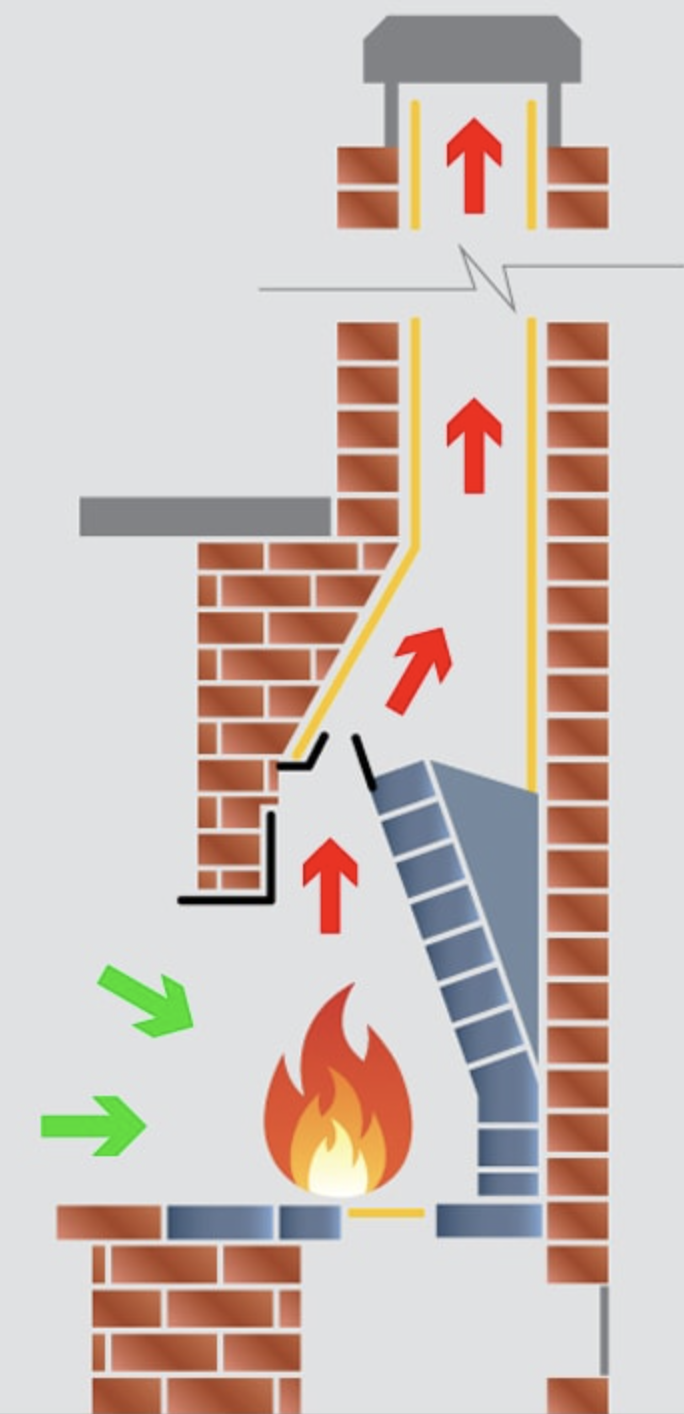
How chimneys work
Chimneys operate using differences in air pressure to create effective ventilation. The system relies on creating low pressure at the top of the chimney stack, which draws air upwards from the fireplace below.
When wind moves around a building, it creates areas of both high pressure and low pressure (suction). The location of these pressure zones depends on several factors:
- The building's position and orientation
- The pitch angle of the roof
- Wind direction and strength
Note
If adequate low pressure cannot be created at the top of the chimney, the fireplace will experience downdraughts, preventing proper operation and potentially causing smoke to enter the room.
Wind effects on different roof types
The roof design significantly affects how wind creates pressure differences:
Pitched roofs below 30°: Wind creates suction zones on the leeward side, helping to draw air up through the chimney.
Pitched roofs above 30°: Steeper angles create different airflow patterns, with suction occurring in different areas.
Flat roofs: These create unique pressure zones that require careful consideration for chimney positioning.
Note
Understanding these wind patterns is essential for proper chimney placement, as incorrect positioning can result in poor ventilation performance regardless of chimney height.
Minimum height requirements
Building regulations specify precise measurements to ensure chimneys function correctly:
Primary height rule
Important
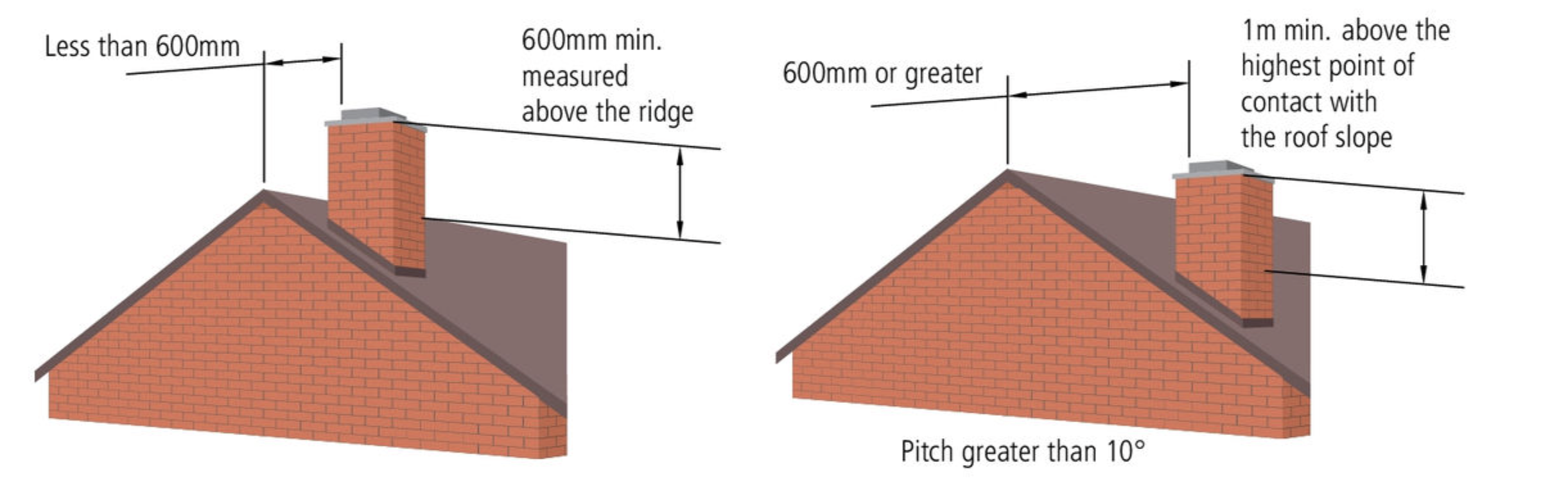
The top of the chimney stack must extend at least 1 metre above the highest point where the chimney contacts the roof slope. This ensures the chimney projects into the low-pressure zone created by wind flow.
Overall height requirement
Important
The chimney must be at least 4.5 metres above the fireplace opening to provide adequate draw for proper ventilation.
Ridge proximity rules
When the chimney is positioned near the roof ridge:
Important
For roof pitches less than 10°: The chimney must extend 600mm minimum above the ridge line.
For roof pitches greater than 10°: The chimney requires 600mm or greater clearance above the ridge, depending on specific conditions.
Wind stability considerations
Note
Tall chimneys face increased wind loading due to their height and exposure above the roofline. To address this:
- Chimney width increases proportionally with height to improve stability
- The distance between the chimney top and roof ridge affects pressure zones
- Dimensional guidelines prevent structural problems from wind forces
Weather protection
Important
The chimney top requires proper finishing to prevent water penetration:
- A precast concrete chimney cap provides the primary weather seal
- A damp proof course (DPC) layer sits beneath the cap
- This combination prevents rainwater from entering the chimney structure and causing structural damage
Summary
Key Points to Remember:
- Chimneys work by creating low air pressure at the top to draw air upwards from below
- Minimum 1 metre above the highest roof contact point is essential for proper function
- 4.5 metres total height above the fireplace ensures adequate draw
- 600mm clearance above ridge lines prevents downdraught problems
- Proper capping with concrete and DPC protects against water damage