Stair Safety (Leaving Cert Construction Studies): Revision Notes
📚Revision Notes
Stair safety
Understanding stair safety regulations
Stairs present significant safety risks when poorly designed or constructed. Building regulations establish specific requirements to ensure stairs are safe and comfortable for all users. These standards help prevent accidents and ensure accessibility for people of different ages and abilities.
Note
Modern building codes have evolved from decades of research into accident prevention and human biomechanics. These regulations aren't arbitrary - they're based on extensive studies of how people naturally move and what causes stair-related injuries.
The fundamental safety formula
The most important principle in stair design is the relationship between rise and going. This fundamental relationship ensures that stairs match human anatomy and natural movement patterns.
Example
Worked Example: The Safety Formula
The basic stair safety formula is:
Where:
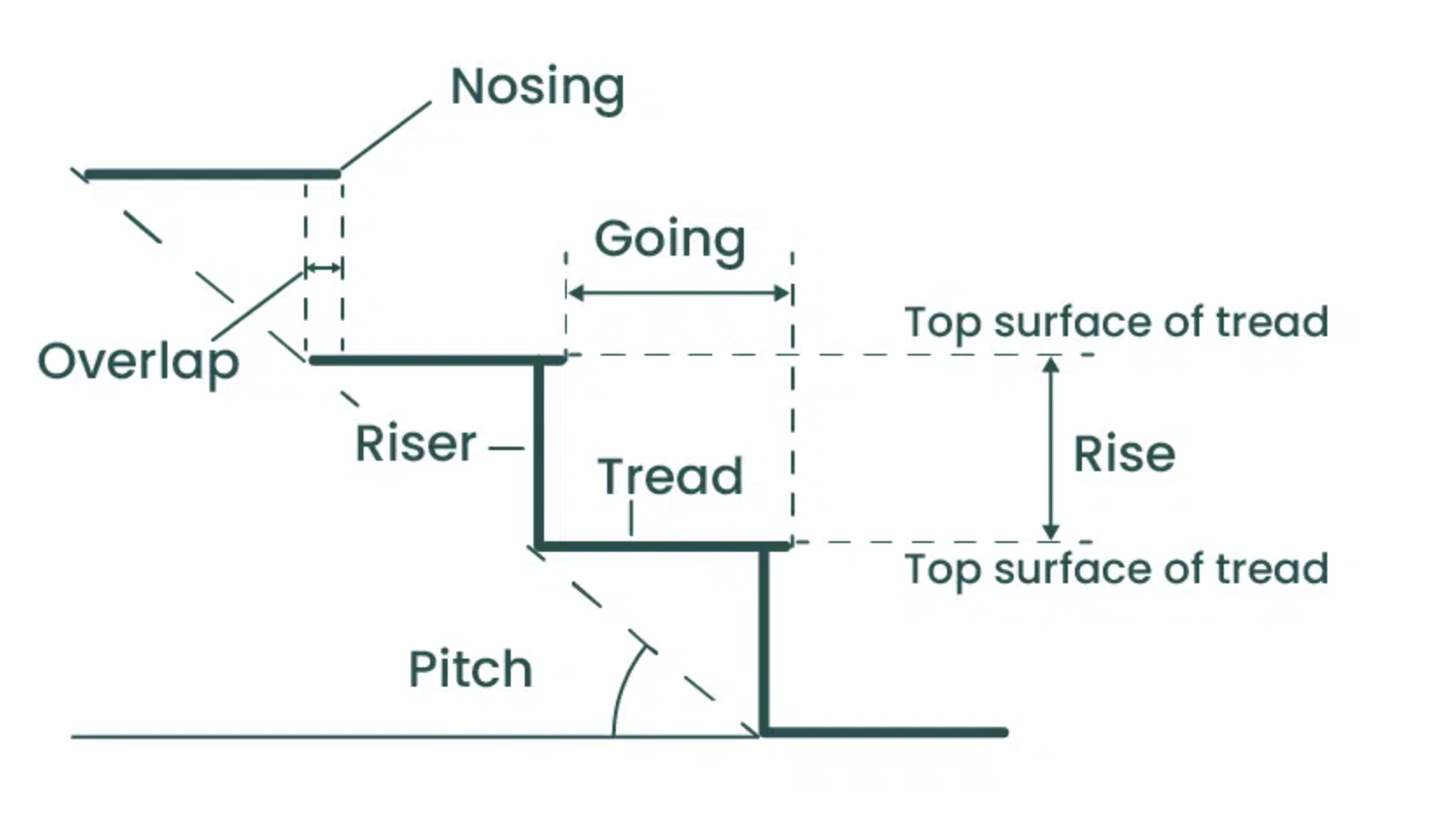
- = rise (vertical height of each step)
- = going (horizontal depth of each step)
Example calculation: If rise = 175mm, then: Therefore: (220mm minimum applies, so G = 220-350mm)
This formula ensures stairs match a person's natural stride length. When stairs follow this calculation, users can climb them comfortably without breaking their normal walking rhythm or feeling unsteady.
Essential dimensional requirements
Rise specifications
The rise must not exceed 220mm, though 175mm provides optimal comfort. Excessive rise heights make stairs particularly challenging for elderly users and young children to navigate safely.
Important
Critical Safety Rule: Never exceed 220mm rise height. This limit is based on the maximum comfortable step height for the general population, including elderly and mobility-impaired users.
Going specifications
Each going must measure at least 220mm, with 250mm being the preferred dimension. Adequate going depth ensures sufficient space for users to place their entire foot on each step, improving stability and reducing trip hazards.
Headroom clearance
A minimum 2m clearance between the pitch line and ceiling level prevents users from hitting their heads while climbing. This measurement accommodates even tall individuals comfortably.
Pitch requirements
The stair angle must not exceed 42°, though 35° provides better usability. Steeper pitches become uncomfortable and potentially dangerous for regular use.
Note
The pitch angle directly affects user comfort and safety. Angles steeper than 42° require significantly more effort to climb and increase the risk of falls, particularly when descending.
Nosing details
Each step requires a nosing (the rounded edge) of 16-25mm. This feature helps users lift their feet properly during climbing, reducing the risk of catching toes on step edges and tripping.
Handrail and baluster safety
Handrail positioning
Handrails must be positioned 840-900mm above the pitch line. This height allows average-height users to grip the rail comfortably without stooping or reaching awkwardly.
Baluster spacing regulations
All balusters must be spaced closely enough that a 100mm diameter sphere cannot pass between them. This "sphere test" is based on infant head size and prevents small children from getting trapped or falling through gaps.
Important
The 100mm Sphere Test: This critical safety measure is specifically designed to protect young children. The 100mm measurement represents the approximate head size of a small child, ensuring they cannot get their head stuck between balusters.
Safety testing standards
The 100mm sphere test applies to all stair openings and is a critical safety measure designed specifically to protect young children from serious injury.
Additional safety measures
Flight length limitations
No more than 16 steps are permitted between floors or landings. This restriction serves two purposes: it reduces the distance someone would fall if they tripped, and provides rest points for users who struggle with extended stair climbing.
Width requirements
Stairs must be at least 800mm wide. When the width exceeds 1000mm, handrails become mandatory on both sides to ensure users always have support within easy reach.
Note
The width requirements balance accessibility with practical construction considerations. Narrower stairs become difficult for people carrying objects or those with mobility aids, while very wide stairs without central handrails can leave users too far from support.
Guarding specifications
All stair guarding (protective barriers at openings) must be at least 900mm high and designed to prevent children from climbing over them.
Special considerations for open stairs
Some staircases omit risers for aesthetic purposes. While this doesn't affect functionality, additional safety measures become necessary to maintain the same level of protection as conventional stairs.
Important
Open Stair Requirements:
- A lip must be provided at the back of each tread to prevent feet or objects from slipping through
- The spacing between treads must still pass the 100mm sphere test
- These requirements ensure open stairs maintain the same safety standards as conventional designs
Summary
Key Safety Requirements to Remember:
- The formula ensures comfortable and safe stair use for all ages
- Maximum rise is 220mm and minimum going is 220mm to prevent accidents and ensure adequate foot placement
- Handrails must be 840-900mm high and balusters spaced to prevent a 100mm sphere passing through
- No more than 16 steps per flight reduces fall distances and provides necessary rest points
- Open stairs without risers require additional safety measures including lips on treads and proper spacing