Fitting a Door (Leaving Cert Construction Studies): Revision Notes
📚Revision Notes
Fitting a door
Understanding door frame construction
A door requires proper support to function correctly, which comes from the door frame. The door frame consists of three main components that work together to create a stable structure.
The frame is built using two jambs (which are the vertical side posts) and a head (the horizontal top piece). These components are joined together using a rebated butt joint, which creates a strong connection between the head and the jambs. This joint is then reinforced with screws or nails to ensure stability and longevity.
Note
The rebated butt joint is specifically chosen for door frames because it provides a large glueing surface and mechanical strength, making it ideal for supporting the repeated stress of door operation.
Frame assembly process
Checking for accuracy
Before final assembly, it's essential to ensure the frame is perfectly square. A large steel square is used to check that all corners are at 90-degree angles. Additionally, the diagonals of the frame should be measured and checked to confirm they are equal in length, which proves the frame is truly square.
Important
Critical Step: Squareness Check
Never skip the squareness check - an out-of-square frame will cause the door to bind, not close properly, or wear unevenly. Always measure both diagonals and ensure they match exactly.
Adding structural support
Once squareness is confirmed, a brace piece is attached diagonally across one corner of the frame. This diagonal brace prevents the frame from shifting during handling and installation.
To maintain the correct width of the door opening, a cross piece is fitted towards the bottom of the jambs. This temporary support ensures the jambs remain the proper distance apart during installation.
Example
Worked Example: Checking Frame Squareness
Step 1: Measure diagonal from top-left corner to bottom-right corner
Step 2: Measure diagonal from top-right corner to bottom-left corner
Step 3: Compare measurements - they should be identical
Step 4: If measurements differ, adjust the frame until both diagonals are equal
If diagonal A = 2.15m and diagonal B = 2.17m, the frame is out of square and needs adjustment.
Installation and wall attachment
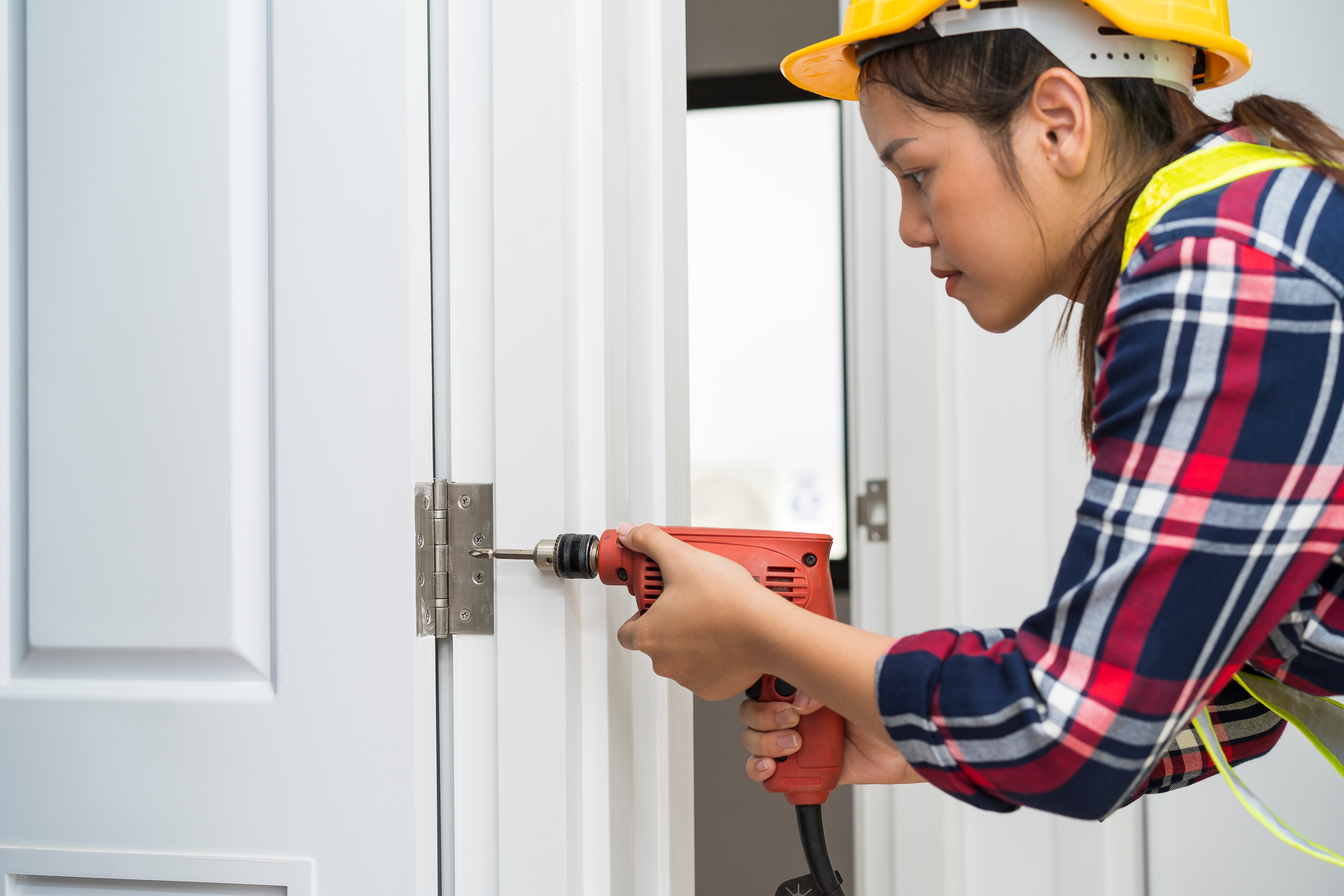
The assembled frame is secured to the building structure using screws that fasten the jambs to either masonry or timber walls. This connection must be strong enough to support the door's weight and the forces created by opening and closing.
An important consideration during installation is leaving a small gap between the door and frame. This gap accommodates any positional changes that may occur due to variations in the moisture content of the timber. As timber expands and contracts with humidity changes, this gap prevents binding and ensures smooth door operation.
Important
Essential Gap Requirement
Always leave a 2-3mm gap around the door perimeter. Timber can expand significantly with moisture changes - without this gap, doors will stick in humid conditions and may be difficult or impossible to open.
Finishing with architraves
After the frame and door are properly fitted, architraves can be attached to complete the installation. The architrave serves as a decorative element that creates a smooth transition between the door frame and the wall surface, effectively 'blending' these two elements together.
Architraves come in various styles and profiles, allowing for different aesthetic choices while serving the practical purpose of covering the joint between frame and wall.
Note
Architraves serve a dual purpose - they provide both aesthetic appeal and practical function by concealing any gaps or imperfections where the frame meets the wall surface.

Installation best practices
The fitting process requires precision and attention to detail. Professional carpenters use power tools and hand tools to ensure accurate measurements and secure fastenings. Proper checking of squareness, diagonal measurements, and careful attachment to the building structure are essential steps that cannot be rushed.
The temporary bracing and cross pieces used during installation help maintain the frame's shape until it's fully secured in position, preventing distortion that could affect door operation.
Summary
Key Points to Remember:
- Door frames consist of two jambs and a head joined with rebated butt joints
- Always check squareness using a steel square and measure diagonals for accuracy
- Use diagonal braces and cross pieces to maintain frame shape during installation
- Leave small gaps between door and frame to allow for timber movement due to moisture changes
- Architraves provide both decorative and practical finishing by blending frame with wall