Types of Window (Leaving Cert Construction Studies): Revision Notes
📚Revision Notes
Types of window
Window selection plays a crucial role in building design, affecting both functionality and aesthetics. Understanding the different window types helps builders choose appropriate solutions for various applications.
Overview of window types
Three primary window types dominate Irish construction: casement windows, pivot windows, and sliding sash windows. Each type offers distinct advantages depending on the application, architectural style, and practical requirements.
Note
The choice between these types often depends on factors such as opening span requirements, maintenance considerations, thermal performance, and aesthetic preferences. Historical trends have shifted between these types, with casement windows gaining popularity for wider openings during the 1950s and 1960s, while sliding sash windows have experienced renewed interest due to their traditional appeal and improved thermal properties.
Material evolution
Window frame materials have evolved significantly over time. Timber dominated for many years as the primary material, offering natural insulation and traditional appearance. Aluminium gained popularity temporarily, providing durability and slim profiles. However, aluminium lost favour due to poor thermal performance and condensation issues.
Important
Thermal Performance Considerations
Aluminium lost favour due to poor thermal performance and condensation issues, highlighting the importance of considering thermal properties when selecting window materials.
uPVC emerged as a popular alternative, offering low maintenance and good thermal properties. Modern developments include pressure-treated timber, which addresses traditional rot concerns while maintaining sustainability benefits. This has led to renewed interest in timber windows among environmentally conscious builders.
Casement window
 Basic operation and design
Casement windows feature an opening section (the casement) that swings within a fixed frame. Non-opening sections are called fixed lights. The casement typically hinges from either the side or top of the frame, with the opening extent limited by average human arm reach for practical operation.
The direction of opening can be specified for either side of the frame, allowing clients to choose the most suitable configuration for their space and access requirements. This flexibility makes casement windows adaptable to various room layouts and external constraints.
Construction methods
Casement windows can be manufactured from timber or uPVC, or combinations of both materials. Timber frames are machine-made and assembled using weatherproof adhesives, providing strong, durable joints. uPVC windows utilise bulky hollow frame sections to achieve structural strength, though these frames are inherently less rigid than timber equivalents due to the material properties.
Example
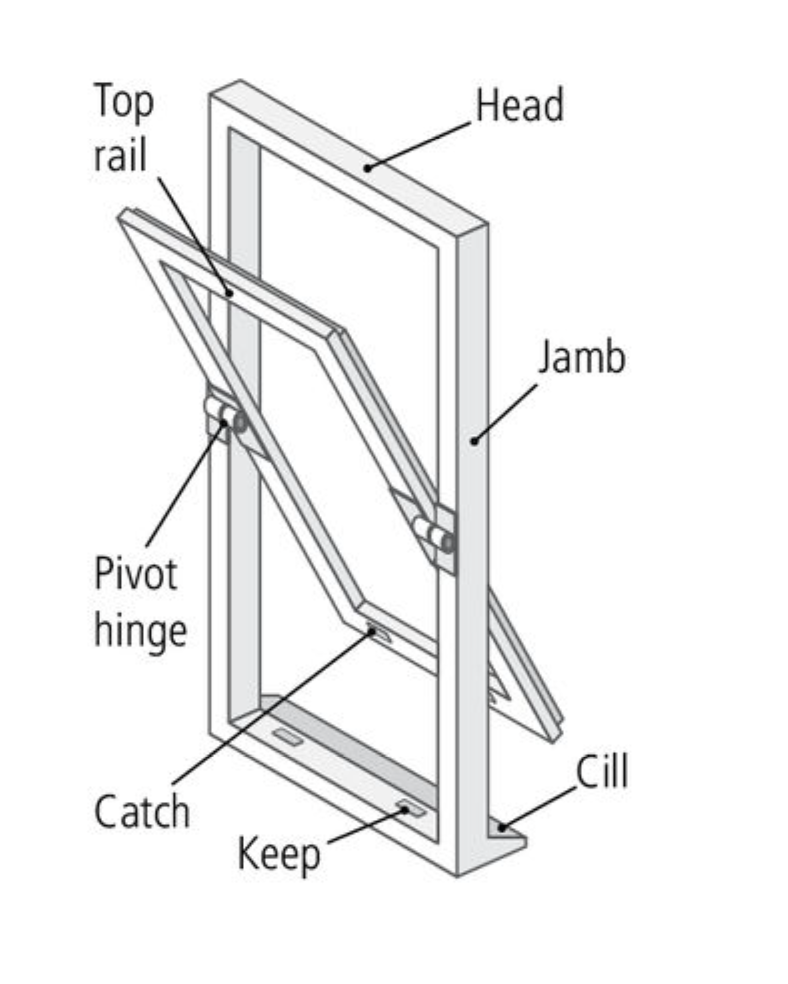
Key Components of Casement Windows:
- Head - Top section of the frame
- Jamb - Side sections providing vertical support
- Cill - Bottom section with weather drainage
- Transoms - Horizontal dividers creating multiple sections
- Mullions - Vertical dividers for multiple openings
Weatherproofing systems
Effective weatherproofing is essential for casement windows to prevent draughts and water penetration. Stripping systems provide the primary seal between opening and fixed elements. Several stripping types are available:
Adhesive weather stripping - Fixed directly to the frame using self-adhesive backing, providing a simple installation method that creates an effective seal when the casement closes against it.
Rubber self-adhesive strips - Offer durability and consistent sealing performance, with the flexibility to accommodate slight movement and settling in the frame.
Groove-fitted stripping - Installed into machined grooves in the frame, this method provides more secure fixing and professional appearance, often using PVC or rubber materials.
Tubular strips - Made from PVC or synthetic rubber, these create excellent sealing performance and can be easily replaced when worn or damaged.
Note
The stripping acts as the first contact point for wind and rain, protecting the interior from weather infiltration. Quality stripping systems can be replaced when damaged, extending the overall window lifespan.
Pivot windows
Applications and benefits
Pivot windows are particularly popular in Ireland, with centre pivot designs being the most common configuration. These windows rotate around a central horizontal or vertical axis, allowing both sides of the glass to be accessed from inside the building.
When installed in ceiling applications, pivot windows are commonly called rooflights. This application brings natural light into roof spaces and upper floor areas, enhancing the usability of these spaces.
Note
Rooflight Benefits
Rooflights can significantly improve the natural lighting of rooms that would otherwise rely solely on artificial illumination during daylight hours, making upper floor spaces more functional and energy-efficient.
Operational advantages
The rotating mechanism of pivot windows offers practical benefits, particularly for cleaning and maintenance. Both surfaces of the glass can be cleaned from inside the building, eliminating the need for external access equipment in many situations. This feature is especially valuable for upper-floor installations or locations where external access is difficult or dangerous.
Built-in blinds can be incorporated into pivot window designs, providing convenient light control while protecting the blind mechanism from weather exposure. The rotation capability allows easy access to blind controls and maintenance.
Construction details
Pivot window construction requires careful attention to weatherproofing, particularly for rooflight applications where water penetration risks are higher. The installation includes multiple layers of protection
Example
Multi-Layer Weather Protection System:
Flashing systems - Lead flashing and galvanised steel flashing work together to direct water away from the window opening. These materials provide long-lasting weather protection when properly installed and maintained.
Insulation integration - The window installation coordinates with roof insulation systems, typically including battens, felt, and various insulation materials to maintain thermal continuity.
Structural support - Proper framing using rafters and trimmers ensures the window opening maintains structural integrity while supporting the window unit.
Sliding sash windows
Traditional design and operation
Sliding sash windows consist of two sashes within a frame system, with both sashes capable of sliding vertically within recessed channels. This design allows flexible ventilation control, as either or both sashes can be opened to varying degrees.
Important
Proper sealing between sashes is crucial when both are closed, preventing water penetration during adverse weather conditions. The overlapping design of traditional sash windows helps create this weather seal when properly maintained and adjusted.
Balance mechanisms
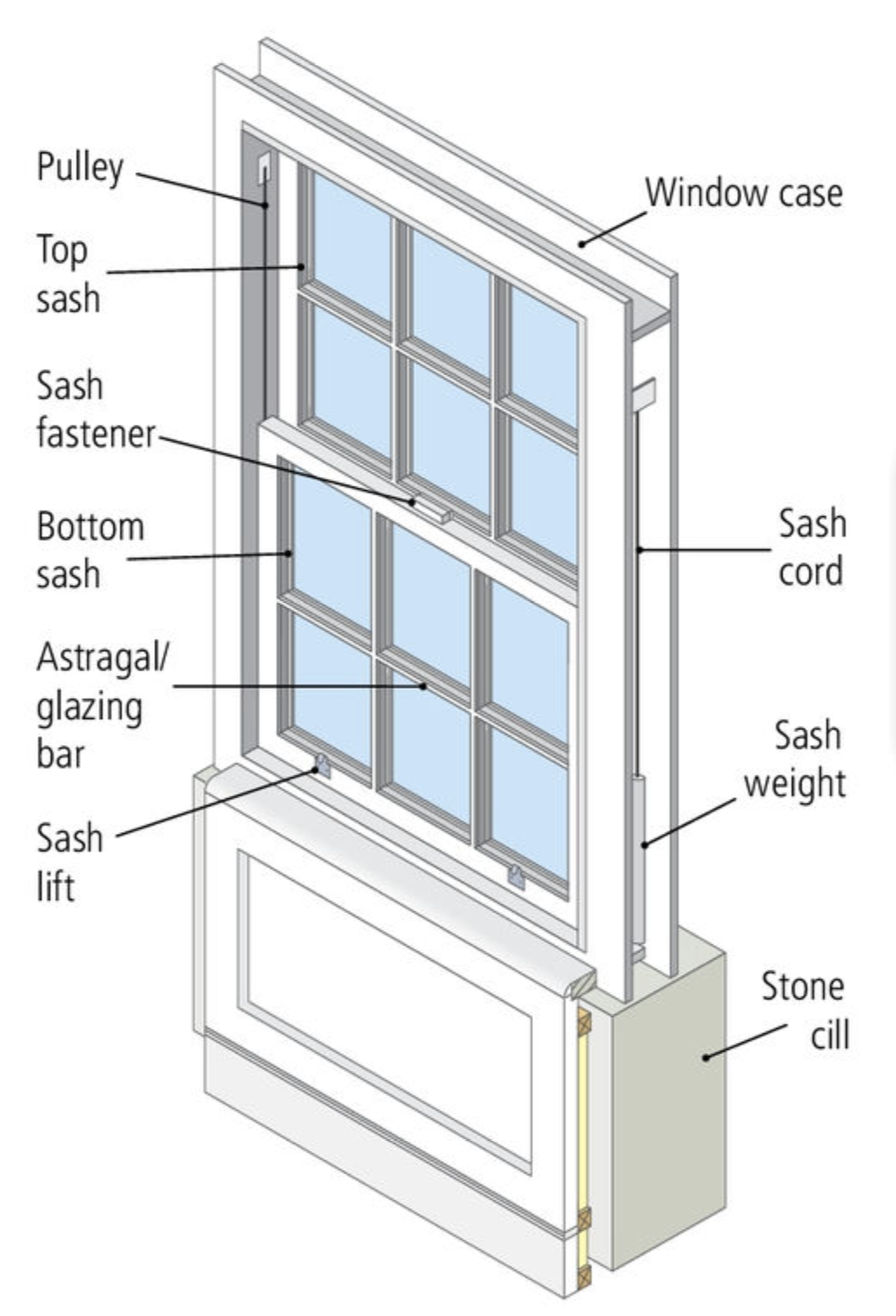
Traditional sliding sash windows employed a weight and pulley system to balance the sashes during operation. Sash weights, connected via sash cords, counterbalanced the weight of the moving sashes, making them easier to operate and hold in position when opened.
However, traditional cord systems often suffered from wear and eventual failure, leading to expensive repairs when cords snapped or pulleys failed. Modern installations may incorporate spring balance systems as an alternative. These springs extend fully when the window is closed and assist with lifting the bottom sash during opening, reducing the mechanical complexity while maintaining operational ease.
Construction components
Sliding sash windows include several key components that work together to ensure proper operation:
- Window case - The outer frame that contains the sliding mechanism and provides structural support for the entire assembly
- Sash fasteners - Hardware that secures both sashes when closed, ensuring proper weather sealing and security
- Astragal or glazing bars - Decorative and structural elements that divide the glass area into smaller panels, contributing to the traditional appearance while providing glass support
- Stone cill - The bottom structural element that supports the window and directs water away from the building fabric
Modern developments
Contemporary sliding sash windows benefit from improved glazing technology, with double or triple glazing now standard for enhanced thermal performance. Modern versions can be constructed in uPVC as well as traditional timber, offering maintenance advantages while preserving the classic aesthetic.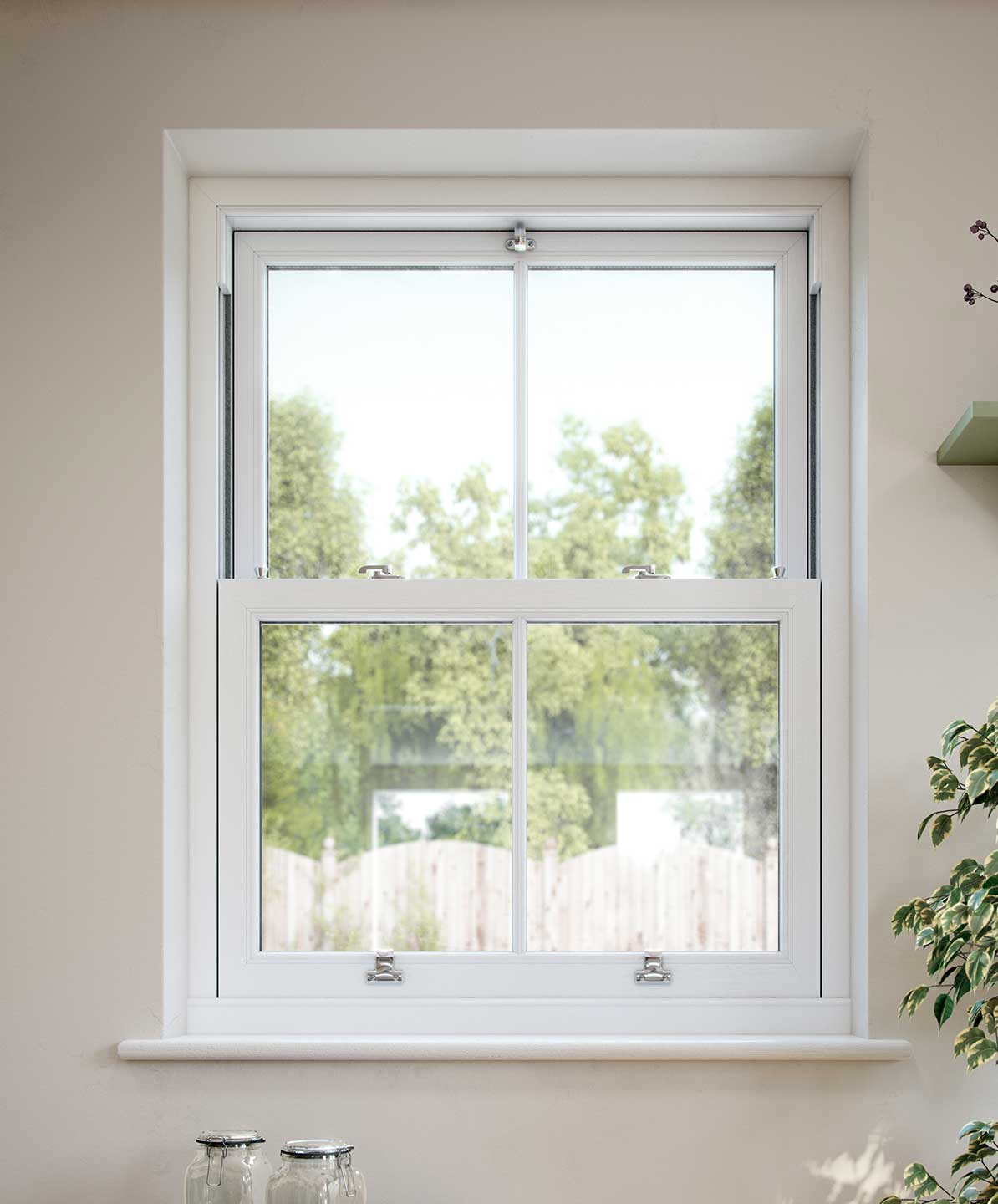
Note
Traditional Design Feature
Traditional sliding sash windows featured tapered glazing bars to maximise light transmission - thicker at the base for strength, tapering towards the top. This design consideration balanced structural requirements with the desire to admit maximum natural light to interior spaces.
Summary
Key Points to Remember:
- Three main types: Casement windows (hinged opening), pivot windows (rotating mechanism), and sliding sash windows (vertical sliding sashes)
- Material choices: Timber offers sustainability and tradition, uPVC provides low maintenance, with modern pressure treatments improving timber durability
- Weatherproofing: All window types require effective stripping systems to prevent draughts and water penetration, with various options available for different applications
- Operational benefits: Pivot windows excel for cleaning access, casement windows offer flexible opening directions, sliding sash windows provide variable ventilation control
- Modern improvements: Traditional designs now incorporate better glazing technology and improved balance mechanisms while maintaining aesthetic appeal