Sketching in Orthographic (Leaving Cert DCG): Revision Notes
📚Revision Notes
Sketching in Orthographic
What is orthographic sketching?
Orthographic sketching is a fundamental technique in technical drawing that allows you to quickly communicate design ideas and thoughts in a simple and effective way. This method uses the same principles as formal orthographic projection but is done freehand, making it much faster than using drawing instruments.
The key advantage of orthographic sketching is that it can significantly reduce the time needed for creating technical drawings, especially when adding dimensions and proportions. However, even though you're drawing freehand, you must still maintain accuracy and follow the same standards used in instrument drawing.
Note
The beauty of orthographic sketching lies in its combination of speed and technical precision. While you gain the flexibility of freehand drawing, you maintain the structured approach of formal technical drawing methods.
Understanding the construction process
When creating orthographic sketches, it's helpful to follow a systematic three-step approach that builds up your drawing gradually:
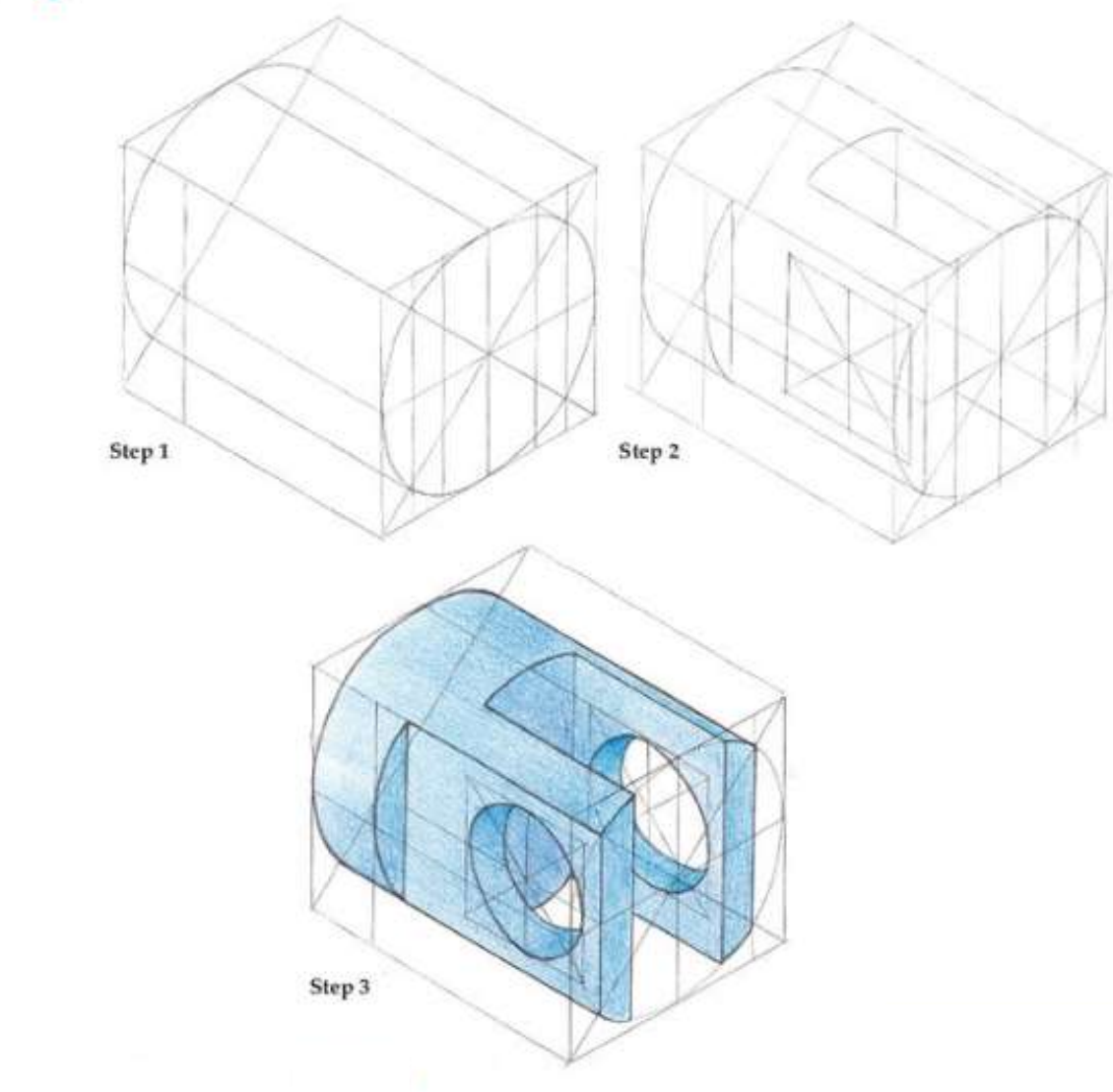
Example
Worked Example: Three-Step Construction Method
Step 1: Basic wireframe construction
- Start with simple rectangular forms using light construction lines
- Establish the basic proportions and overall shape
- Use isometric or orthographic projection principles
- Keep lines light so they can be adjusted easily
Step 2: Develop the structure
- Add more detailed construction lines and geometric framework
- Refine the proportions and add internal details
- Build up the three-dimensional form systematically
- Maintain consistent projection angles throughout
Step 3: Complete the final form
- Add shading or hatching to show depth and dimension
- Strengthen the important outline lines
- Clean up construction lines that are no longer needed
- Ensure the final result clearly communicates the intended design
Key principles for successful orthographic sketching
Important
Critical Drawing Standards
Maintain drawing standards: All the practices you would follow when creating orthographic views with instruments should also be applied to freehand sketching. This includes:
- Correct line weights and types
- Proper projection relationships between views
- Accurate proportions and scaling
- Clear dimensioning where required
Focus on accuracy: Even though you're sketching freehand, maintaining accurate proportions and relationships between different parts is crucial. The sketch should communicate the design intent clearly and be technically sound.
Use construction techniques: Break down complex forms into simpler geometric shapes first. This systematic approach helps ensure accuracy and makes the sketching process more manageable.
Note
Remember that in orthographic sketching, the goal is not artistic perfection but clear technical communication. Your sketches should convey precise information about dimensions, relationships, and construction details.
Benefits of orthographic sketching
Note
Key Advantages of This Technique:
- Speed: Much faster than formal technical drawing with instruments
- Flexibility: Easy to make changes and explore different design options
- Communication: Effective way to share ideas quickly with others
- Problem-solving: Helps visualise and work through design challenges
- Documentation: Provides a record of design development process
Exam tips
Important
Essential Exam Strategies:
- Practice the three-step construction method regularly
- Always start with light construction lines
- Maintain consistent line quality throughout your sketch
- Remember that accuracy in proportions is more important than perfect straight lines
- Use proper orthographic projection principles even when sketching freehand
Summary
Key Points to Remember:
- Orthographic sketching combines the speed of freehand drawing with the accuracy of technical drawing principles
- Follow a systematic three-step approach: wireframe construction, structural development, and final completion
- Maintain the same standards and practices used in formal technical drawing
- Focus on clear communication of design ideas through accurate proportions and proper projection
- Practice regularly to develop confident, accurate sketching skills that will serve you well in design and technical work