Some Common Materials (Leaving Cert DCG): Revision Notes
📚Revision Notes
Some Common Materials
Understanding how to represent different materials accurately in freehand drawing is essential for effective design communication. By carefully analysing the texture and colour properties of various materials, you can create realistic and recognisable drawings that clearly communicate your design ideas.
Shading techniques for material representation
Before exploring specific materials, it's important to understand the basic shading approaches you can use to create different surface effects and textures.
Note
Mastering these fundamental shading techniques is crucial because each material requires a specific approach based on its surface properties and how it interacts with light.
There are three fundamental shading techniques you can employ:
- Smooth, blended strokes - Create even, continuous tones by blending pencil marks smoothly together. This technique works well for polished or refined surfaces
- Rough, large strokes - Use bold, visible pencil strokes to suggest textured or matte surfaces. The individual marks remain visible to create surface interest
- Irregular scribble - Apply random, overlapping marks to create rough, uneven textures. This approach is ideal for very textured or weathered materials
Metal
Metal surfaces present unique challenges due to their highly reflective properties. Metals have smooth surfaces that bounce light in multiple directions, creating complex patterns of highlights and shadows.

Important
The key to drawing convincing metal is understanding that it reflects light from multiple angles simultaneously, unlike most other materials which have more predictable light patterns.
When drawing metal objects, focus on these key characteristics:
- Reflective surface quality - Metal reflects light strongly, creating bright highlight areas alongside deep shadows
- Multidirectional shading - Unlike other materials, metal surfaces reflect light from various angles, so your shading lines should follow these different directions
- Colour selection - Choose your tones carefully based on the metal type:
- Steel appears as light grey with darker grey bands for shadows
- Brass and gold require orange or yellow base colours
- High contrast - Emphasise both the brightest highlights and the darkest shadow areas to capture the metal's reflective nature
Wood
Wood offers rich visual interest through its natural grain patterns and warm colour variations. Understanding how grain flows through timber is crucial for realistic representation.

Note
Grain direction is the most important concept in drawing wood convincingly. The grain always follows the natural growth pattern of the tree, flowing along the length of the timber piece and continuing around edges onto adjacent faces.
Key principles for drawing wood include:
- Grain direction - Remember that grain runs along the length of the timber piece. This directional flow continues around edges and onto adjacent faces
- Pattern variation - Different faces of the same piece will show varying grain patterns, but they should all relate to the overall grain direction
- Texture range - Some woods display subtle grain patterns while others feature bold, dramatic markings
- Colour approach - Use light brown or orange as your base colour, then add darker browns or oranges to define the grain pattern
- Edge continuity - Where grain reaches the edge of one surface, it should continue logically onto the connecting surface
Plastic (opaque)
Opaque plastic materials have distinct surface characteristics that set them apart from other materials. They typically feature smooth surfaces with strong, vibrant colours.
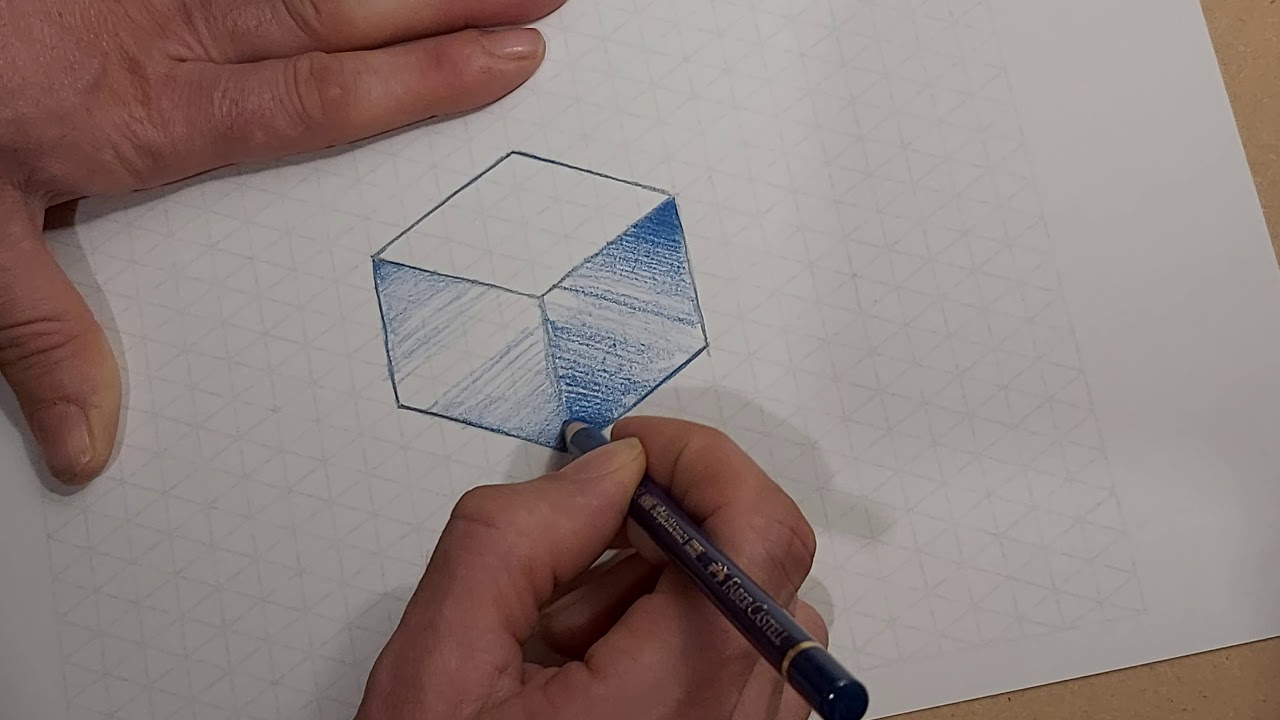
When representing opaque plastic:
- Surface finish - Plastic surfaces are generally smooth and often have a slight shine or gloss
- Colour intensity - Plastics frequently display bold, saturated colours that require attention to colour depth and variation
- Highlight placement - Pay particular attention to where light hits the surface most directly, as these highlight areas are crucial for conveying the plastic's smooth finish
- Consistent shading - Unlike metal, plastic surfaces tend to have more predictable light reflexion patterns
Clear plastic and glass
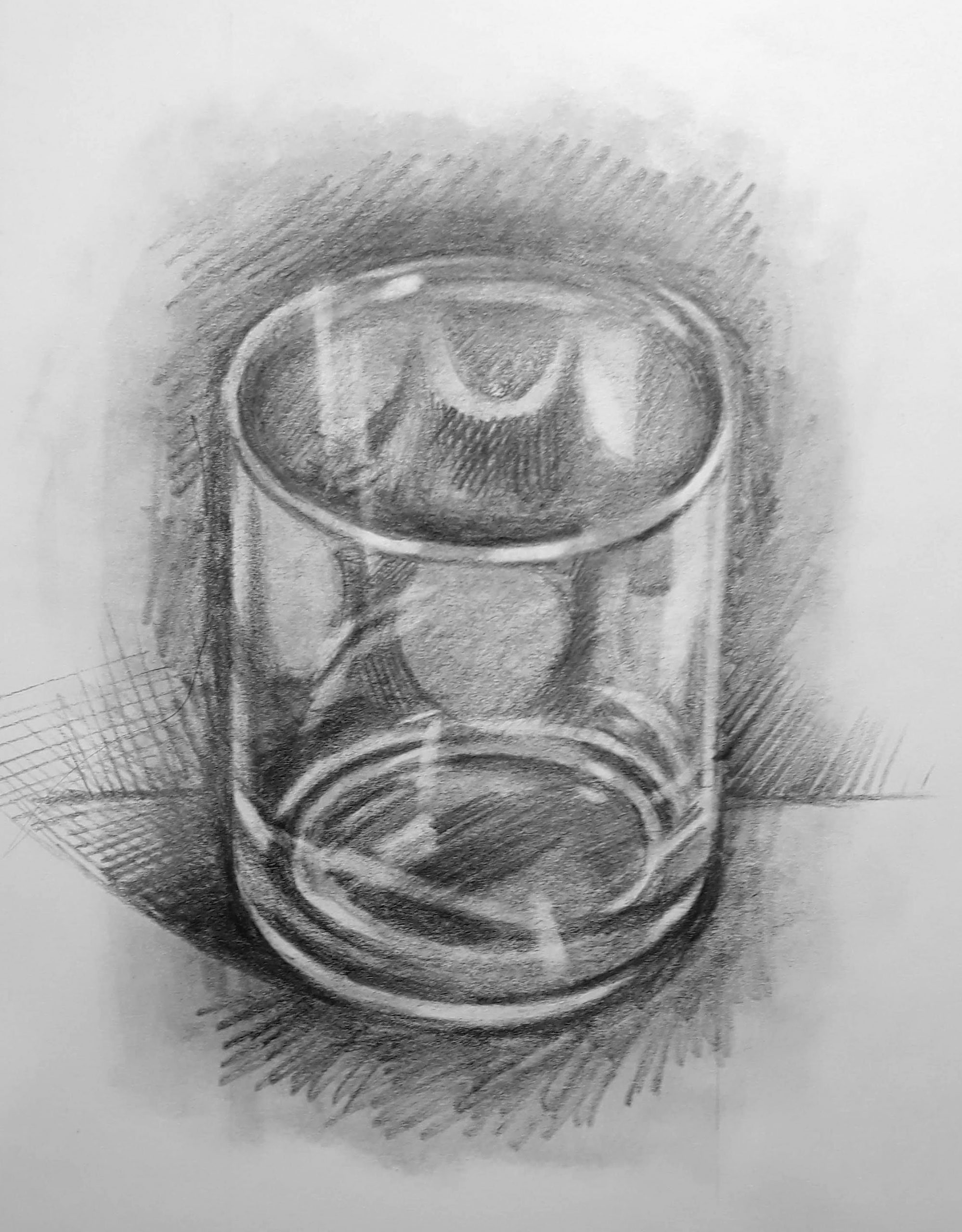
Transparent and semi-transparent materials require special techniques to suggest their see-through qualities while still defining their form and presence.
Important
Drawing transparent materials is challenging because you must show both the object itself and what can be seen through it, while maintaining the sense of the material's presence and form.
Effective approaches for transparent materials include:
- Parallel line technique - Draw groups of parallel lines using hard pencils, angling these lines across the surface to suggest transparency
- Reflection effects - When multiple glass or plastic objects are grouped together, they reflect light onto each other, creating complex light patterns
- Uneven shading - Unlike opaque materials, transparent surfaces don't have uniform shadow values due to light bouncing between surfaces
- Distortion consideration - Curved glass or plastic surfaces will distort the appearance of objects seen through them, which you may need to indicate in your drawing
- Light interaction - Focus on how light passes through, reflects off, and bounces between transparent surfaces
Note
Exam tips
- Practice identifying material properties by studying real objects around you
- Build a reference collection of material samples to refer to during practice
- Start with simple forms before attempting complex shapes
- Pay attention to light source direction - this affects all materials differently
- Use appropriate pencil grades: harder pencils (2H-4H) for fine details and transparent effects, softer pencils (2B-4B) for rich shadows and bold textures
Summary
Key Points to Remember:
- Material analysis is key - Always observe texture, colour, and surface properties before you start drawing
- Each material has unique characteristics - Metal is reflective with multidirectional shading, wood shows directional grain, plastic has smooth surfaces with strong colours, and glass requires special transparency techniques
- Shading technique matters - Choose between smooth blended strokes, rough large strokes, or irregular scribble based on the material's surface properties
- Light behaviour varies - Different materials reflect, absorb, or transmit light in distinct ways that you must capture in your drawings
- Practice builds recognition - The more you study and draw different materials, the better you'll become at representing them convincingly