Computer-Controlled Manufacturing (Leaving Cert Engineering): Revision Notes
📚Revision Notes
Computer-Controlled Manufacturing
Computer-controlled manufacturing has revolutionised modern industry by bringing together digital technology and physical production processes. This technology enables manufacturers to create high-quality products with remarkable speed, precision, and consistency.
What is computer-aided manufacturing (CAM)?
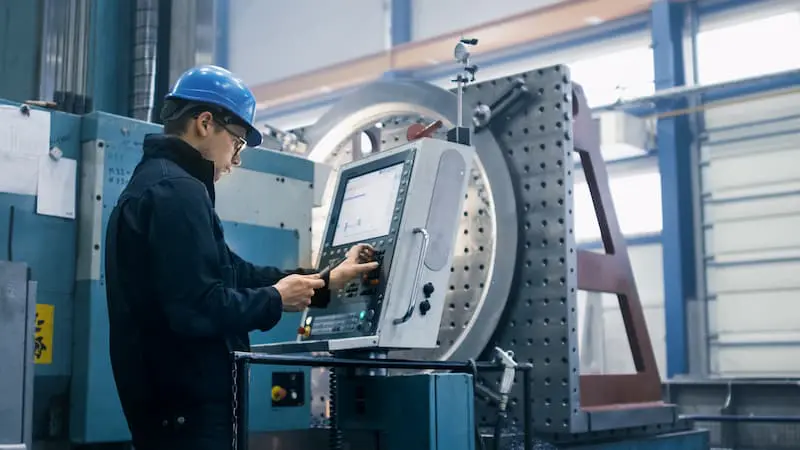
Computer-Aided Manufacturing (CAM) is the use of computer software and systems to plan, manage, and control manufacturing operations. This technology works by generating machine-readable instructions, such as G-code, that guide automated machinery including CNC machines, lathes, and 3D printers in producing parts and products.
Note
G-code is a standardised programming language that tells machines exactly how to move, what speed to use, and what operations to perform during manufacturing processes.
Key features of CAM
CAM systems integrate advanced technology with manufacturing processes to reduce errors and streamline workflows. The software works seamlessly with automated machinery to transform digital designs into physical products with minimal human intervention.
CAM is particularly important in industries that require precision and consistency, such as aerospace, automotive, and medical device manufacturing. The technology allows manufacturers to maintain high standards whilst increasing production efficiency.
Note
The seamless integration between CAM software and automated machinery is what makes modern manufacturing so efficient - digital designs can be converted directly into production instructions without manual programming.
Differences between CAM and CAD
Although Computer-Aided Design (CAD) and Computer-Aided Manufacturing (CAM) work closely together, they serve distinct purposes in the product lifecycle:
Computer-aided design (CAD)
- Primary function: Focuses on designing and modelling products digitally
- Output: Produces 2D drawings, 3D models, and design files
- Users: Designers, architects, and engineers
- Integration: Provides input data for CAM systems
Computer-aided manufacturing (CAM)
- Primary function: Translates designs into instructions for manufacturing
- Output: Generates machine code (such as G-code) for production
- Users: Machinists, production engineers, and operators
- Integration: Converts CAD designs into actionable production plans
Important
While CAD handles the conceptual and design phases, CAM takes responsibility for the execution and production stages. Both are essential and work together in the complete product development cycle.
Benefits of CAM software
The adoption of CAM software offers numerous advantages that make it essential for modern manufacturing:
1. Enhanced precision
CAM software eliminates human error in machining operations, resulting in consistently accurate products that meet exact specifications.
Note
Human error in manual machining can lead to costly mistakes and wasted materials. CAM software ensures that every cut, drill, and operation follows the exact specifications programmed into the system.
2. Increased efficiency
By automating repetitive tasks like toolpath generation and machine setup, CAM software significantly speeds up production. This leads to faster turnaround times and increased throughput.
3. Cost reduction
CAM minimises material waste and operational errors, reducing overall manufacturing costs. The automation of processes also lowers labour expenses by streamlining workflows.
4. Consistency and quality
CAM systems maintain uniformity in production by standardising machining processes. This ensures that each product meets the same high-quality standards, regardless of production volume.
Note
Standardised processes mean that whether you're making one prototype or thousands of units, each product will have identical specifications and quality levels.
5. Integration with CAD
CAM software seamlessly integrates with CAD tools, enabling a smooth transition from design to production. This reduces errors caused by manual data transfer and enhances collaboration between designers and machinists.
6. Flexibility
CAM supports a wide range of manufacturing processes, including milling, turning, drilling, and additive manufacturing. This versatility allows manufacturers to adapt to different project requirements.
Industrial applications of computer-aided manufacturing
CAM software is used across various industries, enabling precision and efficiency in manufacturing processes:
1. Aerospace
The aerospace industry relies heavily on CAM for producing complex components that require exceptional precision and compliance with strict safety and quality standards.
Note
Aerospace components often have complex geometries and must meet extremely tight tolerances. A small error in manufacturing could have serious safety implications, making CAM's precision crucial.
2. Automotive
Automotive manufacturers use CAM to produce intricate parts like gears, engine blocks, and chassis components. CAM's ability to automate processes enhances production speed and consistency, which is critical for high-volume manufacturing.
3. Medical devices
The medical industry uses CAM for producing customised implants, prosthetics, and surgical instruments. Its precision allows for the creation of complex geometries tailored to individual patient needs.
4. Consumer electronics
CAM is essential for producing components used in smartphones, laptops, and other electronic devices. It ensures precision in cutting, shaping, and assembling small and intricate parts.
Note
Consumer electronics require incredibly precise manufacturing due to the miniaturisation of components. CAM enables the production of parts that would be impossible to create accurately by hand.
5. Industrial equipment
In industrial manufacturing, CAM supports the production of heavy machinery components, such as gears, shafts, and casings. Its automation capabilities optimise resource utilisation and reduce lead times.
6. Tool and die making
CAM is widely used in creating moulds, dies, and fixtures for various industries. Its precision and efficiency are critical for producing tools that meet exacting specifications.
The future of computer-controlled manufacturing
As manufacturing continues to evolve, CAM plays an increasingly vital role in enabling businesses to meet the demands of modern markets. By leveraging CAM software, companies can enhance their competitiveness, deliver high-quality products, and adapt to changing customer needs.
The benefits of CAM, including improved precision, cost savings, and flexibility, make it an essential tool for industries ranging from aerospace to consumer electronics. Whether producing complex aerospace components or intricate medical devices, CAM provides the tools needed to achieve precision, efficiency, and innovation in manufacturing.
Important
As Industry 4.0 and smart manufacturing continue to develop, CAM systems are becoming more integrated with IoT devices, artificial intelligence, and real-time monitoring systems, making them even more powerful and essential for competitive manufacturing.
Remember!
Summary
Key Points to Remember:
- CAM uses computer software to control manufacturing operations and generate machine-readable instructions like G-code
- CAD focuses on design whilst CAM focuses on production - they work together but serve different purposes in the manufacturing process
- Key benefits include enhanced precision, increased efficiency, cost reduction, consistent quality, seamless CAD integration, and manufacturing flexibility
- Major applications span aerospace, automotive, medical devices, consumer electronics, industrial equipment, and tool and die making
- CAM is essential for modern manufacturing competitiveness, enabling high-quality production and adaptability to market demands