Types of Semiconductor (Leaving Cert Engineering): Revision Notes
Types of Semiconductor
What are semiconductors?
Semiconductors are materials that can conduct electricity in a controlled manner. Unlike metals (which are good conductors) and insulators (which block electricity completely), semiconductors sit between these two extremes. This unique property makes them incredibly useful in modern electronics.
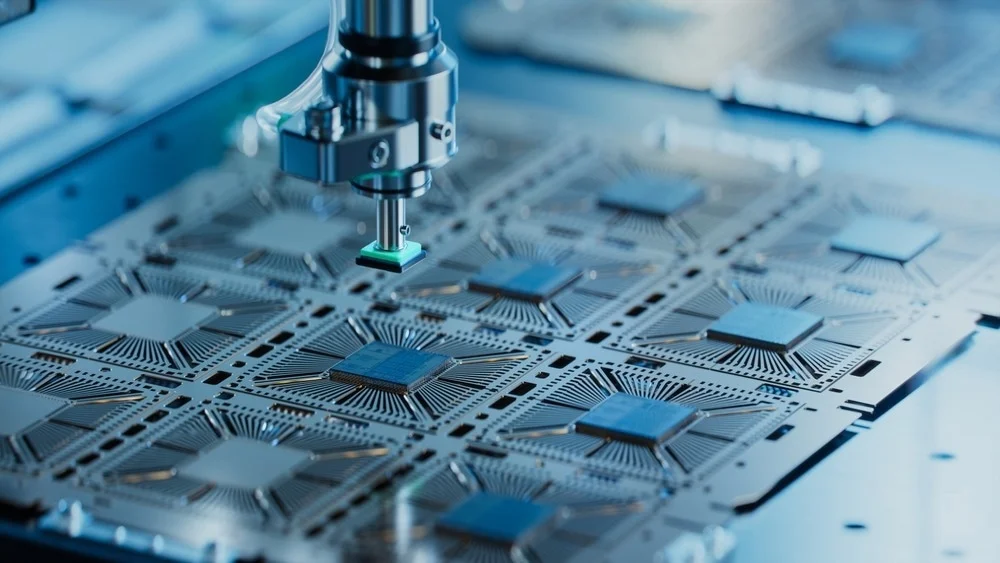
The key advantage of semiconductors is their position between conductors and insulators - they can be "switched" between conducting and non-conducting states, which is fundamental to digital electronics.
The key function of semiconductors is that their electrical conductivity can be modified and controlled. This is achieved by introducing specific dopants or by changing external conditions such as temperature, pressure, or electric field. Under normal conditions, semiconductors behave like insulators, but under certain circumstances they can conduct electricity effectively.
The most commonly used semiconductor materials are silicon (Si) and germanium (Ge). However, there are also many compound semiconductors such as gallium arsenide (GaAs) and indium phosphide (InP). These materials form the foundation for making semiconductor components like diodes, transistors, and integrated circuits.
The doping process
Pure semiconductors like silicon do not have sufficient electrical properties for use in modern electronic devices. To improve their ability to conduct electricity, a doping process is used. This involves introducing small amounts of other chemical elements into the semiconductor structure.
The doping process is essential because it allows engineers to precisely control how well the semiconductor conducts electricity. Without doping, pure semiconductors would be too resistive for practical electronic applications.
Depending on the type of dopant used, two main types of doped semiconductors can be created.
Types of doped semiconductors
N-type semiconductors
N-type semiconductors are created by doping the pure semiconductor with elements that have more electrons than the original material. Common dopants include phosphorus or arsenic.
When these dopants are introduced, they create an excess of electrons that can move freely through the material. This increases the semiconductor's conductivity significantly. The "N" stands for "negative" because the extra electrons carry negative charge.
Think of N-type as "Negative" - the extra electrons from donor atoms create mobile negative charge carriers that improve conductivity.
P-type semiconductors
P-type semiconductors are formed by doping the semiconductor with elements that have fewer electrons, such as boron or aluminium. These dopants create spaces called electron holes in the material structure.
These electron holes behave as positive charge carriers and help improve the conductivity of the material. The "P" stands for "positive" because the holes act like positive charges moving through the semiconductor.
Think of P-type as "Positive" - the electron holes created by acceptor atoms act as mobile positive charge carriers.
Advanced semiconductor structures
Pin-type semiconductors
A more advanced type is the pin-type semiconductor, which uses a special three-layer structure. This allows better control of current flow and has high resistance to breakdown, making them ideal for specific applications.
Pin-type Semiconductor Structure:
The three layers are arranged as follows:
- P-layer: Doped p-type layer (positive charge carriers)
- I-layer: Undoped intrinsic layer (pure semiconductor)
- N-layer: N-type doped layer (negative charge carriers)
This P-I-N structure is used in components such as pin diodes, photodetectors, and power transistors.
Classification by composition
Semiconductors can be divided into two main groups based on their composition: elementary semiconductors and compound semiconductors.
Elementary semiconductors
Elementary semiconductors are single-component materials. The most important examples are:
- Silicon (Si) - the most commonly used semiconductor material
- Germanium (Ge) - less common but still important in some applications
Silicon is particularly important because it is the most frequently used semiconductor material in the manufacture of integrated circuits. It dominates the computer and electronics industry due to its excellent properties and abundance.
Compound semiconductors
Compound semiconductors are made up of two or more different elements. Important examples include:
- Gallium arsenide (GaAs) - widely used in radio and optoelectronic technologies
- Indium phosphide (InP) - used in high-frequency applications
Each type of semiconductor has specific properties that make it suitable for different applications. For example, gallium arsenide is used in high-frequency devices such as satellite dishes and radar systems due to its superior electron mobility compared to silicon.
Importance of different semiconductor types
Understanding the different types of semiconductors is essential for modern technology because each type serves specific purposes. Silicon-based semiconductors dominate the computer industry, while compound semiconductors are essential for telecommunications and high-speed electronics.
The choice of semiconductor type depends on the specific requirements of the electronic device being manufactured. Factors such as operating frequency, power requirements, and environmental conditions all influence which type of semiconductor is most appropriate.
Key Points to Remember:
- Semiconductors can conduct electricity in a controlled manner, sitting between conductors and insulators
- Doping improves semiconductor properties by adding small amounts of other elements
- N-type semiconductors have excess electrons from donor atoms like phosphorus
- P-type semiconductors have electron holes from acceptor atoms like boron
- Elementary semiconductors (Si, Ge) are single elements while compound semiconductors (GaAs, InP) combine multiple elements
- The choice of semiconductor type depends on the specific application requirements