Characters: Elizabeth Proctor (Leaving Cert English): Revision Notes
📚Revision Notes
Elizabeth Proctor
Overview:

Elizabeth Proctor is a central character in The Crucible and serves as the play's moral compass. She is the wife of John Proctor and is known for her honesty, integrity, and strong sense of morality. Elizabeth's character is deeply connected to themes of forgiveness, loyalty, and the impact of personal integrity on relationships. Throughout the play, she struggles with her husband's infidelity and her feelings of inadequacy, yet she remains a figure of quiet strength and resilience.
Character Traits:
Elizabeth is depicted as a virtuous and pious woman deeply committed to her family and faith. She is honest to a fault, and her reputation in Salem is that of a woman who "never lies". However, Elizabeth's strict moral code and inability to easily forgive John's betrayal create tension in their marriage. Despite her coldness, Elizabeth deeply loves and cares profoundly for her husband and children.
"In her life sir, she have never lied... my wife cannot tell a lie." – John Proctor
Struggle with Forgiveness:
Elizabeth's most significant internal conflict revolves around her struggle to forgive John for his affair with Abigail Williams. While she loves John and wishes to repair their marriage, she is deeply hurt by his betrayal and finds it difficult to trust him again fully. This struggle is reflected in her initial coldness towards John and her suspicion that he may still have feelings for Abigail. However, Elizabeth's journey in the play is one of growth as she realises her role in their marital discord and ultimately forgives John.
"It needs a cold wife to prompt lechery... I never knew how I should say my love. It were a cold house I kept." – Elizabeth Proctor

Moral Integrity:
Elizabeth's moral integrity is one of her defining characteristics. She values truth and honesty above all else, evident when she lies for the first time to protect John's reputation, an act that ironically leads to his condemnation. Her unwavering commitment to what is right contrasts sharply with the deceit and hysteria that consume Salem. Elizabeth's integrity is a source of strength for her, but it also isolates her in a community increasingly driven by fear and falsehoods.
"I do not judge you. The magistrate sits in your heart that judges you." – Elizabeth Proctor
Relationship with John Proctor:
Elizabeth's relationship with John is central to her character development. The strain in their marriage caused by John's affair is a significant plot point, and their interactions reveal much about both characters. Elizabeth's initial coldness and distance stem from her hurt and distrust, but as the play progresses, she begins to see John's struggle for redemption and forgives him. By the end of the play, their relationship is one of mutual respect and understanding, with Elizabeth supporting John's decision to maintain his integrity, even if it means his death.
"He have his goodness now. God forbid I take it from him." – Elizabeth Proctor
Role in the Salem Witch Trials:
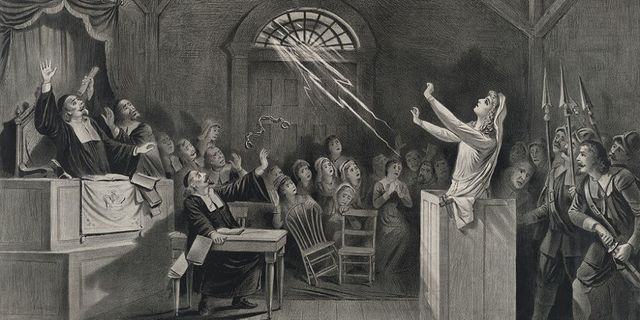
Elizabeth becomes directly involved in the witch trials when Abigail accuses her of witchcraft in an attempt to eliminate her as a rival for John's affection. Elizabeth's arrest and trial are key turning points in the play. Despite the absurdity of the charges against her, Elizabeth remains composed and dignified, refusing to confess to a crime she did not commit. Her refusal to lie, even to save her life, underscores her commitment to truth and integrity.
"Oh the noose, the noose is up." – Elizabeth Proctor
Transformation and Redemption:
Elizabeth's character undergoes significant growth throughout the play. Initially, she is portrayed as a somewhat cold and unforgiving figure, but as the events unfold, she becomes more introspective and acknowledges her shortcomings. Her admission that she has been a "cold wife" and her eventual forgiveness of John are crucial to her transformation. By the end of the play, Elizabeth emerges as a figure of grace and strength, supporting John's final act of defiance against the corrupt court.
Legacy:
Elizabeth Proctor's legacy in The Crucible is that of a woman who embodies the virtues of honesty, integrity, and forgiveness. Her moral fortitude, even in the face of overwhelming adversity, makes her one of the play's most admirable characters. Elizabeth's journey from hurt and distrust to understanding and forgiveness highlights the play's themes of redemption and the power of personal integrity. Her final support of John's decision to die with his honour intact solidifies her role as a figure of quiet but unyielding strength in a world overcome by fear and deceit.