Overview & Summary (Leaving Cert English): Revision Notes
📚Revision Notes
Overview & Summary
Introduction to the novel
F. Scott Fitzgerald's masterpiece was published in 1925 and stands as one of America's most significant literary works of the twentieth century. The narrative unfolds during the summer of 1922 in New York, structured across nine chapters and told through the perspective of Nick Carraway, who serves as an unreliable narrator recounting his memories of the enigmatic Jay Gatsby.
The story centres on Gatsby's obsessive pursuit of Daisy Buchanan, now married to the wealthy Tom Buchanan. Gatsby's extravagant lifestyle and lavish parties serve as desperate attempts to win back his lost love, but his hopes crumble when confronted with Tom's cruel nature and the harsh realities of class divisions. Through this personal tragedy, Fitzgerald explores the broader themes of the Roaring Twenties, the American Dream, social class, and the tension between past and future.
Note
The novel captures the essence of what Fitzgerald termed "The Jazz Age," examining the spirit, excitement, and underlying violence of this transformative era. Through powerful symbols like the green light, the watchful eyes of Doctor T. J. Eckleburg, the desolate Valley of Ashes, and the geographical divide between East and West, the story becomes a classic tale of hope meeting disillusionment.
Literary genre and structure
Fitzgerald wrote during the Modernist movement, a period characterised by rapid technological advancement and society's shift towards modernity. However, his poetic language reveals inspiration from the Romantic literary tradition, particularly the influence of English Romantic poet John Keats. In Keats' "Ode to a Nightingale," the speaker feels torn between death's enchanting nature and life's uncertainty - a theme Fitzgerald echoes when Daisy encounters the nightingale in Gatsby's garden, describing it as "romantic."

The novel functions as both a Realist work and a twentieth-century tragedy. As a Realist text, Fitzgerald grounds his story in recognisable New York locations, though he renames geographic areas (Great Neck becomes East Egg, Manhasset Neck becomes West Eggs, and the Flushing landfill becomes the Valley of Ashes). This realistic foundation supports the novel's exploration of themes like sexuality, adultery, and social satire.
Important
Fitzgerald employs irony, exaggeration, and ridicule to mock and expose the hedonistic lifestyle of 1920s America. The story demonstrates how social transformation requires tragedy - only through death do the lower classes find justice in this society, while the wealthy remain insulated beneath their "vast carelessness and shallowness."
The narrative structure deliberately avoids chronological order, instead following the sequence of Nick's recollections. This technique places Gatsby in an almost mythical position while casting Nick as both participant and observer. Nick's unreliable narration means readers must interpret Gatsby through his subjective, sometimes dishonest perspective, creating layers of meaning about truth, memory, and storytelling itself.
Historical context
The Jazz Age and Roaring Twenties
The post-World War I period brought unprecedented economic prosperity to America and the Western world. This era, known as the Roaring Twenties or Golden Years, saw the birth of what Fitzgerald called "the Jazz Age." Industrial growth created employment opportunities, leading to widespread economic expansion and a culture of consumption and materialism.
Note
The 1920s became synonymous with lavish parties, glamorous fashion, and abundant liquor despite Prohibition. While this decade projected optimism and extravagance, Fitzgerald illuminates the shallow hedonism underlying this apparent prosperity.
Social and economic factors
The 1919 Prohibition Act paradoxically created opportunities for wealth accumulation through illegal activities. Bootleggers sold alcohol in secret establishments called "speakeasies," generating enormous profits. Gambling and organised crime flourished, contributing to widespread violence and corruption.
The 1924 Immigration Act restricted immigration from Southern and Eastern Europe while prohibiting Asian immigration entirely, fostering prejudice against ethnic minorities. These social tensions appear throughout the novel in the treatment of characters like Wolfsheim and various ethnic references.
Economic disparity became more pronounced as America's West Coast remained associated with demanding physical labour, while the East Coast gained a reputation for luxury living and financial corruption. The post-war banking boom attracted people eastward seeking fortune and opportunity.
Major themes
The American Dream
Since America's founding, the nation has symbolised opportunity and the belief that hard work can lead to social advancement and success. However, Fitzgerald reveals the Dream's complexity and corruption. While Gatsby achieves financial success, his American Dream of winning Daisy ultimately costs him his life.
Example
Character Example: Three Social Classes
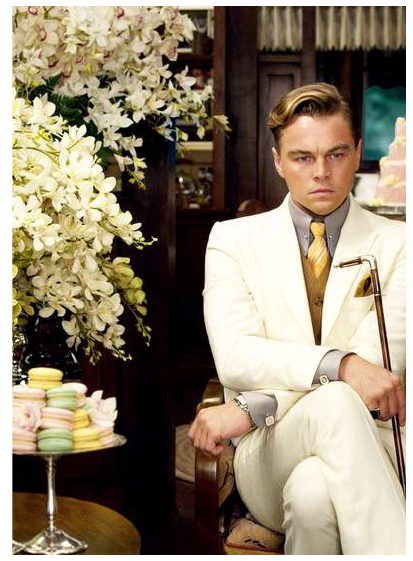
Gatsby embodies both the corrupted Dream (through his callous attitude towards lower classes) and the pure Dream of genuine love and earnest hope. The novel presents three distinct social classes:
- "Old Money" (Tom, Daisy, Jordan, and Nick)
- "New Money" (Gatsby)
- "No Money" (George and Myrtle Wilson)
Notably, the third class remains largely invisible and ignored, highlighting social inequality.
Time and the past
Time emerges as a central theme, with Gatsby attempting to "repeat the past" and reclaim his relationship with Daisy. However, he struggles against Tom's "cruel body" and the irreversible passage of time. Gatsby's "romantic readiness" proves admirable in his pure pursuit of love, yet he dismisses the present and destroys his future possibilities.
Important
Nick recognises Gatsby's entrapment in the past, symbolised by the clock imagery throughout the novel. Religion and morality have been replaced by consumerism and pleasure-seeking, creating a society where traditional values crumble under materialistic pressures.
Gender and class dynamics
The 1920s witnessed changing gender roles, with the emergence of "flappers" who challenged traditional feminine expectations. However, the novel reveals persistent misogyny and patriarchal structures in American society.
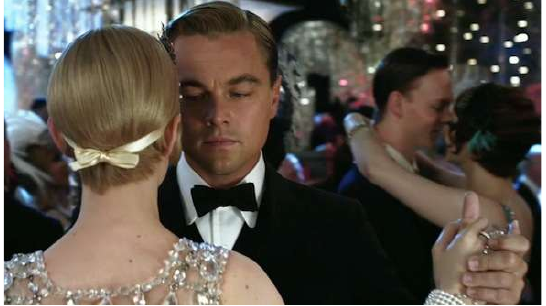
Jordan Baker represents subversive femininity through her independence and agency, contrasting sharply with Myrtle Wilson's conformity to traditional gender roles. Tom's use of sexuality for power and control demonstrates the connection between gender dynamics and social dominance.
Love and relationships
The novel contains only one example of genuine love: Gatsby's devotion to Daisy. However, this idealised, unconditional love faces destruction from the material concerns dominating other relationships. Every connection in the story ends in conflict, leaving Nick emotionally scarred.
Note
Fitzgerald portrays relationships as inherently shallow, with traditional family structures notably absent. Instead of nuclear families, the novel presents hedonistic pursuits that corrupt authentic love and connection.
Key symbols
The green light
This symbol represents hope more powerfully than any other element in the novel. Gatsby's dreams focus intensely on this light, which takes on a green colouring that symbolises both money and his perception of the world around him.
Example
Symbol Analysis: The Green Light
Perhaps Gatsby's love for Daisy lacks purity because he associates her with the American Dream and material success. The green colouring represents:
- Hope - Gatsby's unwavering belief in his dreams
- Money - The material wealth he believes will win Daisy
- Envy - His jealousy of Tom's established position
Nevertheless, his romanticised vision of Daisy drives the entire narrative.
East and West
Nick describes the novel as a "story of the West", emphasising how the conflict between Eastern and Western values ultimately destroys Gatsby. The geographic division symbolises the class struggle that permeates the story, with the East representing established wealth and the West symbolising new opportunities and values.
Valley of Ashes
This desolate area between New York City and West Egg represents the corruption of the Jazz Age. It houses the "no money" class that the Wilsons belong to, symbolising moral decay and social neglect.
The eyes of Doctor T. J. Eckleburg
For Nick and George, these billboard eyes watch over the corruption of the Roaring Twenties. George interprets them as God's eyes, seeing through society's moral degradation and hedonistic behaviour.
Clocks and time
The "defunct mantelpiece clock" symbolises time's passage and Gatsby's futile attempt to control it. When Gatsby leans on the clock, it nearly falls before he catches it, representing his belief that he can "repeat the past" and reverse time's destructive effects.
Automobiles
Cars symbolise modernity, social status, and ultimately destruction. They represent progress in civilisation while highlighting the exclusive nature of wealth - only Gatsby, Tom, and Jordan own cars, suggesting that material possessions create social hierarchies.
Example
Symbol Analysis: Cars as Social Markers
For different characters, automobiles serve distinct symbolic purposes:
- Gatsby: His car completes his carefully constructed self-made identity
- Tom: Uses his vehicle to assert social superiority
- Jordan: Her car highlights the subversion of traditional gender roles
However, cars also symbolise destruction, as Myrtle's death by automobile ultimately leads to everyone's dreams being shattered.
Character analysis
Jay Gatsby
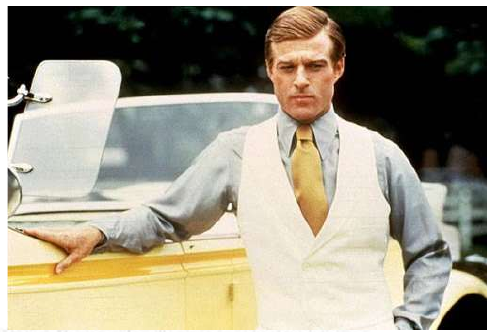
Nick Carraway's wealthy neighbour and Daisy Buchanan's former lover represents the archetypal self-made man of the Jazz Age. His extravagant lifestyle at his West Egg mansion stems from his "new money" status, acquired through bootlegging during Prohibition. Originally named James Gatz, he embodies the tragic hero/lover of his era.
Nick Carraway
The story's unreliable narrator retells Gatsby's tale despite describing himself as "one of the few honest people that [he has] ever known." As Daisy's cousin, he criticises both her lifestyle and her husband's behaviour while simultaneously exposing their moral shortcomings. He represents the romantic critic of 1920s American society.
Daisy Buchanan
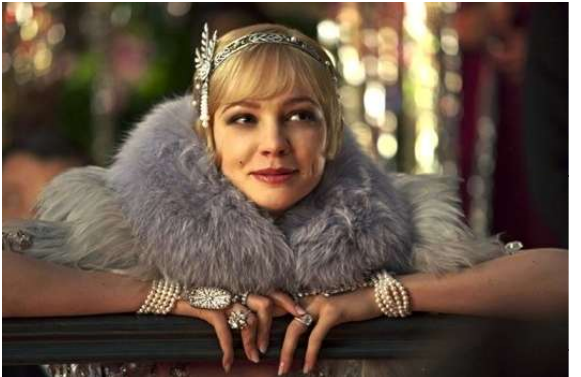
The object of Gatsby's obsession, Nick's cousin, and Tom's wife embodies the ephemeral woman who values material possessions and superficial qualities. Her disloyalty to Jay Gatsby stems from her commitment to social status rather than genuine love. She hopes her daughter will become a "beautiful little fool," revealing how societal greed has corrupted her values and made her callous towards deeper human connections.
Tom Buchanan
Daisy's husband and the story's primary antagonist represents the "old money" establishment that barely conceals misogynistic, racist, and violently self-serving tendencies.
Myrtle Wilson
George Wilson's wife and Tom Buchanan's mistress desperately seeks to escape her social class and faces the brutal consequences of her husband's indifference to Tom Buchanan and the cold indifference of Jay Gatsby's vehicle. She represents the lower class that struggles unsuccessfully to climb the social ladder.
George Wilson
Myrtle's husband owns a garage in the Valley of Ashes. His love for his wife contrasts with her violent betrayal when she becomes involved with Tom. After discovering her affair, his mental state deteriorates, ultimately driving him to seek revenge that results in tragedy.
Plot summary
The story unfolds through Nick's retrospective narration, beginning with his move to West Egg, Long Island, in the summer of 1922. As a recent Yale graduate entering the bond business, he seeks excitement and opportunity in New York.
Nick rents a small house next to Gatsby's mansion, which stands surrounded by forty acres of elaborate grounds designed to evoke "old money" aesthetics despite being an "eye-sore" compared to traditional wealth displays. His location provides him with a front-row seat to Gatsby's extravagant Saturday night parties, attended by guests who know nothing about their mysterious host.
Note
The narrative reveals Gatsby's background through a series of revelations: born James Gatz on a North Dakota farm around 1900, he changed his name at seventeen and left college after two weeks due to financial constraints. His transformation began during his time on Lake Superior, where he met Dan Cody, a wealthy mentor who introduced him to luxury and sophistication.
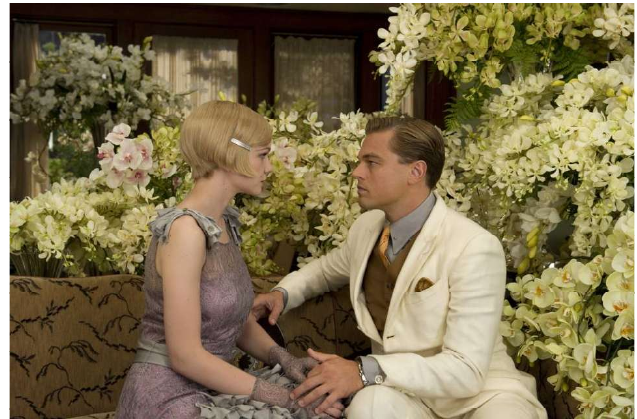
Gatsby's reunion with Daisy forms the emotional centre of the story. Five years earlier, when Daisy was not yet married and Gatsby served as a Lieutenant in Louisville, they experienced a passionate romance. Her family prevented their marriage, leading to her union with Tom Buchanan, a wealthy Chicago native who provided her with expensive jewellery and luxury.
Important
The climactic confrontation occurs at the Plaza Hotel, where Tom challenges Gatsby's claim to Daisy's affections. When Gatsby insists confidently that Daisy never loved Tom, she attempts to support him but ultimately admits to having loved Tom "too" at some point. This revelation destroys Gatsby's idealised vision of their relationship.
The tragic conclusion unfolds rapidly: during the drive back from the city, Daisy strikes and kills Myrtle Wilson while driving Gatsby's car. George Wilson, consumed by grief and rage, seeks revenge against the driver he believes murdered his wife. Finding Gatsby floating in his unused swimming pool, Wilson shoots him before taking his own life.
Summary
Key Points to Remember:
-
The Great Gatsby serves as both a love story and a critique of 1920s American society, exposing how class divisions and materialism corrupt genuine human connections and dreams
-
Nick Carraway's unreliable narration creates multiple layers of meaning, requiring readers to interpret events through his subjective and sometimes dishonest perspective of Gatsby's story
-
The novel's key symbols work together to reinforce major themes - the green light represents hope and dreams, the Valley of Ashes symbolises moral decay, and the eyes of T.J. Eckleburg suggest divine judgement over a corrupt society
-
Class distinctions drive the central conflicts, with "Old Money" (East Egg) representing established power, "New Money" (West Egg) showing social climbing, and "No Money" (Valley of Ashes) revealing society's forgotten victims
-
Gatsby's tragedy stems from his inability to accept that the past cannot be repeated, making his pursuit of Daisy both romantic and ultimately destructive as he refuses to acknowledge how time and circumstances have changed