Navigating the Comparative Modes (Leaving Cert English): Revision Notes
📚Revision Notes
Navigating the Comparative Modes
Overview
The comparative study requires students to explore connections and contrasts between different texts. This involves understanding various comparative modes—specific perspectives through which texts are compared. Mastering these modes is essential for achieving a H1 in the comparative! 🚀
Four comparative modes:
1. Cultural Context
Cultural context examines the societal norms, values, and structures that influence the characters and events within the texts. This includes aspects such as class, gender roles, religion, politics, and economic conditions.
Key Points:
- Societal norms and values: How do these shape the characters' actions and decisions?
- Social structures: What are the dominant social structures, and how do they impact the storyline?
- Character response: How do the characters accept or challenge the cultural norms of their time?
2. General Vision and Viewpoint
This mode explores the overall perspective or attitude of the texts towards life, often encapsulated in the tone and mood. It reflects the author's vision and how they want the reader to perceive the world presented in the text.
Key Points:
- Tone and mood: Is the overall outlook of the text optimistic or pessimistic?
- Reader's emotion: What emotions are evoked in the reader?
- Character journeys: How do the characters' journeys shape the text's vision and viewpoint?
3. Theme or Issue
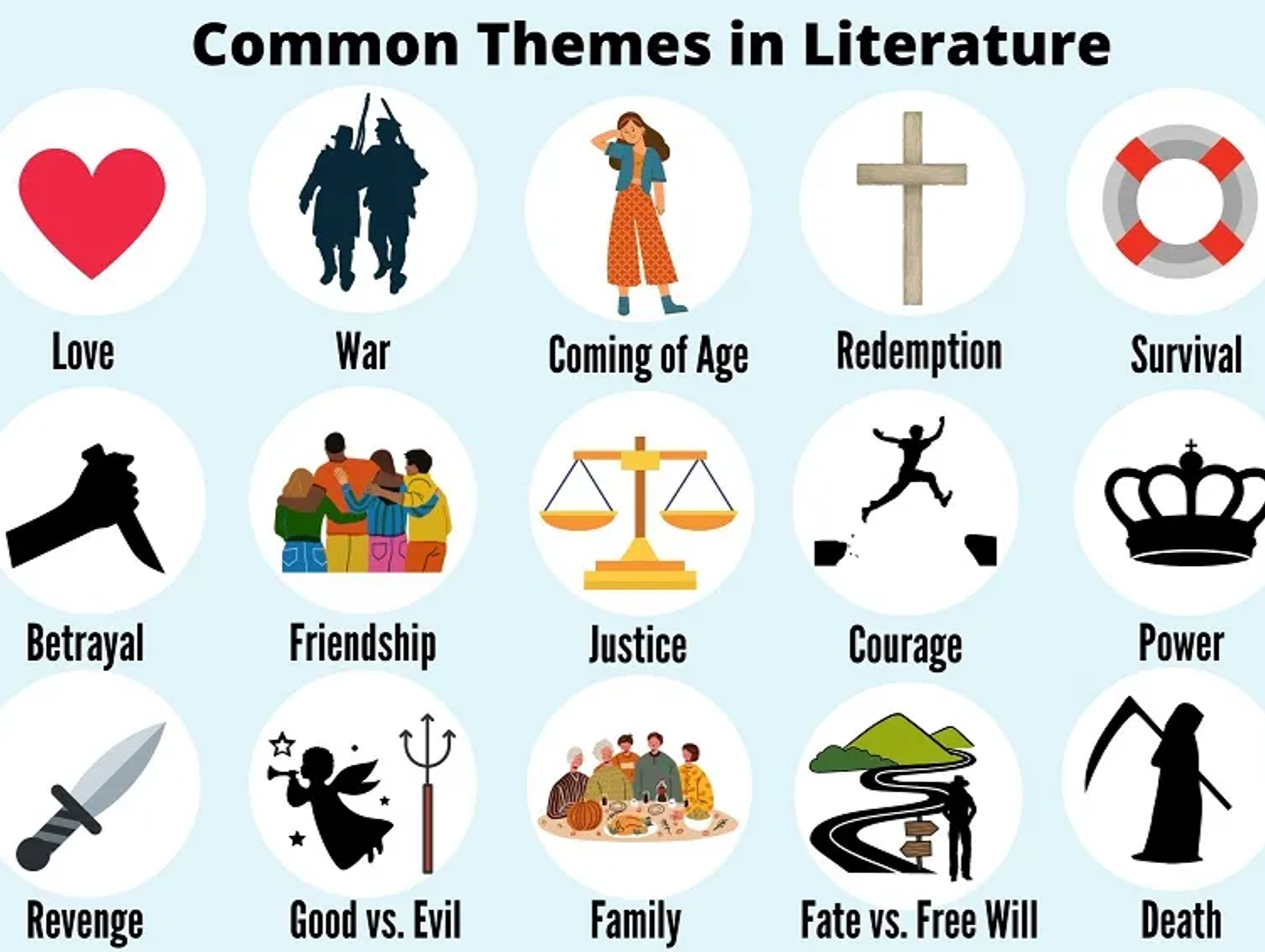
The theme or issue mode focuses on the central topics or ideas that the texts explore. This could range from themes of power, love, conflict, and identity, to issues like freedom, justice, or oppression.
Key Points:
- Introduction and development: How is the theme introduced and developed throughout the text?
- Impact on characters: How does the theme affect the main characters?
- Key moments: Are there any key moments that significantly highlight this theme?
4. Literary Genre
Literary Genre refers to the style in which a text is written or presented, whether in a novel, play, or film. This mode analyses how the author or director structures and delivers the story to engage the audience.
Key Points:
- Narration and Point of View:
- How is the story narrated (first-person, third-person)?
- What impact does the narrator's perspective have on the audience?
- Title Significance:
- Does the title reveal anything important about the story?
- Symbols and Symbolism:
- Are symbols used, and what do they represent?
- In plays, do props or lighting serve as symbols?
Linking Phrases
| Addition | Comparison | Contrast | Time |
|---|---|---|---|
| Further | Similarly | However | Meanwhile |
| Furthermore | Comparable | Nevertheless | Presently |
| Moreover | In the same way | On the other hand | At last |
| In Addition | Likewise | On the contrary | Finally |
| Additionally | As with | Even so | Immediately |
| Then | Equally | Notwithstanding | Thereafter |
| Also | Just as ... so too | Alternatively | At that time |
| Too | a similar X | At the same time | Subsequently |
| Besides | Another X like | Whereas | Eventually |
| Again | Otherwise | Currently | |
| Equally importantly | Instead | In the meantime | |
| First, Second | Nonetheless | In the past | |
| Finally, Lastly | Conversely |
| Result | Summary | Example | Place |
|---|---|---|---|
| Hence | In short | For example | There |
| Therefore | On the Whole | For Instance | Here |
| Accordingly | In other words | That is | Beyond |
| Consequently | To be sure | Such as | Nearby |
| Thus | Clearly | As revealed by | Next to |
| Thereupon | Anyway | Illustrated by | At that point |
| As a result | On the whole | Specifically | Opposite to |
| In consequence | In sum | In particular | Adjacent to |
| So | After all | For one thing | On the other side |
| Then | In general | This can be seen in | In the front |
| It seems | An instance of this | In the back | |
| In brief |
| Comparing Similarities | Contrasting Phrases |
|---|---|
| Similarly | Unlike |
| Likewise | The texts are different in the area of… |
| … is common in… | On the other hand |
| Equally noticeable is… | This is contrasted in… |
| In the same way | On the contrary… |
| Furthermore | However, the opposite is seen in… |
| Both authors take the same approach in… | In contrast/contrastingly… |
| A common feature of all the texts are… | Nothing like this occurs in… |
| This is mirrored in… | Whereas |
| This can also be observed in… | Quite the reverse is seen in… |
| … is equally important in both texts. | This is the only text where we notice… |