Patterns of World Trade (Leaving Cert Geography): Revision Notes
📚Revision Notes
Patterns of World Trade
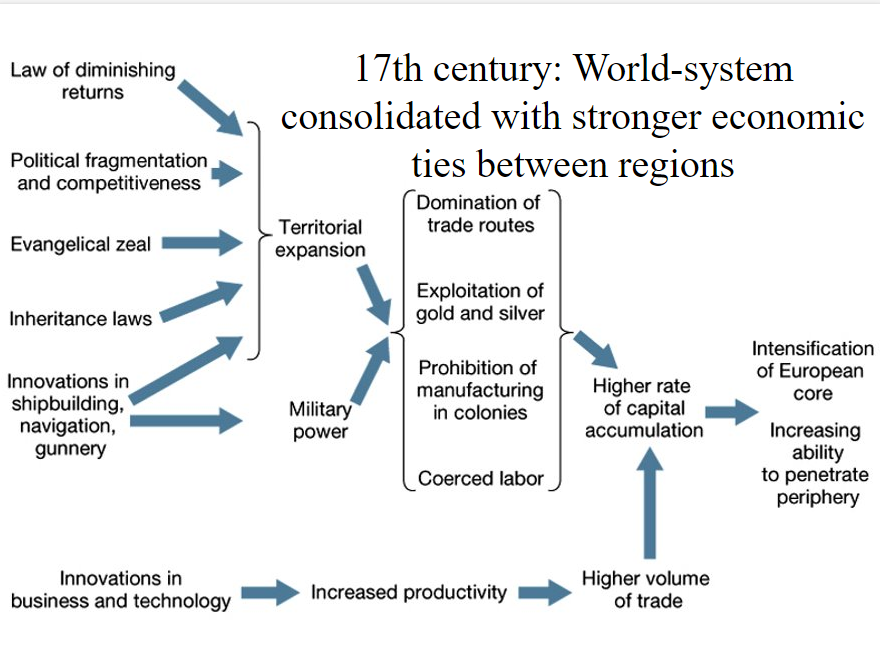
Global Trade and the World-System
Wallerstein's World-System Theory:
- The global economy operates as an interdependent system of countries competing economically and politically.
- Countries are connected through commodity chains:
- Networks of labour and production, from raw materials to finished products.
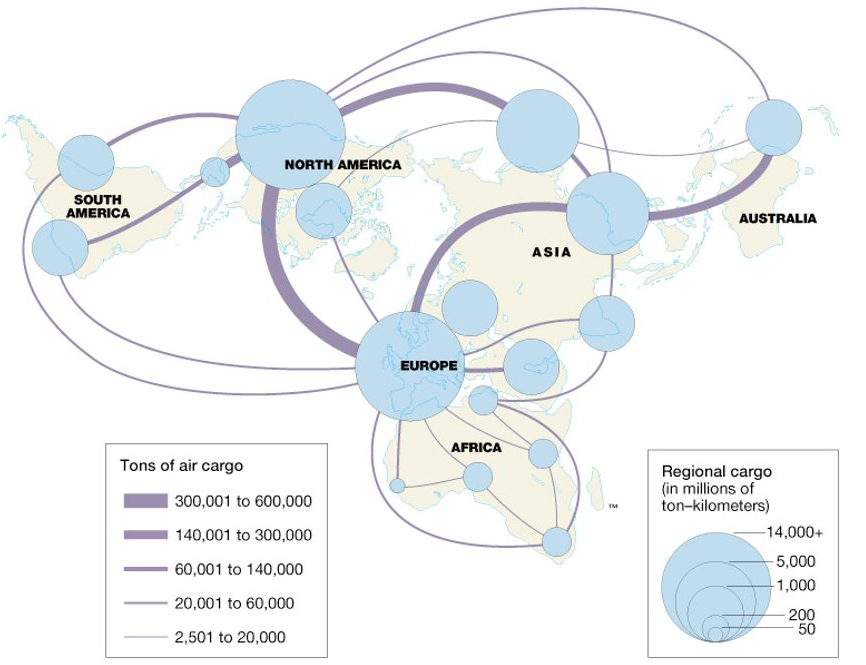
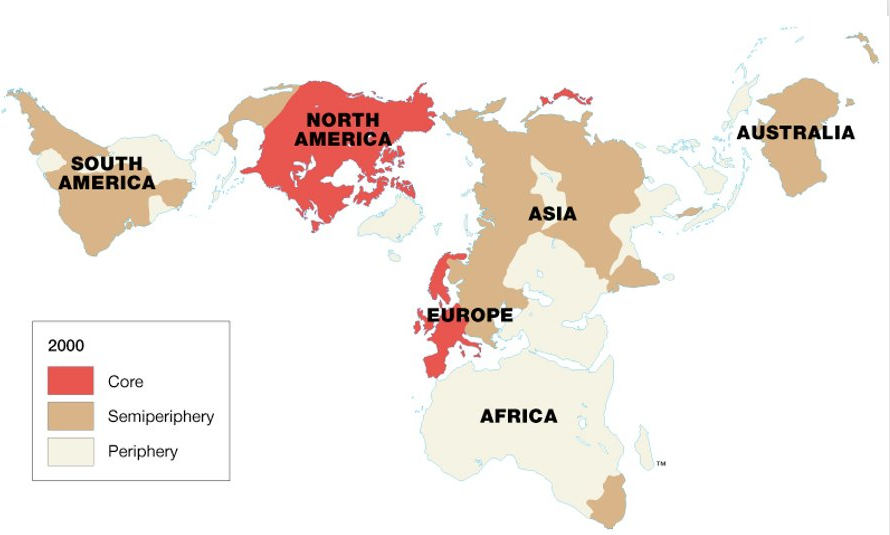
Structure of the World Economy: Core, Semi-Periphery, and Periphery
Core Regions:
- Dominate world trade and control advanced technologies.
- High levels of productivity, diversified economies, and the highest standards of living.
- Examples: USA, Germany, Japan.
Peripheral Regions:
- The "Slow World":
- Low levels of technology and productivity.
- Economies are underdeveloped or narrowly specialised.
- Characterised by low standards of living.
- Examples: Sub-Saharan Africa, parts of Southeast Asia.
Semi-Peripheral Regions:
- Act as intermediaries:
- Exploit peripheral regions while being exploited by core regions.
- Once peripheral but have developed to semi-periphery.
- Examples: India, Brazil, South Africa.
- Fluidity: Regions can change their status over time.
International Division of Labour
Globalisation has created a new international division of labour:
- Post-Industrial United States:
- Focuses on services, innovation, and consumption.
- Japan and the EU:
- Remain manufacturing powerhouses, producing high-value goods.
- Peripheral and Semi-Peripheral Regions:
- Low-wage areas dominate manufacturing.
- Examples: Nike's production in Vietnam and Bangladesh.
Note
Who Benefits?
- Core Regions: Profit from cheap goods and control over global trade.
- Peripheral Regions: Limited benefits, often face exploitation and dependency.
- Semi-Peripheral Regions: Benefit from attracting investment and advancing in the global trade network.
Patterns of Global Trade
Three Key Economic Areas:
- USA:
- A global consumer powerhouse, importing goods from peripheral and semi-peripheral regions.
- Europe:
- Integrated markets with luxury goods, machinery, and pharmaceuticals.
- Pacific Rim Countries:
- Manufacturing hubs (e.g., China, South Korea) and emerging economies (e.g., Vietnam).
Global Commodity Chains:
- Example: Coffee.
- Grown in peripheral regions (e.g., Ethiopia).
- Processed in semi-peripheral regions (e.g., Brazil).
- Sold in core regions (e.g., USA and Europe).
Advanced Stages of Globalisation
Globalisation is fostered by:
- International Agencies: World Bank, IMF.
- Global Communication Networks: The Internet and 24/7 business.
- International Laws: World Trade Agreements regulate trade across borders.
- New Technology Systems:
- Innovations like robotics, biotechnology, and digital communications facilitate trade.
- International Consumer Markets:
- Homogenised products create global demand for world brands (e.g., McDonald's, Apple).
Excluded Regions in Global Trade
- Conflict Zones: Afghanistan, Syria.
- Landlocked Countries: Chad, Nepal.
- Underdeveloped Economies:
- Lack of infrastructure, political instability, and resource dependency exclude them from trade benefits.
Impacts of Global Trade
Advantages:
- Economic Growth: Boosts GDP through exports and FDI.
- Technology Transfer: Peripheral regions gain access to innovations.
- Job Creation: Manufacturing and service jobs in semi-peripheral and peripheral regions.
Disadvantages:
- Exploitation: Low wages and poor working conditions in peripheral regions.
- Environmental Damage: Overuse of resources and pollution.
- Dependency: Peripheral regions remain reliant on core regions for capital and technology.
Note
Patterns of trade illustrate how the global economy operates as a system of interdependence. While globalisation has connected regions and fostered economic growth, disparities between core, semi-periphery, and periphery persist, highlighting the challenges of achieving equitable development.