Case Study: The Jarrow March (Leaving Cert History): Revision Notes
📚Revision Notes
Assessing the March & Essay Tips
Overall Assessment of the Jarrow March
- The march effectively brought national attention to Jarrow's economic struggles and unemployment issues. Media coverage and public sympathy helped highlight the severity of the town's situation.
- The marchers received widespread support from people along their route, demonstrating solidarity and increasing public awareness about unemployment and economic hardship.
- Although immediate policy changes were not achieved, the march symbolised working-class struggle and resilience, inspiring future social and political movements.
- The march did not gain significant political support, particularly from the Labour Party, which criticised the effort. This lack of political backing limited its immediate impact on government policies.
- The Unemployment Assistance Board's decision to cut the marchers' benefits added to their hardships, showing a direct negative consequence of their participation in the march.
- The march had little immediate effect on Jarrow's government policy or economic conditions, as demonstrated by the lack of significant legislative action following the petition's presentation.
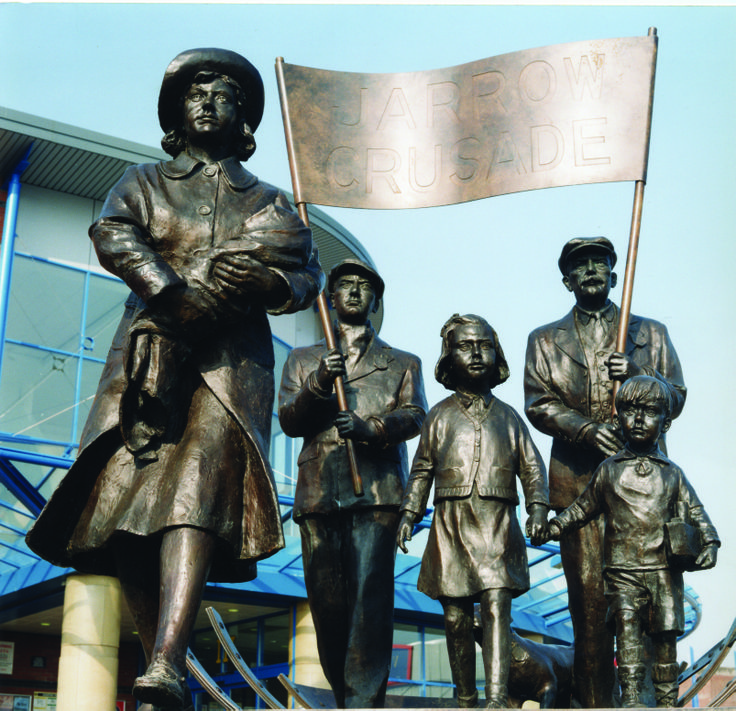
Essay Prep - Aims of the Jarrow March and Their Achievement
- Raising Awareness: Aim was to bring national attention to Jarrow's economic plight. Achievement: Successfully raised awareness through media coverage and public sympathy.
- Securing Government Action: Aim was to obtain immediate government intervention to address unemployment and economic issues. Achievement: Largely unachieved, as no significant immediate policy changes were made.
- Gaining Political Support: Aim was to secure support from political parties, particularly the Labour Party. Achievement: Partially achieved, as Ellen Wilkinson advocated for the cause, but the Labour Party did not fully endorse the march.
- Presenting a Petition: Aim was to present a petition to Parliament to highlight the town's struggles. Achievement: Achieved, but the petition did not lead to immediate legislative action.
- Mobilising Public Support: Aim was to garner public support and sympathy for Jarrow's situation. Achievement: Successfully achieved, as evidenced by donations and public backing along the route.
- Creating a Symbol of Protest: Aim was to create a lasting symbol of working-class struggle. Achievement: Achieved, as the Jarrow March became an enduring symbol of resilience and protest.
Essay Prep - Reflexion of Socio-Economic Issues in Britain
- Industrial Decline: The Jarrow March highlighted the severe impact of industrial decline, particularly in shipbuilding and steelworks, which were major employers in towns like Jarrow.
- Unemployment Crisis: The march underscored the widespread unemployment problem, with many skilled workers left without jobs and struggling to find new employment.
- Government Inaction: The march reflected frustration with the government's perceived inaction and inadequate response to the economic depression affecting industrial towns.
- Class Struggles: The march illustrated the growing class divide and the struggle of the working class to have their voices heard in a predominantly middle and upper-class political system.
- Welfare System Issues: The reduction of benefits for the marchers highlighted flaws in the welfare system, where assistance was contingent on availability for work, disregarding participation in protests or social movements.
- Public and Political Response: The mixed reactions from the public and political entities to the Jarrow March reflected broader societal tensions and differing perspectives on how to address economic and social issues.