Assessing Lenin's Contribution (Leaving Cert History): Revision Notes
📚Revision Notes
Assessing Lenin's Contribution
Life and Contribution of Lenin
Early Life and Influences
- Vladimir Ilyich Ulyanov, known as Lenin, was born on April 22, 1870, in Simbirsk, Russia, into a well-educated, middle-class family.
- His older brother, Alexander Ulyanov, was executed in 1887 for plotting to assassinate Tsar Alexander III, which profoundly influenced Lenin's revolutionary zeal.
- Lenin was deeply inspired by the works of Karl Marx and Friedrich Engels. He became involved in radical political activities during his time at Kazan University, from which he was expelled for participating in student protests.
Formation of the Bolshevik Party
- In 1895, Lenin co-founded the Union of Struggle for the Emancipation of the Working Class in St. Petersburg, advocating for Marxist ideas.
- After his arrest in 1897, he spent several years in exile in Siberia, during which time he continued to develop his revolutionary theories and write influential works.
- The Second Congress of the Russian Social Democratic Labour Party (RSDLP) in 1903 saw a split, leading to the formation of the Bolsheviks, led by Lenin, who favoured a small, disciplined party of professional revolutionaries.
Role in the 1905 Revolution and Theoretical Contributions
- The 1905 Revolution was a precursor to the 1917 revolutions, during which Lenin refined his ideas on the role of the vanguard party and the necessity of a proletarian revolution.
- Lenin's influential works, such as "What Is to Be Done?" (1902), emphasised the need for a strong, centralised party, and "Imperialism, the Highest Stage of Capitalism" (1916), analysed global capitalism and predicted its collapse.
Leadership in the 1917 Revolutions
- The February Revolution of 1917 led to the abdication of Tsar Nicholas II and the establishment of the Provisional Government. Lenin, then in exile, saw an opportunity and returned to Petrograd in April 1917 with the help of the Germans, who hoped his return would destabilise Russia.
- Lenin's April Theses called for "Peace, Land, and Bread" and "All power to the Soviets," demanding immediate withdrawal from World War I, redistribution of land to the peasants, and transfer of power from the Provisional Government to the Soviets.
- The October Revolution saw Lenin and the Bolsheviks successfully overthrow the Provisional Government, establishing Bolshevik control.
Establishing Bolshevik Rule and Policies
- As head of the new Soviet state, Lenin implemented drastic changes to dismantle the old social and economic structures. He introduced the New Economic Policy (NEP) in 1921 to revive the war-torn economy by allowing limited capitalist elements.
- The establishment of the Cheka in December 1917, a secret police force headed by Felix Dzerzhinsky, helped to suppress counter-revolutionary activities and consolidate Bolshevik power.
- Lenin also led Russia out of World War I by signing the Treaty of Brest-Litovsk in March 1918, which ceded large territories to Germany but allowed the Bolsheviks to focus on internal challenges.
Later Years and Legacy
- Lenin's health began to decline after a series of strokes starting in 1922. Despite his illness, he continued to influence Soviet policies until his death on January 21, 1924.
- Lenin left a mixed legacy: he successfully led the Bolshevik Revolution and established the first socialist state, but his tenure was also marked by harsh measures, political repression, and the establishment of a one-party state.
- His ideas and leadership laid the foundations for the Soviet Union, influencing communist movements worldwide.
Lenin's Contribution to Communism
-
Vladimir Lenin was a pivotal figure in the development and implementation of communist ideology, profoundly shaping the course of 20th-century history. His contributions to communism can be broadly categorised into his theoretical advancements, revolutionary leadership, and practical governance.
-
Theoretically, Lenin expanded upon Marxist doctrine to address the specific conditions of early 20th-century Russia. His seminal work, What Is To Be Done? (1902) argued for the necessity of a highly disciplined party of professional revolutionaries to lead the proletariat, contrasting with Marx's broader, less centralised vision. Lenin's Imperialism, the Highest Stage of Capitalism (1916) further developed Marxist theory by analysing the global dynamics of capitalism, arguing that imperialism was a natural and inevitable outcome of capitalist economies and thus highlighting the need for global revolution.
-
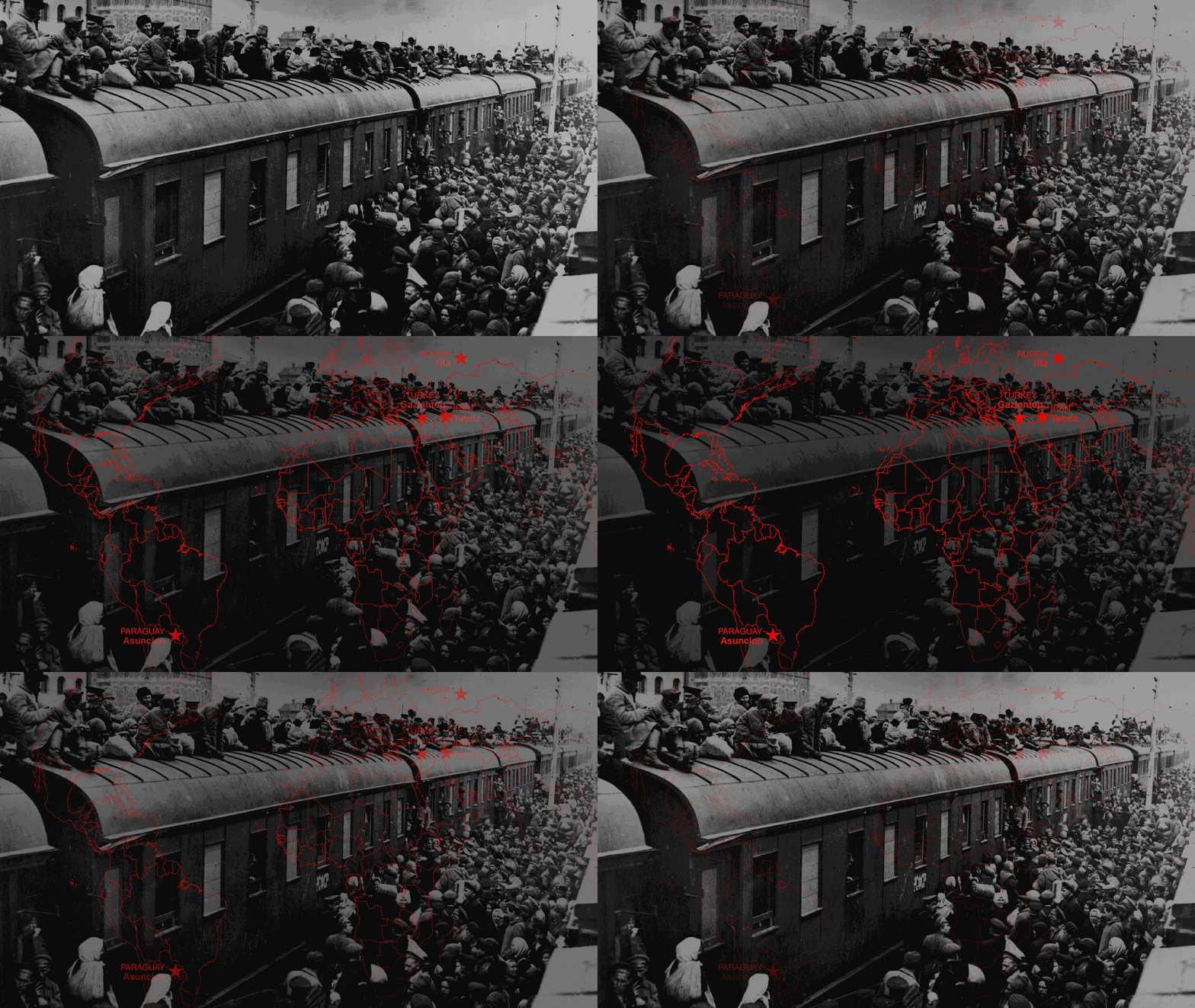
Lenin's most significant contribution was leading the Bolshevik Revolution in October 1917. His leadership and strategic acumen were crucial in seizing power from the Provisional Government and establishing a socialist state. The revolution implemented Marxist principles and provided a blueprint for future communist movements worldwide. Lenin's April Theses provided clear, actionable goals that resonated with the masses, advocating for "Peace, Land, and Bread" and "All power to the Soviets."
-
As the head of the Soviet state, Lenin implemented policies that tested and adapted Marxist theory to real-world conditions. He introduced the New Economic Policy (NEP) in 1921, which allowed for a temporary reintroduction of market mechanisms to stabilise the economy while maintaining state control over key industries. This pragmatic approach demonstrated Lenin's flexibility in policy implementation to achieve long-term socialist goals.
-
Lenin's establishment of the Cheka, the secret police, underscored his commitment to consolidating Bolshevik power and suppressing opposition, albeit through often ruthless means. His contributions laid the foundation for the Soviet Union and influenced communist movements globally, marking him as a central figure in the history of communism.
Lenin's Death and the Controversy It Caused
- Vladimir Lenin died on January 21, 1924, after a series of strokes that had left him partially paralysed and increasingly incapacitated over the previous years. His death marked the end of an era and triggered significant controversy and power struggles within the Bolshevik Party and the Soviet Union.
- Lenin's health had been deteriorating since a series of strokes beginning in 1922. By the end of 1923, he was largely incapacitated and unable to participate actively in political affairs. His death at the age of 53 left a power vacuum in the Soviet leadership.
- Lenin's death led to a fierce battle for succession among the top Bolshevik leaders. The main contenders were Leon Trotsky and Joseph Stalin. Trotsky was a prominent revolutionary and military leader, while Stalin was the General Secretary of the Communist Party, a position he used to build a base of support within the party apparatus.
- Stalin's manipulative tactics exacerbated the controversy surrounding Lenin's death. In his Testament, Lenin expressed concerns about Stalin's growing power and ruthlessness_,_ suggesting that Stalin be removed from his position. However, Stalin suppressed the testament's publication and gradually consolidated his power. This led to a brutal internal struggle that eventually saw Trotsky exiled and assassinated, cementing Stalin's authoritarian rule.
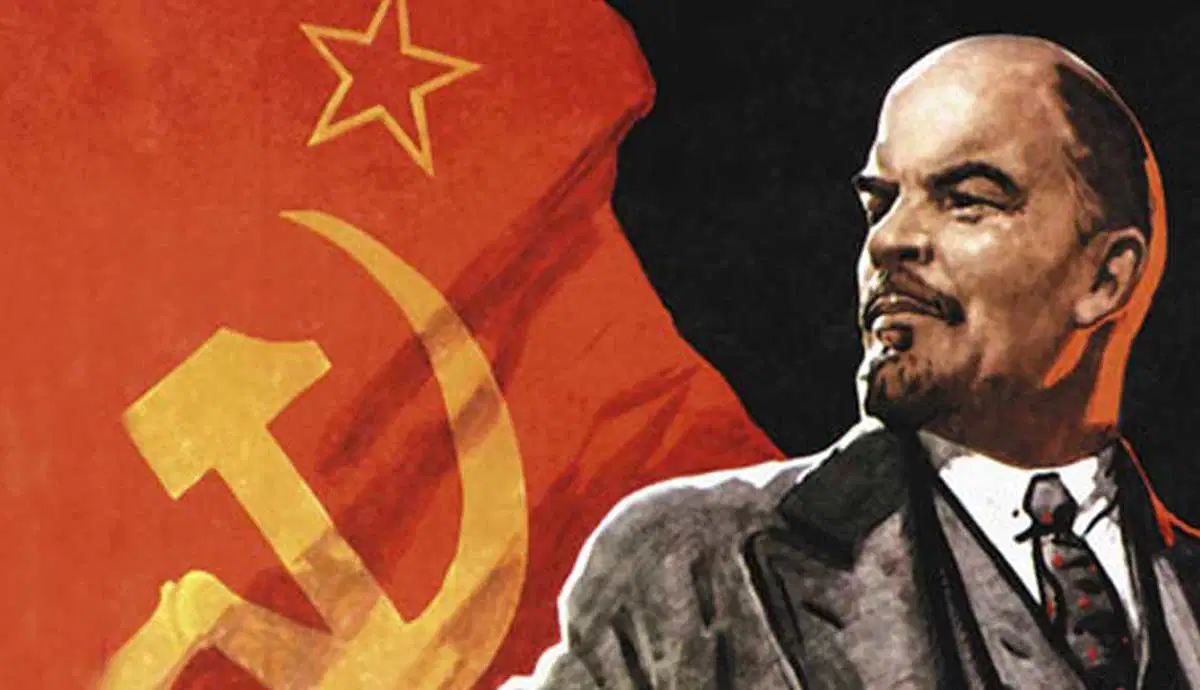
- Lenin's death and the ensuing power struggle had profound implications for the future of the Soviet Union. They led to the establishment of Stalin's totalitarian regime and a significant departure from Lenin's original revolutionary ideals.
- Lenin's death and the ensuing power struggle had profound implications for the future of the Soviet Union. They led to the establishment of Stalin's totalitarian regime and a significant departure from Lenin's original revolutionary ideals.