Trotsky vs Stalin (Leaving Cert History): Revision Notes
📚Revision Notes
Trotsky vs Stalin
The Power Struggle Between Stalin and Trotsky
After Lenin's death in 1924, a fierce power struggle erupted within the Soviet Union between two prominent leaders, Joseph Stalin and Leon Trotsky.
Leon Trotsky was a key figure in the Bolshevik Revolution and the architect of the Red Army, known for his brilliant oratory and leadership skills. Trotsky believed in "permanent revolution," the idea that the success of socialism in Russia depended on spreading communist revolutions worldwide. He was highly respected but also seen as somewhat arrogant and disconnected from the everyday party members.
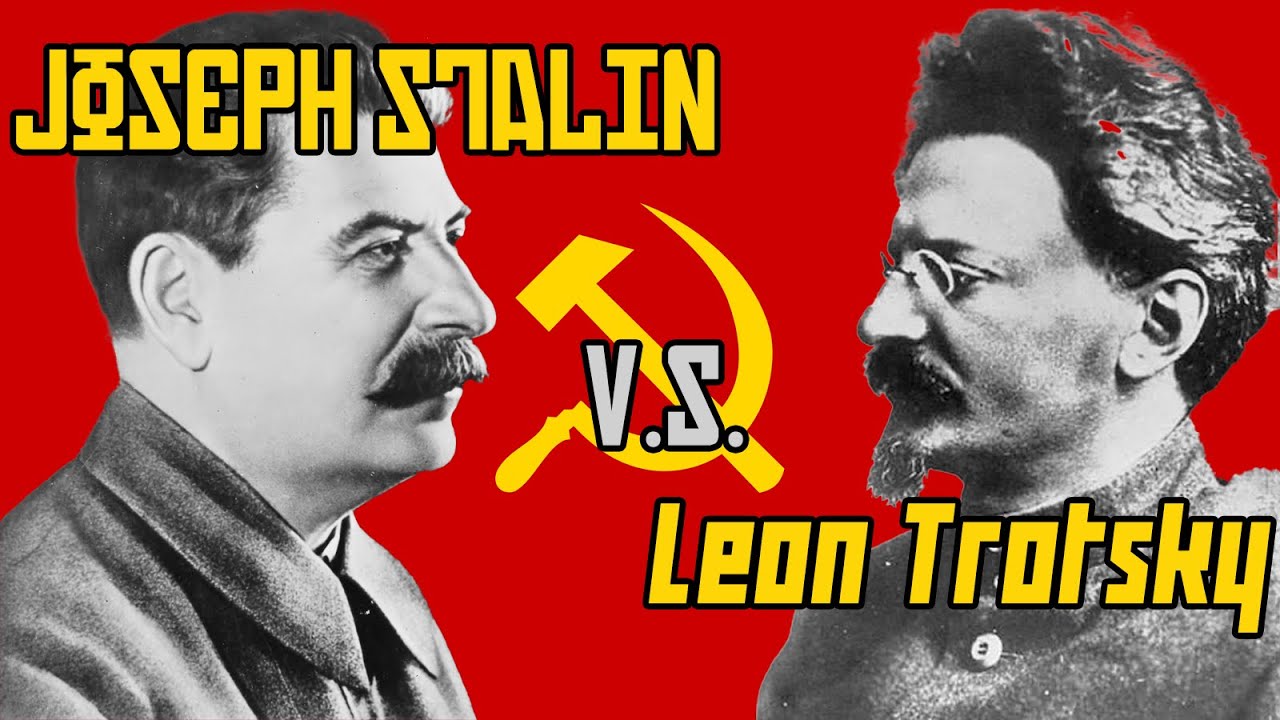
Joseph Stalin, on the other hand, was the General Secretary of the Communist Party, a position that gave him significant control over party appointments and administration. Stalin was less flashy than Trotsky but highly strategic. He believed in "Socialism in One Country," the idea that the Soviet Union should focus on strengthening itself internally before trying to spread socialism globally.
How the Power Struggle Unfolded:
- Alliances and Isolation:
- Stalin formed alliances with other key Bolshevik leaders, such as Lev Kamenev and Grigory Zinoviev, to isolate Trotsky. They worked together to undermine Trotsky by accusing him of disloyalty to Lenin's legacy.
- Political Manoeuvring:
- Using his role as General Secretary, Stalin placed his supporters in important positions within the party, allowing him to control decisions and gather more power. He also used Trotsky's background and personality against him, portraying him as an out-of-touch intellectual and emphasising his Jewish heritage to stir up anti-Semitic sentiments among the party ranks.
- Propaganda and Expulsion:
- Stalin and his allies used propaganda to turn party members against Trotsky, branding him a traitor and a threat to the party's unity. By 1925, Trotsky was removed from his position as Commissar of War. In 1927, he was expelled from the Communist Party altogether.
- Exile and Assassination:
- In 1929, Trotsky was exiled from the Soviet Union. He continued criticising Stalin from abroad, making him a continuing threat. To eliminate this threat, Stalin ordered Trotsky's assassination, which was carried out in 1940 in Mexico by a Soviet agent, Ramón Mercader.
Outcome:
- Stalin emerged as the undisputed leader of the Soviet Union, transforming it into a totalitarian state. He eliminated all potential rivals and established a regime marked by political repression, rapid industrialisation, and severe famines.
- The struggle between Stalin and Trotsky shaped the future of the Soviet Union, setting the stage for Stalin's authoritarian rule.
Socialism in One Country
Socialism in One Country was developed by Joseph Stalin in the mid-1920s. This idea represented a significant departure from the traditional Marxist belief in international revolution, which argued that socialism could only be achieved through coordinated revolutionary movements across multiple countries.
Key Concepts:
- National Focus: Stalin proposed that the Soviet Union could and should build socialism independently without relying on revolutionary movements in other countries. This was a pragmatic response to the failure of communist revolutions in Europe, particularly in Germany and Hungary, during the early 1920s.
- Economic Development: Central to this theory was the notion that the Soviet Union needed to strengthen its own economic and military capabilities to protect itself from external threats and to serve as a model socialist state. This involved rapid industrialisation and the collectivisation of agriculture.
- Political Stability: By focusing on internal development, Stalin believed the Soviet Union could maintain political stability and strengthen the Communist Party's control over the country. This approach aimed to consolidate power domestically before attempting to support or inspire revolutions abroad.
Implementation of Socialism in One Country (More Notes on this in Next Section)
- Industrialisation: Under Stalin's leadership, the Soviet Union launched ambitious five-year plans to transform its economy from agricultural to industrial. This included building factories and infrastructure and increasing production in key sectors like steel, coal, and machinery.
- Collectivisation: To support industrial growth, Stalin also implemented collectivisation policies, which involved consolidating individual peasant farms into large, state-controlled enterprises. This was intended to increase agricultural efficiency and produce surplus grain for export.
Impact of Socialism in One Country
- Short-Term Success - Significant industrial growth made the Soviet Union a major world power.
- Long-Term Consequences - Caused widespread famine, particularly the Holodomor in Ukraine, and severe repression of political dissent.