The 1926 General Strike & Britain vs Germany (Leaving Cert History): Revision Notes
📚Revision Notes
The 1926 General Strike & Britain vs Germany
The General Strike of 1926
Causes
- The General Strike of 1926 in Britain was primarily triggered by the struggles of the coal mining industry. Post-World War I, the British economy faced significant challenges, including the decline of traditional industries. Coal mining, one of the most vital sectors, suffered from outdated equipment, low productivity, and falling coal prices. The reintroduction of the Gold Standard in 1925 overvalued the British pound, making British coal less competitive on the global market.
- Coal mine owners responded to these economic pressures by proposing wage cuts and longer working hours for miners. The Miners' Federation of Great Britain (MFGB) vehemently opposed these measures, arguing that miners' wages were already insufficient and working conditions were deplorable. Tensions escalated when mine owners locked out miners who refused to accept the new terms.
The Strike
- In response to the lockout, the Trades Union Congress (TUC) called a general strike to support the miners, starting on May 3, 1926. This was a historic move involving a broad coalition of workers from various industries, including transport, printing, and heavy industry. Approximately 1.7 million workers participated in the strike, effectively paralysing many sectors of the British economy.
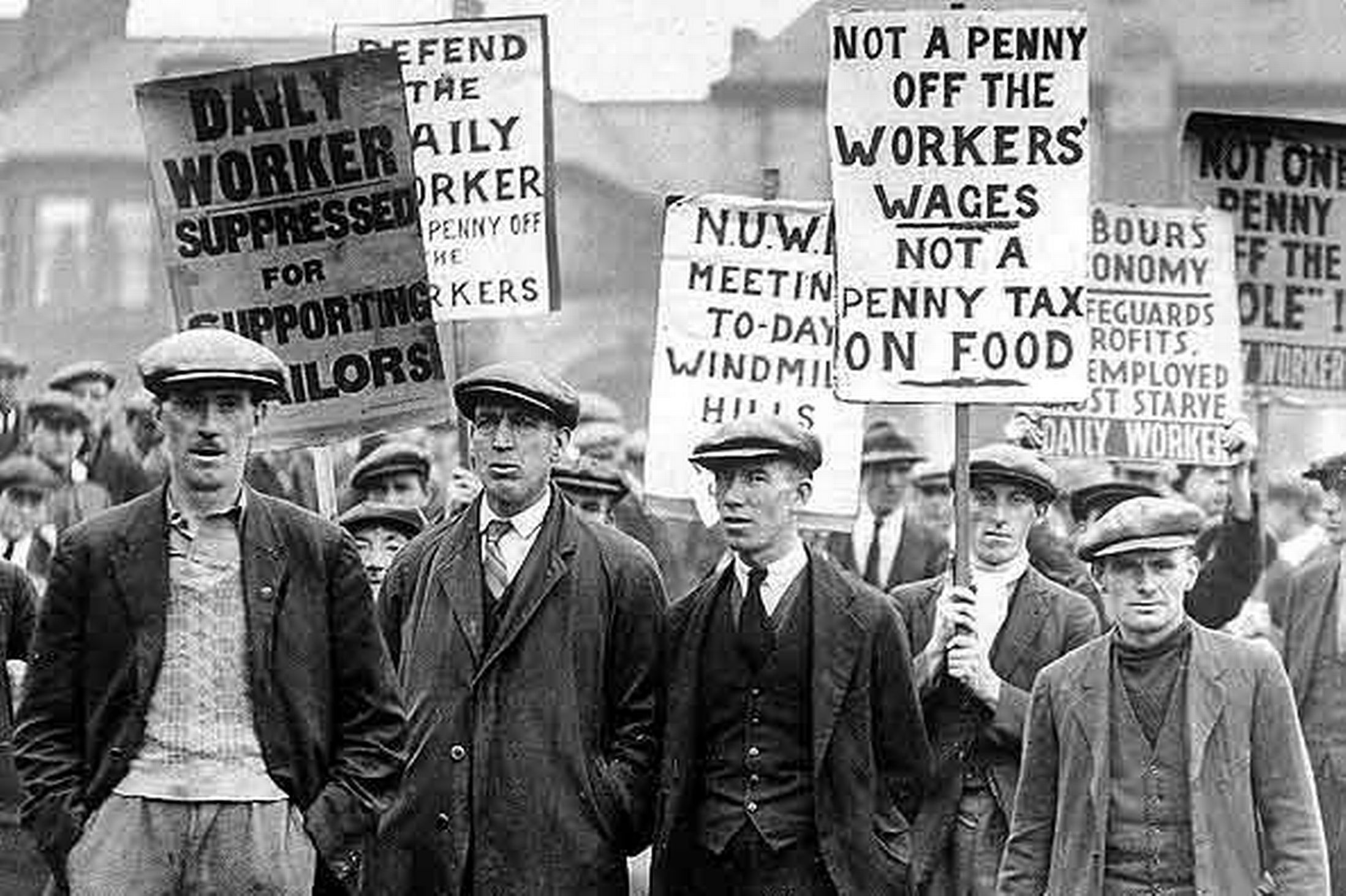
- The government, led by Prime Minister Stanley Baldwin, had anticipated the strike and prepared accordingly. The Emergency Powers Act was invoked, allowing the government to deploy troops and enlist volunteers to maintain essential services. The government also produced its own newspaper, the British Gazette, to counteract union propaganda and maintain public order.
Consequences
- The General Strike lasted nine days, ending on May 12, 1926. The TUC called off the strike without securing any concessions for the miners, largely due to the lack of a clear strategy and the overwhelming response from the government.
- The miners continued their struggle alone, but by November, facing severe financial hardship, they were forced to return to work under the employers' terms.
Involved Parties
- The Miners' Federation of Great Britain (MFGB): Representing the miners, the MFGB was at the forefront of the strike, demanding better wages and working conditions.
- Trades Union Congress (TUC): The TUC organised and led the general strike, rallying workers from various sectors to support the miners.
- The Government: Led by Prime Minister Stanley Baldwin, the government took decisive action to counter the strike, invoking emergency powers and mobilising resources to maintain order and essential services.
- Volunteers and Media: The government enlisted volunteers to keep the country running and used media, particularly the British Gazette, to shape public opinion against the strike.
Long-term Impact
- The General Strike of 1926 had lasting repercussions for the British labour movement. While the strike's immediate goals were not achieved, it highlighted solidarity among workers and the power of collective action.
- However, the strike also led to stricter government regulations on unions, including the Trade Disputes and Trade Unions Act of 1927, which limited the ability to strike and required union members to opt into political levies.
- The strike exposed deep economic and social divisions in Britain and underscored the need for industrial modernisation and better labour relations. It remains a significant event in British labour history, symbolising both the potential and the limitations of organised labour in the face of determined government opposition.
Comparing Britain and Germany in the Early 1920s: Economically and Socially
- In the early 1920s, both Britain and Germany faced significant economic and social challenges, though their circumstances and responses were distinct due to their different historical contexts.
- Economically, Britain was grappling with the aftermath of World War I and the global economic downturn. The return to the Gold Standard in 1925 overvalued the pound, harming exports and increasing unemployment. Britain's industries, particularly coal, steel, and textiles, suffered from decreased global demand. Wage cuts and strikes were common as employers sought to reduce costs. Meanwhile, Germany's economy was devastated by the Treaty of Versailles, which imposed heavy reparations. Hyperinflation peaked in 1923, rendering the German mark nearly worthless and wiping out savings. However, the introduction of the Rentenmark and the Dawes Plan in 1924 stabilised the economy, though it remained fragile.
- Socially, both countries experienced significant unrest and hardship. In Britain, high unemployment led to widespread poverty. Means testing for unemployment benefits was invasive and often excluded those in need. Hunger marches, such as those organised by the National Unemployed Workers' Movement, highlighted the desperation of the unemployed. In Germany, the social fabric was severely strained by economic instability and political extremism. The Weimar Republic faced challenges from both the far left and far right, including the Kapp Putsch in 1920 and the Beer Hall Putsch in 1923. The middle class, in particular, suffered from hyperinflation, losing their savings and facing poverty.
- Both countries saw significant social unrest as citizens reacted to economic hardships. While Britain dealt with labour strikes and hunger marches, Germany experienced political violence and radicalisation. The economic turmoil in both nations underscored the fragility of their post-war recoveries and set the stage for further social and political upheavals in the following decade.