Hitler and the Economy (Leaving Cert History): Revision Notes
📚Revision Notes
Hitler and the Economy
Adolf Hitler's rise to power was significantly influenced by his promises to revive the German economy and reduce the rampant unemployment that plagued the country during the Great Depression. Upon becoming Chancellor in 1933, Hitler and his regime implemented policies and programmes aimed at economic recovery and job creation. These measures had profound impacts on the German economy, contributing to his initial popularity.
The Economic Context of Early 1930s Germany
- Germany was hit hard by the Great Depression, with unemployment peaking at nearly 30% in 1932.
- The Weimar Republic struggled to manage the economic crisis, leading to widespread discontent and political instability.
- Hitler capitalised on this dissatisfaction, promising economic revival and employment opportunities.
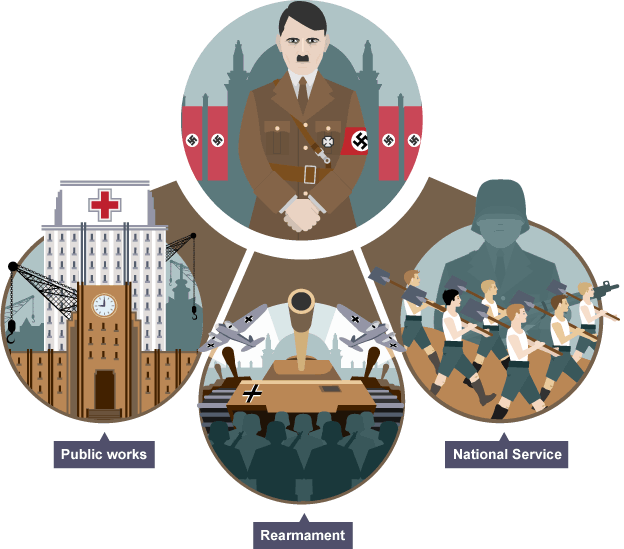
Public Works Programmes
- The Nazi regime launched extensive public works programmes, including the construction of the Autobahn (highway) network, which created thousands of jobs.
- These infrastructure projects were funded by deficit spending, a departure from previous austerity measures, stimulating economic activity.
Rearmament and Military Spending
- A significant portion of job creation came from rearmament, as the regime began rebuilding Germany's military in violation of the Treaty of Versailles.
- Military spending surged, creating jobs in arms production, engineering, and related industries, which helped reduce unemployment significantly.
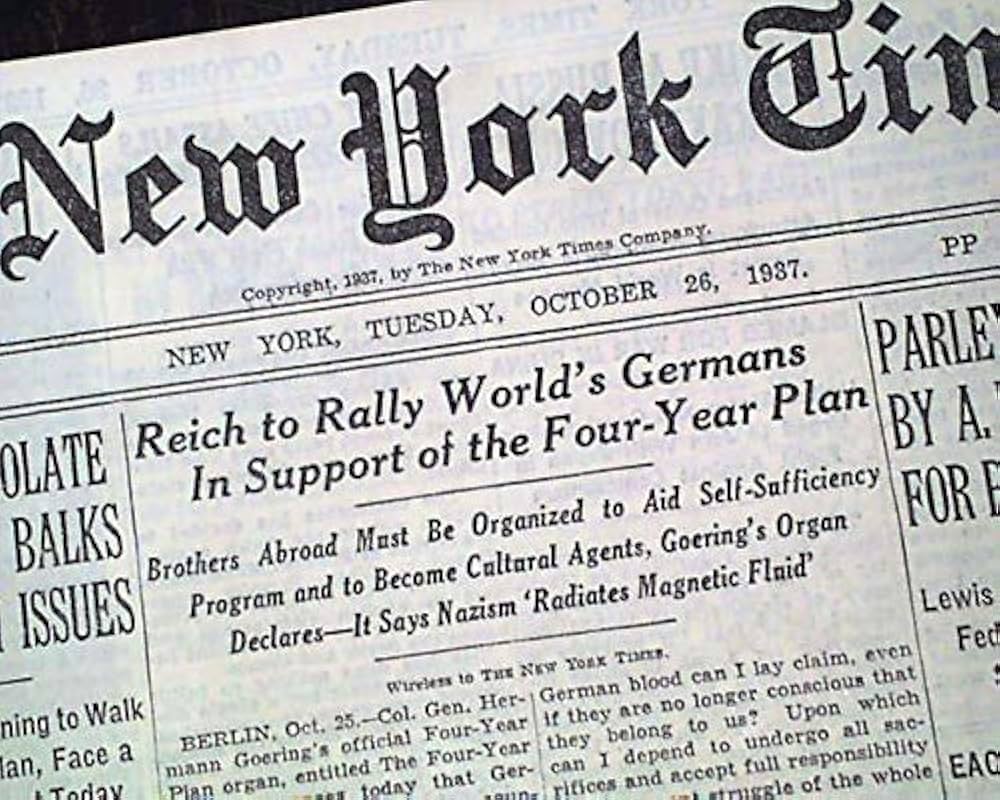
The Four-Year Plan
- Introduced in 1936, the Four-Year Plan aimed to make Germany self-sufficient and ready for war within four years.
- Led by Hermann Göring, the plan focused on increasing the production of raw materials, developing synthetic alternatives, and boosting industrial output.
- This plan further stimulated the economy and contributed to lowering unemployment.
Labour Policies and Organisations
- The regime established the German Labour Front (DAF), which replaced independent trade unions, aligning workers with Nazi ideology.
- The DAF implemented programmes like Strength Through Joy (Kraft durch Freude), which provided affordable leisure activities and boosted worker morale and productivity.
Agricultural Policies
- The Nazis also focused on reviving the agricultural sector through policies aimed at increasing agricultural production and ensuring farmers' incomes.
- Measures included price controls, subsidies, and the Reich Food Estate, which regulated agricultural production and distribution.
Social and Economic Impact
- By 1936, unemployment had dropped significantly, and many Germans felt a sense of economic stability and national pride.
- However, these economic policies were not sustainable in the long term and were heavily dependent on military expansion and preparation for war.
Economic Limitations and Ethical Considerations
- The economic improvements came with high ethical and social costs, including the suppression of political freedoms, the persecution of Jews and other minorities, and the exploitation of forced labour.
- The Nazi economy was also characterised by autarky (economic self-sufficiency) and extensive state control, which stifled private enterprise and market freedoms.
Autarky
- The idea of autarky refers to a nation's pursuit of economic self-sufficiency, minimising reliance on foreign imports and external economic influence. In Nazi Germany, autarky was a central tenet of Adolf Hitler's economic policy, driven by the desire to make Germany independent in preparation for war. This concept was embedded in the Four-Year Plan introduced in 1936, which aimed to boost domestic production of raw materials and develop synthetic substitutes for imports. By focusing on self-sufficiency, the Nazi regime sought to insulate the German economy from international market fluctuations and trade embargoes that hostile nations could impose.
- The Four-Year Plan, led by Hermann Göring, included initiatives to increase the production of iron, coal, and synthetic rubber (known as Buna). The plan also emphasised agricultural self-reliance, promoting increased yields and supporting farmers through subsidies and controlled pricing. The regime's push for autarky was evident in its efforts to develop synthetic fuel and textiles.
- However, the pursuit of autarky had significant limitations and drawbacks. Focusing on self-sufficiency often led to inefficiencies and higher production costs, as domestic substitutes were generally more expensive and less effective than imported goods. Additionally, the regime's stringent control over the economy stifled innovation and limited the growth of private enterprise.
- Despite these challenges, the concept of autarky was integral to Nazi ideology, aligning with their goals of military readiness and national sovereignty. By striving for economic independence, Hitler aimed to create a robust and resilient Germany capable of sustaining prolonged military conflict without reliance on foreign resources.