Advance on Germany- Fall of Berlin and Hitler's Death (Leaving Cert History): Revision Notes
📚Revision Notes
Advance on Germany- Fall of Berlin and Hitler's Death
How D-Day Turned the Tide of the War
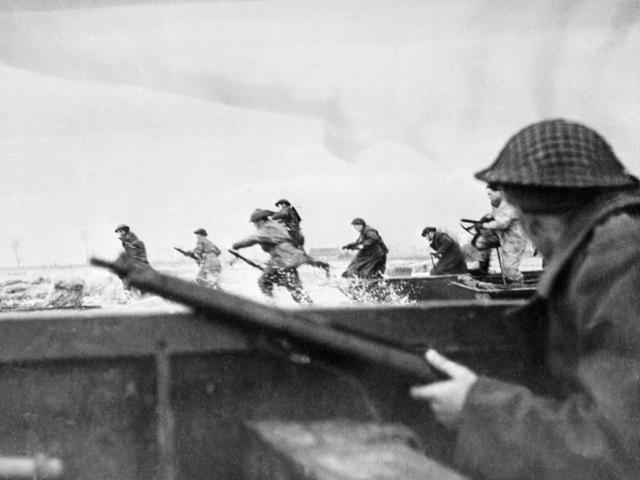
- D-Day, also known as Operation Overlord, took place on June 6, 1944, and opened a new front against Nazi Germany, forcing them to fight on multiple fronts. Despite fierce resistance, especially at Omaha Beach, the Allies secured the beachheads and began a push into France.
- By late August 1944, Allied forces had liberated Paris, significantly boosting morale and disrupting German command and control. The successful landings and subsequent momentum helped to overstretch German resources and forced them into a defensive war.
- By late August 1944, Allied forces had liberated Paris, significantly boosting morale and disrupting German command and control. The successful landings and subsequent momentum helped to overstretch German resources and forced them into a defensive war.
The Fall of Berlin
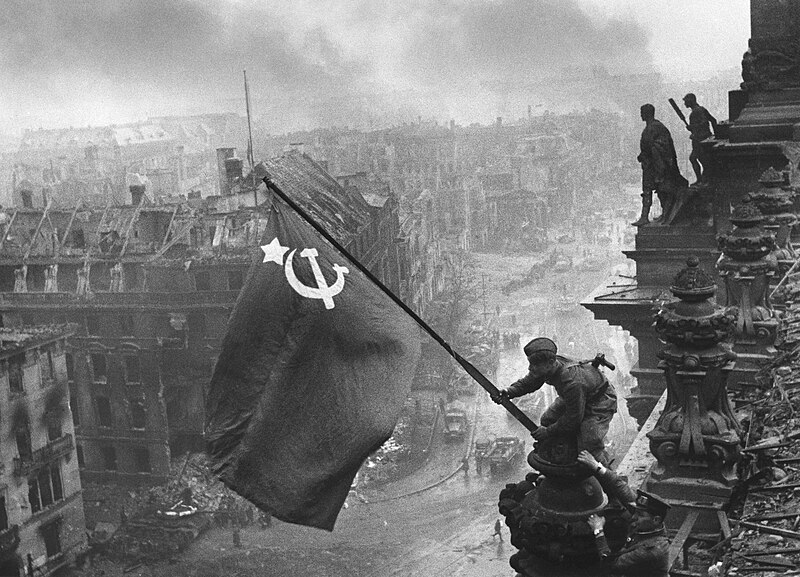
- The Fall of Berlin was one of the final and most significant events of World War II in Europe. The battle began in earnest on April 16, 1945, when Soviet forces launched the Berlin Offensive from the east. This massive assault was led by Marshals Georgy Zhukov and Ivan Konev, commanding the 1st Belorussian Front and the 1st Ukrainian Front, respectively. Their objective was to encircle and capture Berlin, the heart of Nazi Germany.
-
The Soviets had overwhelming superiority in numbers and equipment. They deployed around 2.5 million troops, 6,250 tanks, and 7,500 aircraft against the German defenders, who were vastly outnumbered and under-resourced, with around 1 million soldiers, including many hastily conscripted and poorly equipped Volkssturm (people's militia) and Hitler Youth units.
-
Fighting was intense as Soviet forces approached the city. On April 25, 1945, Soviet and American forces met at the Elbe River, effectively splitting Germany in two and sealing Berlin's fate. The encirclement of Berlin was completed, and Soviet troops began their final assault on the city.
-
Inside Berlin, conditions were dire. The city was subjected to constant artillery bombardment, and street fighting became commonplace. Under General Helmuth Weidling's command, German defenders put up fierce resistance, but it was clear that the end was near. Civilians were caught in the crossfire, and the city's infrastructure was devastated.
-
On April 30, 1945, as Soviet troops closed in on the Reich Chancellery, Adolf Hitler committed suicide in his bunker along with his wife, Eva Braun.
-
This event marked the symbolic collapse of the Nazi regime. Following Hitler's death, Karl Dönitz briefly took over as head of state, but with Berlin falling and Allied forces converging from all sides, the situation was hopeless.
-
Berlin's formal surrender took place on May 2, 1945, when General Weidling surrendered to Soviet General Vasily Chuikov.
-
However, the official end of World War II in Europe came on May 7, 1945, when Germany unconditionally surrendered to the Allied forces. The fall of Berlin not only marked the end of the Third Reich but also the culmination of the brutal and destructive conflict that had ravaged Europe for nearly six years.
-
This victory set the stage for the division of Berlin and Germany, leading to the Cold War's geopolitical tensions between the Soviet Union and the Western Allies.