Invasion of Denmark and Norway, April 1940 (Leaving Cert History): Revision Notes
📚Revision Notes
Invasion of Denmark and Norway, April 1940
When people think about German invasions in the Second World War, they often think about the invasions of Poland and France, but seldom are the invasions of Denmark and Norway discussed. Whilst knowledge of Operation Weserübung is not essential for most essays, you can gain that all-important C-Word (That's Context, by the way) by reading up on it and understanding its overall significance in the broader context of the war. Below are some notes and a little cheat sheet if you just want to gloss over key terms.
Overview of the Invasions
- The German invasions of Denmark and Norway (Operation Weserübung) began on April 9, 1940, marking the end of the Phoney War and the start of significant military operations in Western Europe.
- These invasions were part of Germany's strategic plan to secure key territories and resources and prevent the Allies from establishing a foothold in Scandinavia.
Invasion of Denmark
-
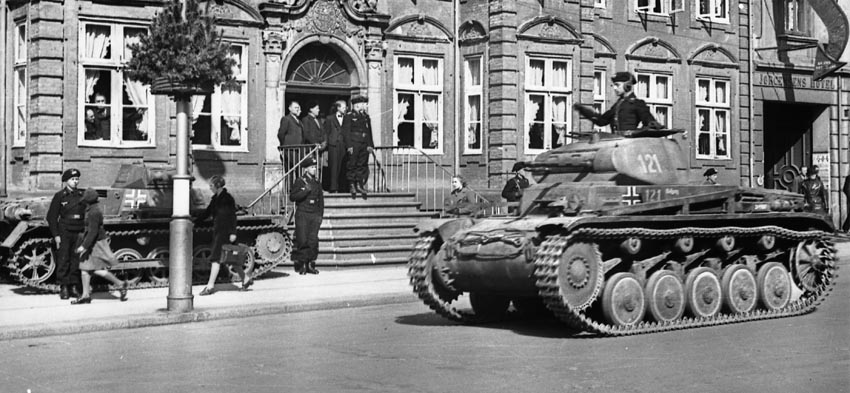
German forces swiftly overwhelmed Denmark. The invasion, aimed at securing bases for operations in Norway, encountered minimal resistance.
-
Denmark's geographical proximity to Germany and lack of natural defences made it a straightforward target.
-
The Danish government capitulated within six hours, leading to an occupation that involved relatively less violence and repression compared to others.
Invasion of Norway
-
Norway's invasion was more complex and strategically significant due to its extensive coastline and proximity to vital shipping routes in the North Atlantic.
-
Germany sought control of Norway to secure the iron ore shipments from Sweden, which were crucial for its war industry, and to prevent the Allies from using Norwegian bases to disrupt German naval operations.
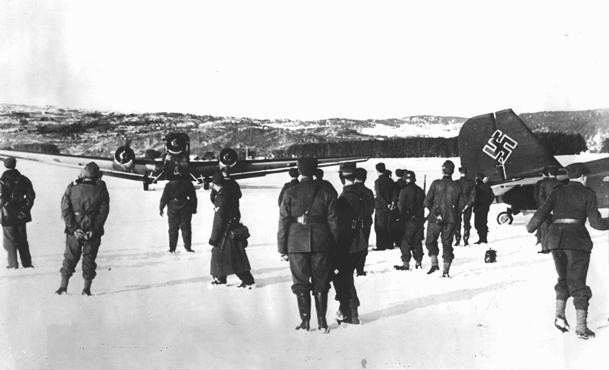
- The invasion began with coordinated attacks on key Norwegian ports, including Oslo, Bergen, Trondheim, and Narvik.
- The German Navy, Air Force, and paratroopers were involved in these operations. Although outmatched, Norwegian forces put up a more prolonged resistance compared to Denmark.
-
The campaign lasted two months, during which the Allies, including British, French, and Polish troops, attempted to aid Norwegian defences. However, the Allies eventually withdrew, and Norway fell under German control by early June 1940.
Strategic Importance
- The successful invasions of Denmark and Norway provided Germany with several strategic advantages. Control of Norway ensured the safety of iron ore shipments from Sweden, which was crucial for German armaments production.
- Additionally, establishing naval and air bases in Norway allowed Germany to control much of the North Atlantic, posing a significant threat to Allied shipping and naval operations.
- The invasions also demonstrated the effectiveness of Blitzkrieg tactics and highlighted the weaknesses in Allied strategic planning and response.
- These operations' rapid and decisive nature underscored Germany's military prowess and set the stage for further campaigns in Western Europe, including the invasions of Belgium, the Netherlands, and France.
Impact and Consequences
- The invasions had significant repercussions for both the Axis and Allied powers. For Germany, the successful operations bolstered morale and provided critical resources and strategic positions.
- For the Allies, the fall of Norway and Denmark was a stark lesson in the need for better coordination and more effective military strategies against the German threat.
- The invasions also influenced public opinion and political decisions in Britain and France, leading to military leadership and strategies changes.
- The events in Scandinavia highlighted the global nature of World War II, as battles in seemingly peripheral regions had substantial implications for the broader conflict.
Definitions of Key Terms
- Denmark: A Scandinavian country that was swiftly invaded and occupied by Germany on April 9, 1940, during World War II.
- Norway: A Scandinavian country with significant strategic importance, invaded by Germany on the same day as Denmark, involving a prolonged and more complex campaign.
- Operation Weserübung: The code name for Germany's combined naval, air, and land invasion of Denmark and Norway in April 1940.
- Phoney War: The period of inactivity on the Western Front following the declaration of war by Britain and France against Germany before the invasions of Denmark and Norway.
- Iron ore shipments: Critical raw materials transported from Sweden to Germany, essential for the German war industry and a key reason for the invasion of Norway.
- Blitzkrieg: A military tactic involving rapid, concentrated attacks using air and ground forces to overwhelm the enemy quickly.
- North Atlantic: The region of the Atlantic Ocean near Europe, where control was vital for shipping routes and naval operations during World War II.
- Allies: The coalition of nations, including Britain, France, and later the United States and the Soviet Union, that opposed the Axis Powers during World War II.
- Axis Powers: The alliance of Nazi Germany, Fascist Italy, and Imperial Japan, which sought to dominate Europe and Asia during World War II.