Focus on: Brian Faulkner (Leaving Cert History): Revision Notes
📚Revision Notes
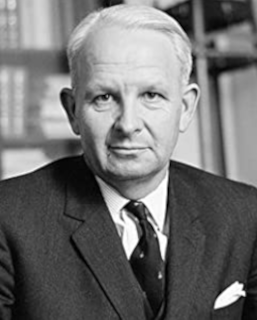
Focus on: Brian Faulkner
-
Brian Faulkner was born in 1921 in County Down, Northern Ireland, and was educated at St. Columba's College in Dublin and Queen's University Belfast.
-
He became involved in politics at a young age, joining the Ulster Unionist Party (UUP) and becoming the youngest person ever to be elected to the Northern Ireland Parliament in 1949 at the age of 28.
-
Faulkner held various ministerial positions within the Northern Ireland government, including Minister of Home Affairs, where he was responsible for internal security during the early years of the Troubles.
-
As Minister of Home Affairs, he introduced controversial policies such as the internment of suspected IRA members without trial, which escalated tensions and violence.
- Faulkner became the last Prime Minister of Northern Ireland in 1971, succeeding James Chichester-Clark during a period of intense political and sectarian conflict.
- He played a central role in the introduction of Direct Rule by the British government in 1972 after his administration was deemed unable to control the escalating violence.
- Faulkner was a key figure in the negotiations that led to the 1973 Northern Ireland White Paper, which proposed a new political framework including power-sharing and a Council of Ireland.
- He led the pro-assembly wing of the UUP during the 1973 Northern Ireland Assembly elections, advocating for power-sharing with nationalists as a means to end the violence.
- Faulkner became the Chief Executive of the newly formed power-sharing executive in January 1974, a historic but short-lived experiment in cross-community governance.
- His support for the Council of Ireland, which aimed to facilitate cooperation between Northern Ireland and the Republic of Ireland, was highly controversial and contributed to the collapse of the power-sharing executive.
- Faulkner faced fierce opposition from hardline unionists and loyalists, including the Ulster Workers' Council Strike, which led to the downfall of the power-sharing government in May 1974.
- After the collapse of the executive, Faulkner resigned from the leadership of the UUP and subsequently left the party to form the Unionist Party of Northern Ireland (UPNI) in 1974.
- The UPNI failed to gain significant support, and Faulkner gradually withdrew from active politics, retiring completely after losing his seat in the 1979 general election.
- Faulkner's legacy is complex; while he is remembered for his efforts to bring about a political settlement through power-sharing, his policies, particularly internment, are also seen as contributing to the escalation of the Troubles.