The Williamite War, Siege of Derry and Formation of the Apprentice Boys of Derry (Leaving Cert History): Revision Notes
📚Revision Notes
The Williamite War, Siege of Derry and Formation of the Apprentice Boys of Derry
The Williamite War (1688-1691)
- The Williamite War in Ireland was a significant conflict that took place between 1688 and 1691 during a period of intense political and religious tension in Europe.
- The war was fought between the forces of King James II, a Catholic monarch, and those of William of Orange, a Protestant leader who became William III of England.
- The conflict was not just about the control of Ireland but also part of a broader European struggle involving England, Scotland, France, and the Netherlands.
- James II had been deposed in the "Glorious Revolution" of 1688-1689, which began when a group of English nobles (the "Immortal Seven") invited William of Orange to take the throne. William landed in England in November 1688, James fled to France in December 1688, and William and Mary were formally crowned in February 1689. King Louis XIV of France supported James.
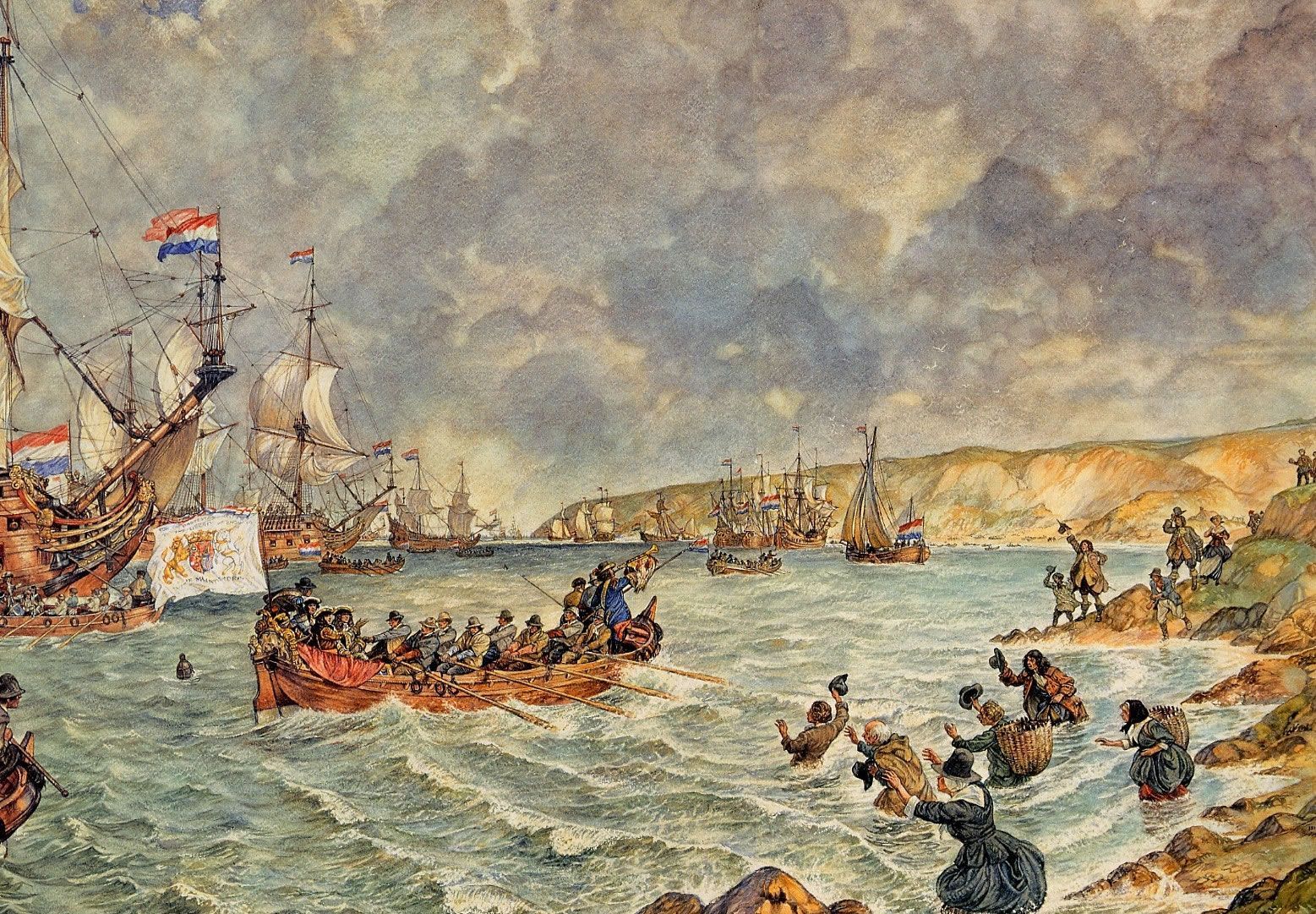
- James then travelled to Ireland, landing at Kinsale on 12 March 1689, where he had significant support among the Catholic population, hoping to use Ireland as a base to reclaim his throne. The war in Ireland became a proxy battle between France, which supported James, and the Protestant coalition led by William.
- The conflict was marked by several key battles, including the Battle of the Boyne in July 1690, where William's forces defeated James's army.
- Although the Battle of the Boyne is often remembered as the decisive battle, the war continued for another year. The Siege of Limerick and the Battle of Aughrim in 1691 were other crucial encounters.
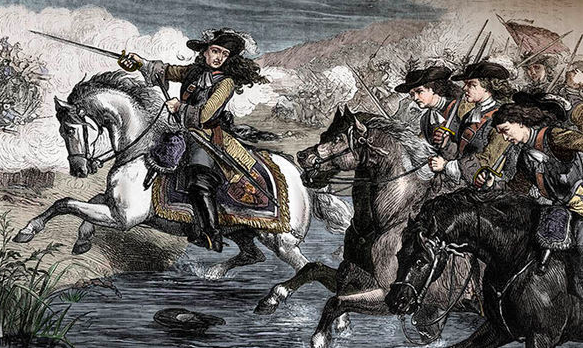
- The war ended with the Treaty of Limerick in October 1691, which allowed the remaining Jacobite (James's) forces to leave for France, marking the end of the Catholic hope for James's restoration.
- The Williamite War had long-lasting effects on Ireland. It solidified Protestant dominance in Ireland, particularly in the north, and ensured that the Protestant Ascendancy would control the country for generations.
- The Orange Order celebrates William III's victory at the Battle of the Boyne annually on July 12th, a tradition that continues to influence the political and cultural landscape of Northern Ireland to this day.
The Siege of Derry (1689)
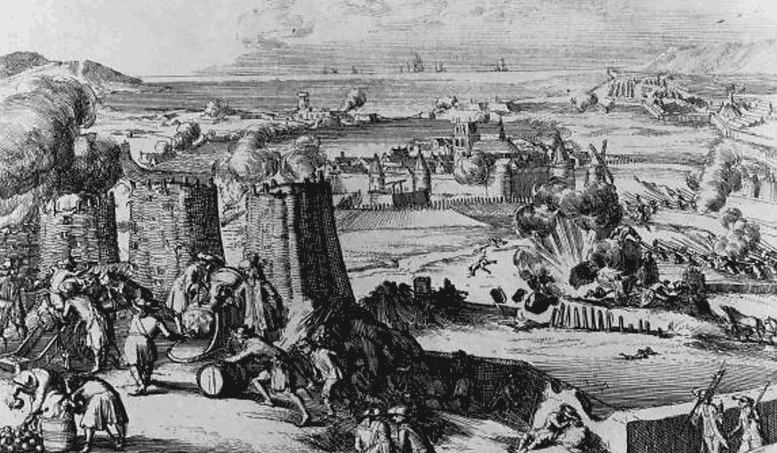
- The Siege of Derry, also known as the Siege of Londonderry, was one of the most significant events during the Williamite War in Ireland. The siege itself lasted 105 days, from 18 April to 28 July 1689, and became a symbol of Protestant resistance against Catholic rule. The city of Derry was primarily inhabited by Protestant settlers, who were determined to resist the Catholic King James II and his forces.
- The lead-up to the siege began in late 1688. On 7 December 1688, a force of around 1,200 Scottish Catholic soldiers ("Redshanks"), led by the Earl of Antrim and sent by Lord Tyrconnell (James II's Lord Deputy of Ireland), approached Derry. While the city's governor and council debated whether to admit them, thirteen young apprentices seized the keys and shut the gates against the advancing force. This act of defiance — carried out against the wishes of the city's leadership, who were inclined to surrender — set the stage for the siege that would follow months later.
- Roughly six peaceful months passed between the shutting of the gates and the start of the actual siege. During this time, James II fled to France, landed in Ireland at Kinsale in March 1689, and marched north.
- The siege proper began on 18 April 1689, when James himself appeared before the walls with a Jacobite army and demanded the city's surrender. He was met with cries of "No Surrender!" and musket fire, and returned to Dublin, leaving the siege under the command of Richard Hamilton.
- The city's governor at this point, Robert Lundy, had argued for surrender and made himself deeply unpopular — eventually escaping the city in disguise. His name became synonymous with treachery in loyalist tradition, and he is burned in effigy each year during the Shutting of the Gates commemoration. Command then passed to Major Baker and the Rev. George Walker.
- During the siege, the defenders of Derry endured severe hardships. The city was surrounded, and supplies quickly ran low. Famine and disease spread among the population, and the situation became increasingly desperate.
- Despite these challenges, the defenders refused to surrender. The siege was marked by constant bombardments from the Jacobite forces, but the walls of Derry held firm.
- The turning point came in late July 1689, when a relief fleet sent by William of Orange managed to break through the boom across the River Foyle and deliver much-needed supplies to the starving city. On 28 July 1689, the Jacobite forces lifted the siege, having failed to capture Derry.
- The successful defence of Derry was celebrated as a great victory for the Protestant cause and became a defining moment in the history of Ulster.
- The Siege of Derry is commemorated annually by the Apprentice Boys of Derry, a Protestant fraternal organisation that honours the bravery of those who defended the city.
- The event is seen as a crucial moment in the Protestant resistance against Catholic dominance and remains an important symbol in the cultural and political identity of Northern Ireland.
Formation of the Apprentice Boys of Derry
- The Apprentice Boys of Derry is a Protestant fraternal society that was formed to commemorate the events surrounding the Siege of Derry in 1688-1689.
- The organisation traces its origins back to the actions of a group of 13 young apprentices who, on 7 December 1688, closed the gates of the city of Derry against the force of the Earl of Antrim, which had been sent by Lord Tyrconnell on behalf of the Catholic King James II.
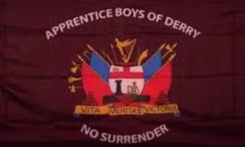
- This defiant act is seen as the spark that ignited the defence of the city during the siege that followed the next year, making these young men heroes in the eyes of the Protestant community.
- The formation of the Apprentice Boys of Derry as an organisation took place in the 18th century, as memories of the siege became a central part of the Protestant identity in Ulster.
- The society was officially established to honour the bravery and determination of those who defended the city against the forces of King James II.
- The Apprentice Boys hold annual commemorations, with the most important events being the "Shutting of the Gates" celebration in December (marking the 1688 closing of the gates) and the Relief of Derry commemoration in August (marking the end of the siege in 1689). These events include parades, church services, and the laying of wreaths, symbolising the community's respect for their ancestors' courage.
- The Apprentice Boys of Derry is one of the Loyal Orders, along with the Orange Order and the Royal Black Institution.
- These groups play a significant role in Northern Ireland's cultural and political life, especially among the Unionist community.
- The Apprentice Boys' commemorations are seen as expressions of Protestant solidarity and are deeply tied to the historical narrative of resistance against Catholic rule.