The foundation of Coleraine & The Lockwood Findings (Leaving Cert History): Revision Notes
📚Revision Notes
The foundation of Coleraine & The Lockwood Findings
The Need for a Second University in Northern Ireland
-
By the 1960s, Northern Ireland's educational landscape was dominated by Queen's University Belfast (QUB), the only university in the region.
-
However, as Northern Ireland's population grew and demand for higher education increased, it became clear that one university was no longer sufficient to meet the needs of the entire population.
-
The post-war baby boom, coupled with a growing recognition of the importance of higher education for economic development, led to calls for the establishment of a second university.
-
There was also a sense of inequality in access to higher education. Queen's University Belfast, while prestigious, was seen as being geographically and culturally distant from large parts of Northern Ireland, particularly the western regions, which were predominantly Catholic and economically disadvantaged.
-
The lack of higher education opportunities in these areas contributed to the economic stagnation and social inequalities already deeply entrenched in Northern Ireland.
-
The establishment of a second university was seen as a way to address these issues. It would not only provide more students with access to higher education but also serve as a catalyst for economic growth and social development in whichever region it was located.
-
The idea was that a new university could help to balance the economic disparities between different parts of Northern Ireland, promote social mobility, and reduce the sense of alienation felt by communities in the more deprived areas.
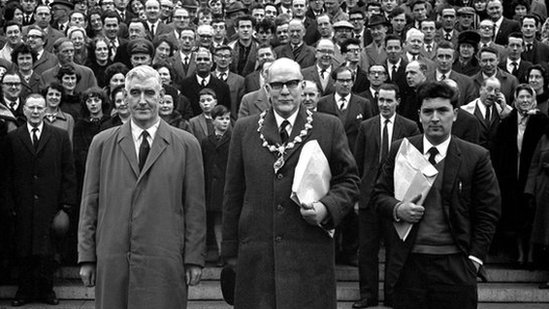
- As the demand for a second university grew, the Northern Ireland government set up a committee led by Sir John Lockwood to explore the feasibility of establishing a new university and recommend its location.
- This marked the beginning of the Coleraine University controversy, a contentious issue that would have significant political and social repercussions.
Where the University Might Have Been Located and the Talks Surrounding It
-
The question of where to locate the second university in Northern Ireland quickly became contentious. Several towns and cities put forwards bids, each arguing that they were the most suitable locations.
- The two main contenders were Coleraine, a market town in County Londonderry, and Derry/Londonderry, Northern Ireland's second-largest city, which already had a strong academic tradition with the Magee College, an affiliate of Trinity College Dublin.
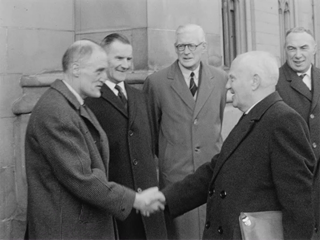
- Many supported Derry/Londonderry's bid, arguing that the city's location in the west of Northern Ireland, an area that had long been economically and socially disadvantaged, made it the ideal site for the new university.
-
Supporters believed that establishing a university in Derry/Londonderry would bring much-needed investment and development to the region, helping to reduce economic disparities and improve educational access for the predominantly Catholic population in the area.
-
Conversely, Coleraine's supporters argued that their town offered a more neutral and politically less divisive option.
-
Coleraine, being smaller and more rural, was less likely to be influenced by the sectarian tensions prevalent in Derry/Londonderry. Proponents of Coleraine also highlighted the town's potential for expansion and its more tranquil setting, which they believed would create an ideal academic environment.
-
The talks surrounding the university's location were highly charged, with strong arguments on both sides.
-
Many in the nationalist community saw the potential decision to place the university in Coleraine rather than Derry/Londonderry as a continuation of discriminatory policies that favoured the Protestant and unionist-dominated regions of Northern Ireland.
-
Conversely, unionists argued that Derry/Londonderry's political atmosphere was too volatile for a new university and that Coleraine would provide a more stable and peaceful environment for higher education.
-
These debates culminated in the Lockwood Committee's investigation, which aimed to assess the best location for the new university objectively.
-
However, the eventual decision would ignite controversy and protests, particularly in Derry/Londonderry, where many felt betrayed by what they perceived as a politically motivated decision.
The Lockwood Findings and Why They Were Important
- The Lockwood Committee, chaired by Sir John Lockwood, was established in 1963 to assess the feasibility of creating a second university in Northern Ireland.
- The committee thoroughly evaluated potential sites, focusing on academic viability, infrastructure, and potential for expansion.
- Derry/Londonderry's Magee College was initially considered a strong contender due to its established academic tradition and existing facilities.
- However, the Lockwood Report, published in 1965, controversially recommended Coleraine as the site for the new university, citing its neutrality and potential for growth.
- The report argued that Coleraine offered a more conducive environment for academic development, away from the sectarian tensions present in Derry/Londonderry.
- The decision to choose Coleraine over Derry/Londonderry sparked outrage, particularly in the nationalist community, who saw it as another example of discrimination against Catholics.
- Protests erupted in Derry/Londonderry, with thousands taking to the streets in opposition to the decision, demanding that the university be placed in their city.
- The Lockwood Committee's findings had significant political implications, deepening sectarian divisions and contributing to the growing civil rights movement in Northern Ireland.
- The controversy highlighted the deep-rooted inequalities in Northern Ireland, as well as the challenges of trying to create a more balanced and fair society in a region marked by deep-seated sectarianism.
- The fallout from the Lockwood findings would continue to resonate in Northern Ireland's politics, influencing the direction of the civil rights movement and contributing to the tensions that eventually led to the Troubles.