Peace in Sight 1985-93/4 (Leaving Cert History): Revision Notes
📚Revision Notes
The Downing Street Declaration 1993
Context of the Downing Street Declaration
- The Downing Street Declaration was signed on 15 December 1993 by British Prime Minister John Major and Irish Taoiseach Albert Reynolds.
- The declaration marked a significant step forwards in the peace process in Northern Ireland, building on the groundwork laid by previous efforts, such as the Anglo-Irish Agreement of 1985 and the initiatives by Peter Brooke, who was instrumental in facilitating early discussions.
- The 1980s had been a decade of intense violence in Northern Ireland, with the IRA continuing its armed campaign and the British government maintaining a strong military presence.
- However, by the early 1990s, there was growing recognition on all sides that the conflict could not be resolved through violence alone.
- The changing political landscape, including the resignation of Margaret Thatcher and the more flexible approach adopted by her successor, John Major, created an opportunity for renewed efforts towards peace.
- In the lead-up to the declaration, both governments had been engaging in secret talks with representatives of the republican and loyalist communities and other political parties in Northern Ireland.
- The declaration was seen as a way to articulate the shared principles that would guide future negotiations formally and to offer a framework for resolving the conflict.
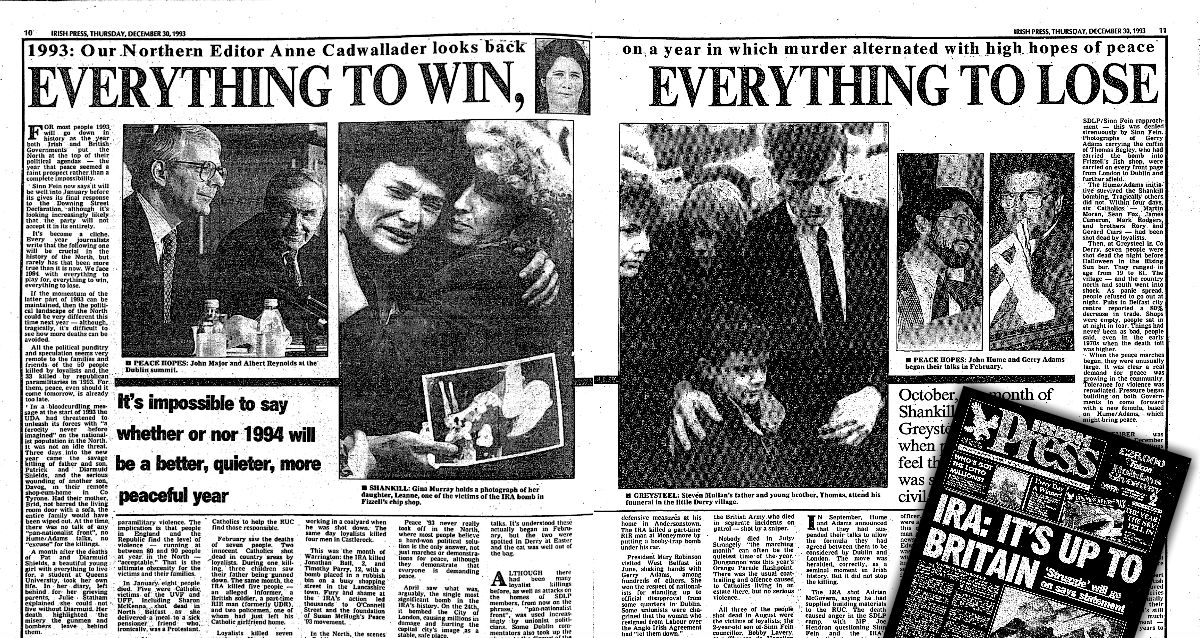
Content of the Downing Street Declaration
The Downing Street Declaration contained several key elements that were crucial to advancing the peace process:
- The declaration reaffirmed the principle of self-determination, stating that any change in Northern Ireland's status could only occur with the consent of the majority of its people. This was a crucial assurance for the unionist community, which feared that they might be forced into a united Ireland against their will.
- The declaration emphasised the need for equality and justice for all communities in Northern Ireland. This included a commitment to addressing the social and economic issues that had fuelled the conflict, particularly in nationalist areas.
- Both the British and Irish governments made it clear that they rejected the use of violence to achieve political ends. The declaration called on all parties to commit to peaceful, democratic methods and engage in dialogue to resolve their differences.
- The declaration invited all political parties in Northern Ireland, including Sinn Féin, to enter into talks, provided they were committed to peaceful methods. This was a significant development, as it opened the door for Sinn Féin's participation in the peace process, which had been a contentious issue due to its association with the IRA.
Consequences of the Downing Street Declaration
The Downing Street Declaration had several important consequences that shaped the future of the Northern Ireland peace process:
- IRA Ceasefire:
- In August 1994, the IRA announced a ceasefire, marking a significant turning point in the conflict. The ceasefire was largely seen as a response to the Downing Street Declaration, which had provided a framework for political engagement that the republican movement could support.
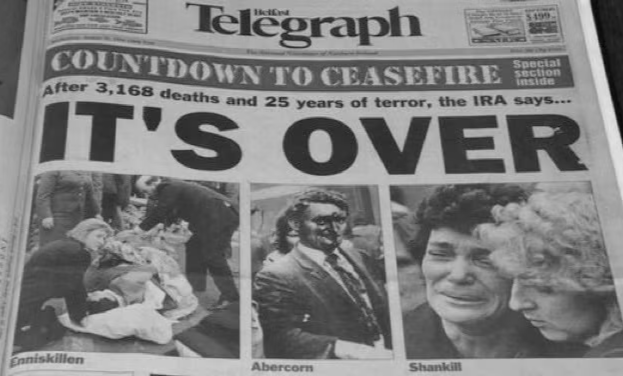
- Loyalist Ceasefire:
- Following the IRA's announcement, loyalist paramilitary groups also declared a ceasefire. This move helped to create a more stable environment for negotiations and demonstrated the widespread desire for peace.
- Increased Political Dialogue:
- The declaration paved the way for increased political dialogue between the British and Irish governments and the various political parties in Northern Ireland. This dialogue eventually led to the multi-party talks that produced the Good Friday Agreement in 1998.
- Sinn Féin's Political Legitimacy:
- The declaration helped to legitimise Sinn Féin as a political party and facilitated its participation in the peace process. Although there were still significant obstacles to overcome, the inclusion of Sinn Féin was crucial to reaching a comprehensive settlement.
- Unionist Reactions:
- While many unionists welcomed the declaration's emphasis on self-determination and consent, they also expressed concerns about the Irish government's involvement in Northern Irish affairs. This ambivalence highlighted the ongoing tensions within the unionist community regarding the peace process. Overall, the Downing Street Declaration was a pivotal moment in the Northern Ireland peace process. It set the stage for further negotiations and laid the foundation for the eventual resolution of the conflict through the Good Friday Agreement.
Essay Plan/Prep Guide - Importance of the Downing Street Declaration 1993
- The declaration marked a formal commitment by both the British and Irish governments to pursue a peaceful, democratic resolution to the conflict in Northern Ireland.
- It provided a framework for self-determination, ensuring that any change in Northern Ireland's status would require the consent of its majority, which reassured the unionist community.
- The declaration rejected the use of violence for political ends, setting a clear expectation for all parties involved in the conflict to engage through peaceful and democratic means.
- It invited Sinn Féin to participate in future talks, provided they committed to peaceful methods, which was crucial in bringing the republican movement into the political process.
- The Downing Street Declaration was instrumental in leading to the IRA's ceasefire in 1994, which significantly reduced violence and created a more conducive environment for peace negotiations.
- The declaration laid the groundwork for the loyalist ceasefire, further reducing violence and contributing to a more stable political situation in Northern Ireland.
- It helped to legitimise Sinn Féin as a political party, allowing it to play a key role in subsequent negotiations, including those leading to the Good Friday Agreement.
- The declaration represented a significant shift in British policy, with Prime Minister John Major adopting a more flexible approach compared to his predecessor, Margaret Thatcher, which helped to advance the peace process.