Direct Rule and the Ulster Convention (Leaving Cert History): Revision Notes
📚Revision Notes
Direct Rule and the Ulster Convention
What Direct Rule Was
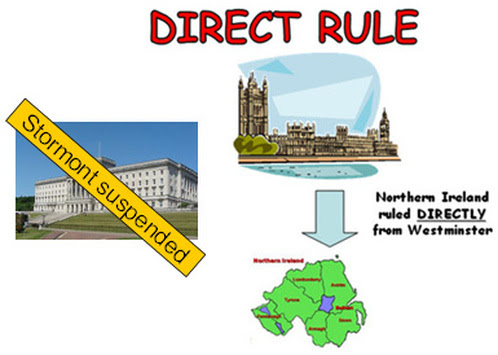
- Direct Rule refers to the governance of Northern Ireland directly from Westminster, London, rather than through a devolved government in Belfast.
- Direct Rule was implemented in 1972 after the Northern Ireland Parliament, known as Stormont, was suspended due to escalating violence during the Troubles.
- The suspension marked the end of Home Rule in Northern Ireland. This system had allowed for a local parliament to govern the region with a degree of autonomy within the United Kingdom.
-
Under Direct Rule, Northern Ireland was governed by a Secretary of State for Northern Ireland, appointed by the British Prime Minister, who had wide-ranging powers over the region's affairs.
-
This included control over security, justice, health, and education. The introduction of Direct Rule was intended as a temporary measure to stabilise the situation in Northern Ireland, but it remained in place for many years as attempts to restore devolved government repeatedly failed.
-
The imposition of Direct Rule was met with mixed reactions. Unionists were generally supportive because it kept Northern Ireland firmly within the United Kingdom.
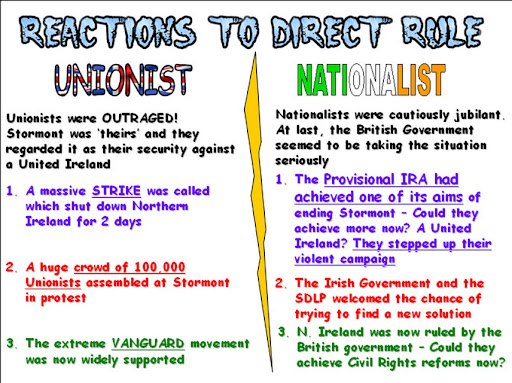
- However, many nationalists and republicans viewed Direct Rule as a sign of British dominance and control over Irish affairs.
- Despite efforts to resolve the conflict, including the Sunningdale Agreement in 1973, which briefly established a power-sharing executive, Direct Rule continued as violence and political instability persisted.
How Direct Rule Remained After the Power-Sharing Executive
- Although the Sunningdale Agreement in 1973 attempted to introduce a power-sharing executive that included both unionist and nationalist parties, it ultimately failed due to strong opposition, particularly from unionists.
- The collapse of the Sunningdale executive, partly due to the Ulster Workers' Council Strike in 1974, led to the re-imposition of Direct Rule.
- Following the collapse of Sunningdale, Direct Rule continued in Northern Ireland for decades. Successive British governments made several attempts to restore a devolved government, but ongoing violence, political disagreements, and mistrust between unionist and nationalist communities undermined these.
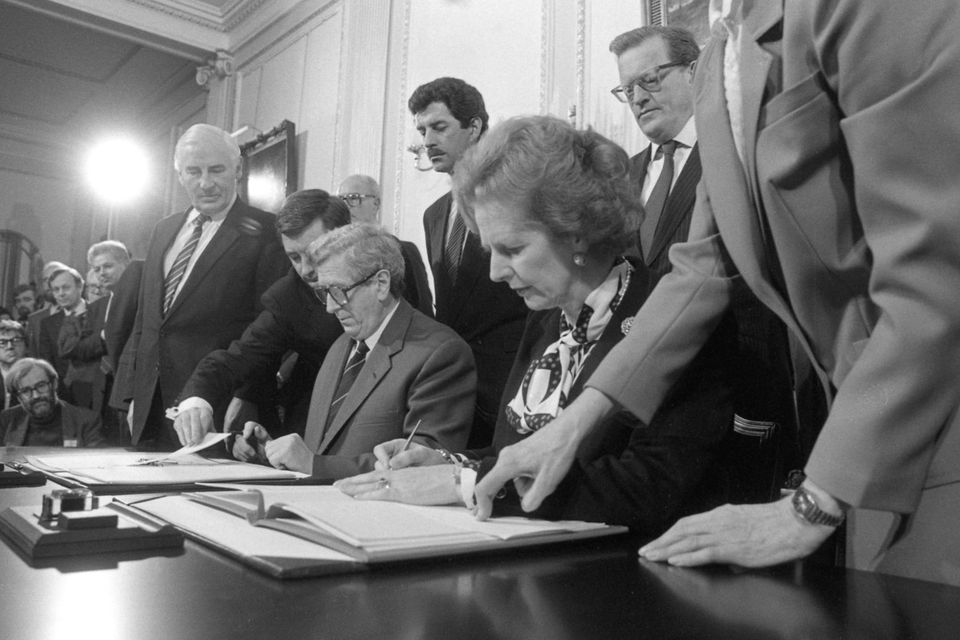
- The Anglo-Irish Agreement of 1985, which gave the Republic of Ireland a consultative role in Northern Ireland's governance, further alienated unionists and made the prospect of a devolved government even more difficult.
- During the period of Direct Rule, Northern Ireland was managed by a series of British-appointed Secretaries of State, who were responsible for overseeing the region's administration.
- Legislation for Northern Ireland was passed through Orders in Council, a process that allowed laws to be made quickly but with limited local input.
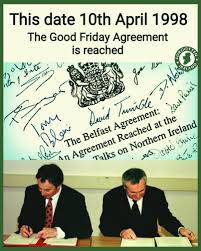
- This governance structure remained until the Good Friday Agreement in 1998, which led to the restoration of devolved government, albeit with periodic suspensions and challenges.
What the Ulster Convention Was
- The Ulster Convention was a significant political event in Northern Ireland, held in 1975 and 1976, as an attempt to break the deadlock over the governance of the region.
- The British government organised the convention to bring together elected representatives from Northern Ireland to discuss the future of its political structure.
- The aim was to find a solution that would allow for the restoration of devolved government while addressing the deep divisions between unionists and nationalists.
- The convention was composed of representatives elected specifically for this purpose, with unionists holding the majority of seats.
- The main task of the Ulster Convention was to agree on a form of devolved government that would be acceptable to both communities.
- However, the convention was dominated by unionist representatives who largely opposed power-sharing with nationalists, leading to a deadlock.
- Unionists at the convention proposed a return to a form of devolved government that would give them significant control, while nationalists demanded more equitable power-sharing arrangements.
- The discussions at the Ulster Convention failed to produce a consensus, and the convention eventually dissolved without agreement.
- The failure of the Ulster Convention underscored the deep-seated divisions in Northern Ireland and the difficulties in finding a political solution that could satisfy both communities.
Main Consequences of the Ulster Convention
- The failure of the Ulster Convention had several important consequences for Northern Ireland's political future.
- First, it highlighted the deep mistrust and unwillingness among unionists to engage in power-sharing with nationalists. This stance would continue to shape Northern Ireland's politics for years to come.
- The collapse of the convention confirmed that any future political settlement would require significant compromises from both sides, something that proved elusive for many years.
- Second, the failure of the convention led to the continuation of Direct Rule from Westminster. With no agreement on a devolved government, the British government had no choice but to continue administering Northern Ireland directly.
- This prolonged the period of Direct Rule, reinforcing the perception among many nationalists and republicans that Northern Ireland was under British control without adequate local representation.
- Third, the collapse of the convention contributed to the continued violence and instability in Northern Ireland.
- The lack of a political solution meant that paramilitary groups on both sides continued their campaigns, leading to further loss of life and deepening divisions.
- The ongoing violence made it increasingly difficult to establish a political process that all parties could support.
- Finally, the failure of the Ulster Convention paved the way for later peace efforts, such as the Anglo-Irish Agreement of 1985 and the Good Friday Agreement of 1998.
- These later agreements sought to address the issues that the Ulster Convention could not resolve, including the need for power-sharing, cross-border cooperation, and respect for both communities' identities.
- While the Ulster Convention was ultimately unsuccessful, it played a role in shaping the trajectory of Northern Ireland's peace process by demonstrating the challenges and complexities involved in finding a lasting solution.