Escalating Violence post-Bogside (Leaving Cert History): Revision Notes
📚Revision Notes
Escalating Violence post-Bogside
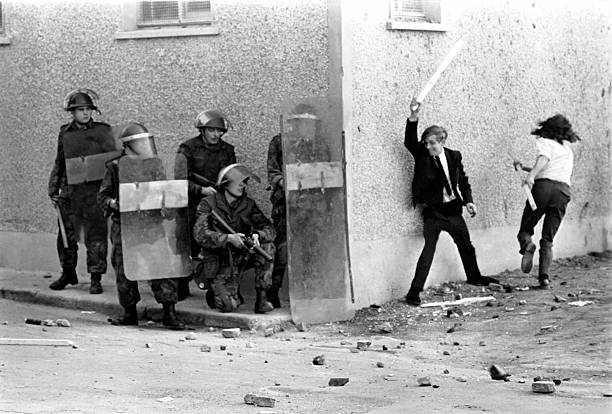
- The Battle of the Bogside marked a significant turning point in Northern Ireland, leading to the deployment of the British Army on the streets of Derry/Londonderry and other parts of Northern Ireland.
- The British government, recognising that the situation had spiralled beyond the control of the Royal Ulster Constabulary (RUC), sent in troops on 14 August 1969 to restore order and prevent further violence.
- Initially, the arrival of the British Army was welcomed by many in the Catholic community, who saw the soldiers as a neutral force that could protect them from the RUC and loyalist mobs. However, this initial goodwill quickly faded as the army became embroiled in the growing conflict.
The Role of the Provisional IRA in Escalating Violence
- As the violence escalated, the Provisional Irish Republican Army (IRA) emerged as a key player in the conflict.
- The Provisional IRA, a breakaway faction from the older and more traditional Official IRA, was formed in December 1969 in response to what was seen as the failure of the civil rights movement to secure equal rights for Catholics and the inability of the Official IRA to protect Catholic communities from loyalist attacks.
- The Provisional IRA adopted a more militant stance, advocating for armed resistance against the British presence in Northern Ireland and the overthrow of British rule.
- The group quickly gained support in nationalist areas, particularly in Derry/Londonderry and Belfast, where Catholic communities felt under siege.
- The Provisional IRA began to carry out attacks against the British Army, the RUC, and loyalist targets, marking the beginning of a violent campaign that would last for decades.
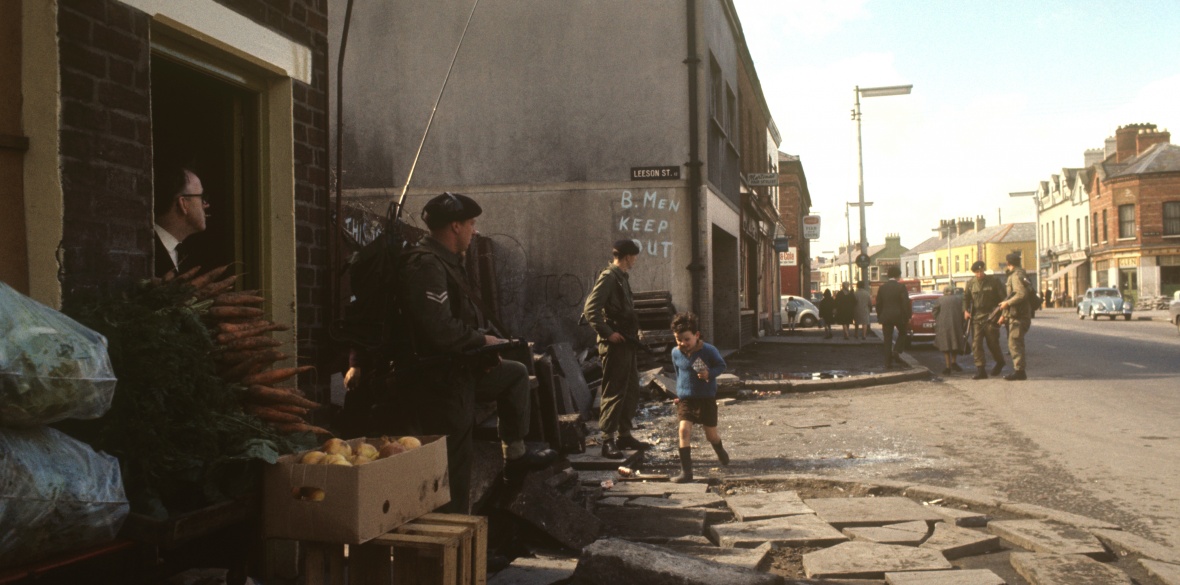
- The presence of the British Army, which was initially seen as a peacekeeping force, soon became a source of contention.
- As the army's tactics grew more aggressive, including house searches, arrests, and curfews, relations between the Catholic community and the British forces deteriorated rapidly.
-
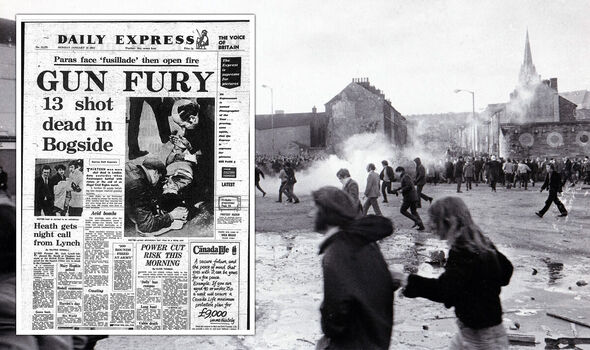
The army's actions were increasingly viewed as repressive, particularly after incidents such as Bloody Sunday in January 1972, when British soldiers shot and killed 14 unarmed civil rights protesters in Derry/Londonderry.
-
The escalating violence created a vicious cycle, with each act of aggression leading to further retaliation.
-
The Provisional IRA's campaign of bombings and shootings intensified, leading to significant loss of life and contributing to the deepening of the conflict.
-
The British Army, caught in the middle of a complex and intractable conflict, found itself increasingly perceived as an occupying force rather than a neutral peacekeeper.
The Falls Road Curfew - Key Points of Note
- The Falls Road Curfew took place in July 1970 in the Catholic Falls Road area of Belfast, a stronghold of nationalist sentiment.
- The curfew was imposed by the British Army after a series of clashes between the army and nationalist residents, who were accused of harbouring IRA members.
- The curfew lasted for 36 hours and involved the British Army sealing off the area, conducting house-to-house searches, and confiscating weapons.
- The operation was intended to disrupt the activities of the IRA, but it backfired, leading to widespread anger and resentment among the local population.
- Thousands of women from across Belfast defied the curfew by marching into the area to bring food and supplies to the trapped residents, a powerful act of resistance.
- The curfew and the heavy-handed tactics used by the British Army further alienated the Catholic community, strengthening support for the IRA.
- The incident marked a significant escalation in the conflict, as it demonstrated the willingness of the British Army to use force against civilian populations.
- The Falls Road Curfew was a key moment in the radicalisation of the nationalist community, driving more people towards supporting armed resistance.
The Arms Crisis - Key Points
-
The Arms Crisis in 1970 was a political scandal in the Republic of Ireland involving senior government officials.
-
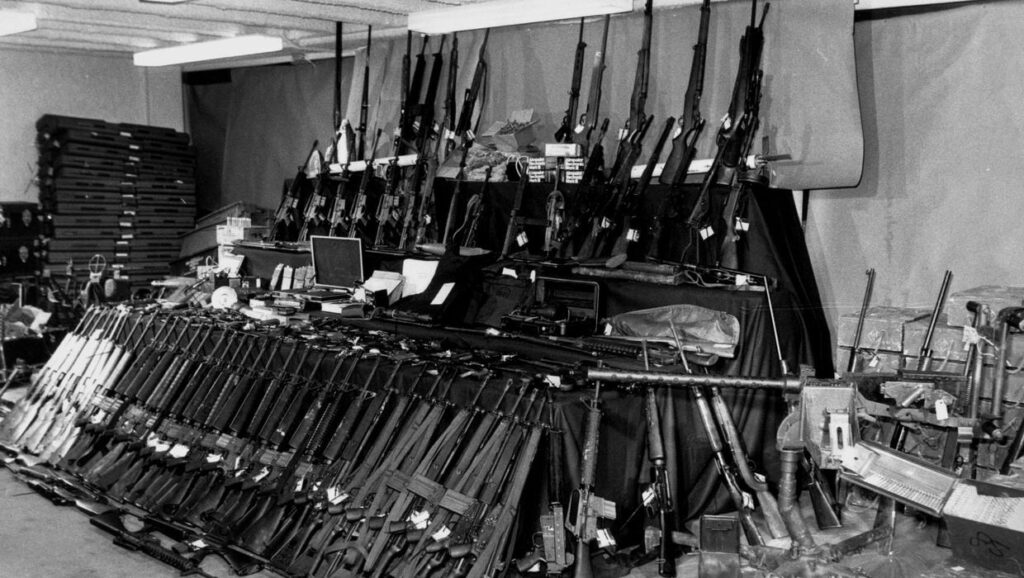
Irish government ministers Charles Haughey and Neil Blaney were accused of attempting to import arms illegally to support the nationalist community in Northern Ireland.
-
The crisis arose from concerns within the Irish government that the Catholic community in Northern Ireland was defenceless against loyalist attacks and needed protection.
-
The plan involved smuggling weapons into Northern Ireland to arm nationalist groups, possibly including the IRA.
-
The plot was uncovered before the arms could be delivered, leading to the arrest and trial of Haughey, Blaney, and others involved.
-
Although Haughey and Blaney were acquitted, the crisis caused significant political fallout in the Republic of Ireland, leading to their dismissal from the government.
-
The Arms Crisis highlighted the tensions between the Republic of Ireland and Northern Ireland and underscored the complexities of the Irish government's position during the early years of the Troubles.
-
The incident further strained relations between the Irish and British governments and contributed to the polarisation of opinion within the nationalist community in Northern Ireland.
The Formation of the Ulster Defence Association (UDA) - Key Points
-
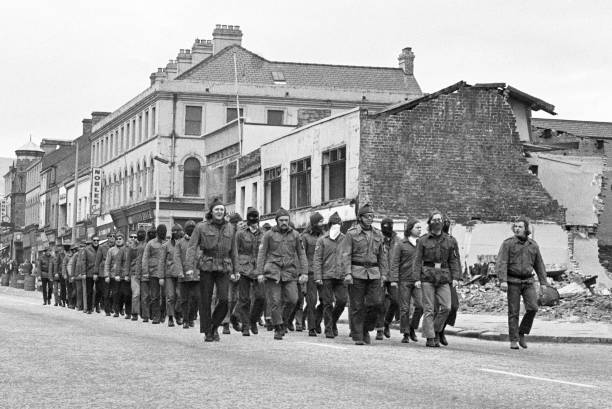
The Ulster Defence Association (UDA) was formed in September 1971 as an umbrella organisation for loyalist vigilante groups in Northern Ireland.
-
The UDA was created in response to the increasing violence and the perceived threat from the IRA and other nationalist groups.
-
It quickly became the largest loyalist paramilitary organisation, claiming to defend Protestant communities against IRA attacks and protect Northern Ireland's union with Britain.
-
Unlike the more secretive Ulster Volunteer Force (UVF), the UDA operated openly and had significant support within the Protestant community.
-
The UDA was involved in a wide range of activities, from community policing to violent attacks on Catholic civilians, which they justified as retaliation against IRA violence.
- The group was responsible for numerous killings and bombings throughout the Troubles, often targeting Catholics indiscriminately.
- The UDA, along with other loyalist groups, played a significant role in escalating the violence, contributing to the cycle of retaliation between loyalist and nationalist factions.
-
The formation of the UDA marked a significant development in the conflict, as it formalised and expanded loyalist paramilitary activity, further entrenching sectarian divisions in Northern Ireland.