O'Neill Replaces Brookborough - Key Background Context (Leaving Cert History): Revision Notes
📚Revision Notes
O'Neill Replaces Brookborough - Key Background Context
-
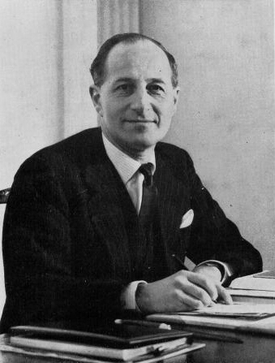
Captain Terence O'Neill was a prominent political figure in Northern Ireland during the mid-20th century. Born in 1914, O'Neill was a member of the Anglo-Irish aristocracy, and his family had a long history of involvement in Irish and British politics.
-
He was educated at Eton College, one of the most prestigious schools in Britain, and later served in the British Army during World War II, where he earned the rank of Captain.
-
This military background, along with his family's political connections, positioned him as a respected and influential figure in Northern Ireland's unionist circles.
-
O'Neill entered politics in 1946 when he was elected as the Ulster Unionist Party (UUP) Member of Parliament for Bannside.
-
He quickly rose through the party ranks, becoming known for his moderate views and pragmatic approach to governance.
-
Unlike many of his contemporaries, O'Neill recognised the need for reform in Northern Ireland, particularly in addressing the economic challenges and social inequalities that had long plagued the region.
-
As a politician, O'Neill was known for his belief in modernisation and his desire to improve relations between the Protestant and Catholic communities in Northern Ireland.
-
He believed that economic development and social reform were essential to achieving political stability and reducing sectarian tensions.
- His vision for Northern Ireland was one of progress and inclusion, though he would later face significant challenges in trying to implement this vision.
- O'Neill's moderate stance and focus on economic reform set him apart from the more hardline unionists of his time, ultimately paving the way for his rise to leadership in the 1960s.
How Terence O'Neill Came to Replace Brookeborough
-
By the early 1960s, Lord Brookeborough's long tenure as Prime Minister of Northern Ireland was coming to an end.
-
After 20 years in power, Brookeborough was facing increasing criticism for his failure to address the social and economic challenges facing Northern Ireland, particularly the growing sectarian tensions and the economic stagnation that had taken hold.
-
Within the Ulster Unionist Party (UUP), there was a growing sense that Northern Ireland needed a new leader who could bring fresh ideas and a more modern approach to governance.
- Terence O'Neill, with his reputation as a moderate and reformer, emerged as Brookeborough's natural successor.
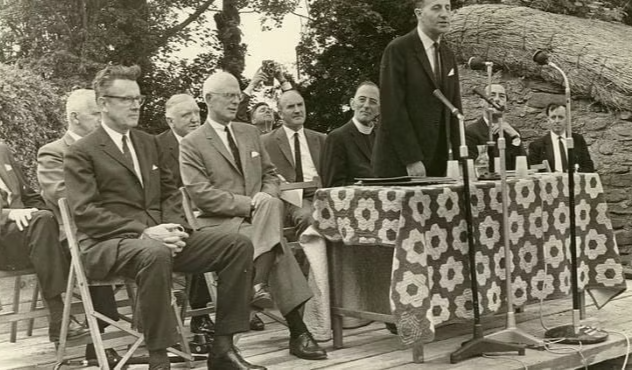
- O'Neill had built a strong political career within the UUP, earning respect for his pragmatic approach to economic development and his willingness to engage with the Catholic nationalist community.
-
His moderate views and focus on economic reform appealed to those within the party who believed Northern Ireland needed to modernise to remain stable and prosperous.
-
In 1963, Brookeborough announced his resignation, and O'Neill was chosen to replace him as Prime Minister.
-
His appointment marked a significant shift in Northern Irish politics, as O'Neill was seen as a leader who could bridge the gap between the Protestant and Catholic communities and steer Northern Ireland towards a more inclusive and economically prosperous future.
-
O'Neill's rise to leadership also reflected the changing political landscape in Northern Ireland.
-
The post-war period had brought new challenges and opportunities, and there was a growing recognition that the old governing methods were no longer sufficient.
- O'Neill's vision of modernisation and reform was seen as the key to securing Northern Ireland's economic and social future.
Terence O'Neill's Role in Economic Transformation Before Leadership
- Before becoming Prime Minister, Terence O'Neill played a crucial role in driving economic transformation in Northern Ireland during the 1950s and early 1960s.
- As Minister of Finance from 1956 to 1963, O'Neill was at the forefront of efforts to revitalise the Northern Irish economy, which had been struggling due to the decline of traditional industries like shipbuilding and textiles.
- O'Neill recognised that Northern Ireland needed to diversify its economy to reduce its reliance on these declining industries.
- He believed that attracting new industries and investment was essential to creating jobs and ensuring long-term economic stability. To this end, O'Neill championed the development of industrial estates and introduced various incentives to encourage both domestic and foreign companies to set up operations in Northern Ireland.
- His efforts led to the establishment of new manufacturing plants, particularly in engineering and electronics, which provided much-needed employment opportunities.
- Another key aspect of O'Neill's economic strategy was improving Northern Ireland's infrastructure.
- He advocated for better transportation links, including modernising roads and railways, to support economic growth and make the region more attractive to investors.
- O'Neill also focused on expanding the availability of technical education and vocational training, which he believed was crucial for building a skilled workforce capable of meeting modern industry demands.
- O'Neill's economic policies aimed to boost Northern Ireland's economy and address the social inequalities that had contributed to sectarian tensions.
- He believed that economic prosperity could help bridge the divide between the Protestant and Catholic communities by providing opportunities for all, regardless of religious background.
- These efforts to transform Northern Ireland's economy laid the groundwork for his later leadership as Prime Minister, where he continued to pursue his vision of modernisation and reform.
- O'Neill's work in economic development before becoming leader demonstrated his commitment to improving the lives of all Northern Irish citizens and set the stage for the challenges he would face in trying to implement broader social and political reforms.