Cumann Na nGaedheal and Foreign Policy (Leaving Cert History): Revision Notes
📚Revision Notes
Cumann Na nGaedheal and Foreign Policy
Cumann na nGaedheal's Approach to the Boundary Commission
- The Boundary Commission was one of the most critical issues in Irish foreign policy during Cumann na nGaedheal's time in power.
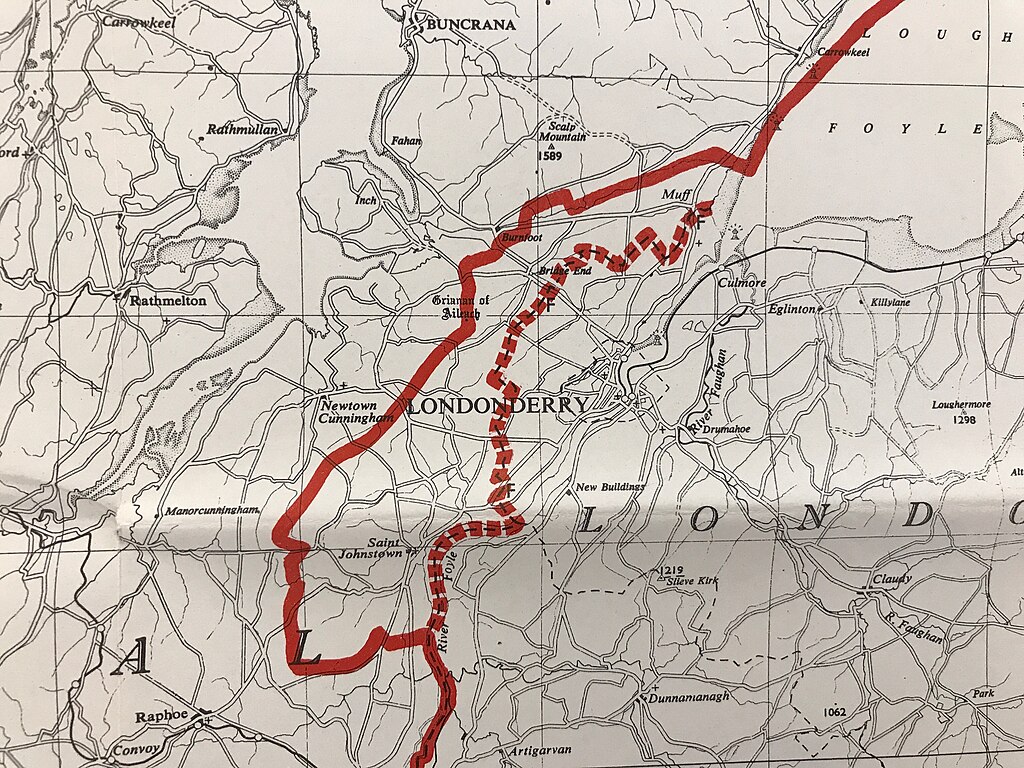
- The commission was established under the terms of the Anglo-Irish Treaty to determine the final border between the Irish Free State and Northern Ireland.
- This was a key concern for the Free State government, as many hoped that the commission would lead to significant adjustments in favour of the Free State, potentially transferring large areas of Northern Ireland to Irish control.
- However, the Cumann na nGaedheal government faced various challenges in managing this issue. The boundary talks dragged on for several years, with various political changes in Britain complicating the situation.
- The commission's work finally began in 1924, but the Free State's hopes for substantial territorial gains were quickly dashed.
- The situation came to a head in 1925 when details of the commission's findings were leaked to the press, revealing that only minor changes to the border were being proposed.
- The leak caused outrage in the Free State, where many had expected significant portions of Northern Ireland to be transferred. Eoin MacNeill, who represented the Free State on the commission, resigned in protest after the leak, further weakening the Free State's position.
- Ultimately, the boundary issue was settled through political negotiations, not by the commission's findings.
- The Anglo-Irish Agreement of 1925 effectively left the border unchanged, and the Free State government agreed to this in exchange for financial concessions from Britain.
- Although many nationalists were disappointed with the outcome, it avoided the possibility of further conflict over the border.
- Cumann na nGaedheal's handling of the Boundary Commission was seen as a pragmatic, if unpopular, decision to preserve stability in the new state.
Establishing an Independent Foreign Policy: Joining the League of Nations
-
One of Cumann na nGaedheal's key foreign policy achievements was establishing Ireland's international presence as an independent entity.
- The government was keen to assert the Irish Free State's sovereignty on the world stage, distinguishing it from its former status as part of the United Kingdom. A major step in this direction was joining the League of Nations in 1923.
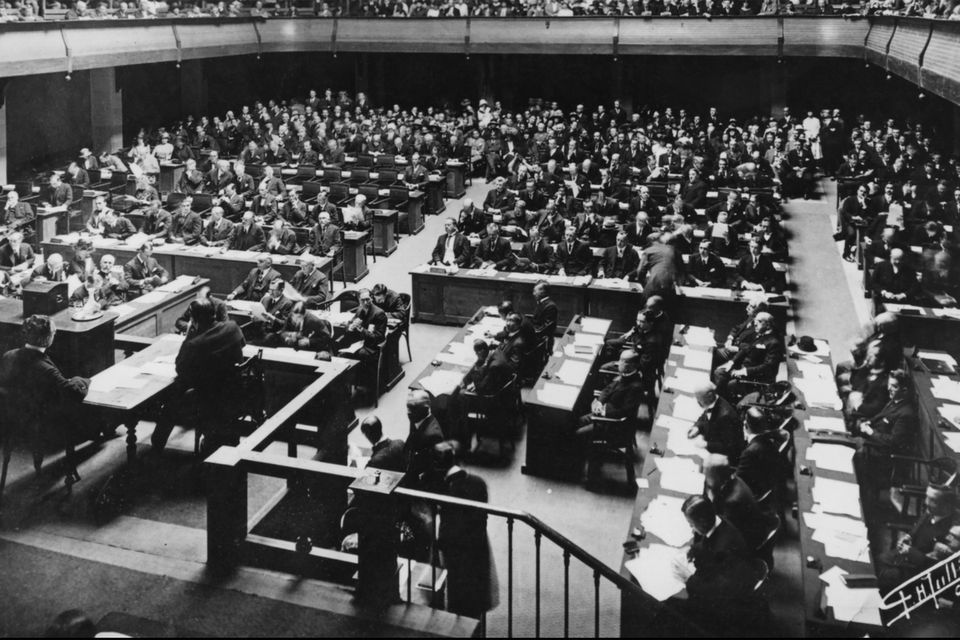
- The government was keen to assert the Irish Free State's sovereignty on the world stage, distinguishing it from its former status as part of the United Kingdom. A major step in this direction was joining the League of Nations in 1923.
-
The League of Nations was an international organisation founded after World War I to promote peace and cooperation among nations.
-
By joining the League, the Irish Free State gained international recognition as a sovereign state, separate from Britain. This was a significant achievement for Cumann na nGaedheal, as it reinforced the Free State's independence in the eyes of the world.
-
The government, particularly under Minister for External Affairs Desmond FitzGerald, worked to build a distinct Irish foreign policy.
-
FitzGerald and his team used Ireland's position in the League to advocate for small nations' rights and to promote peace and diplomacy. This aligned with Ireland's interests as a small state keen to avoid entanglement in major power conflicts.
-
The Irish delegation at the League also worked to emphasise Ireland's unique identity and to forge diplomatic relationships with other countries.
-
This was part of a broader effort to distance the Free State from Britain and to establish Ireland's voice in global affairs.
-
The government's participation in the League was widely seen as a success. It helped secure Ireland's status as an independent nation and increased its influence in international matters.
-
Cumann na nGaedheal's approach to foreign policy was cautious and focused on building respectability and stability for the Free State.
-
By joining the League of Nations, the government ensured that Ireland was recognised as a sovereign state while also contributing to the broader goals of peace and international cooperation.
Ireland in the Commonwealth: Coping and Dealing with the Imperial Connection
-
Despite the emphasis on independence, Cumann na nGaedheal had to navigate Ireland's position within the British Commonwealth, a sensitive issue given the country's recent struggle for independence. Under the terms of the Anglo-Irish Treaty, the Irish Free State was recognised as a Dominion within the British Commonwealth, similar to Canada, Australia, and New Zealand.
-
This meant that while Ireland had significant autonomy, it still had formal ties to the British Crown, including the requirement that Irish officials take an oath of allegiance to the British monarch.
-
Cumann na nGaedheal's strategy was to work within the Commonwealth framework while gradually expanding Ireland's autonomy.
-
The government's approach was pragmatic. It recognised that the Free State's international status and security were partly tied to its Commonwealth membership.
-
This relationship provided Ireland with some international recognition and allowed the Free State to leverage its Dominion status to push for greater independence over time.
- One of the ways Cumann na nGaedheal dealt with the Commonwealth connection was by focusing on the Statute of Westminster in 1931.
- This statute granted full legislative independence to the Dominions, meaning that the Irish Free State could now pass laws without British interference.
-
This was a crucial development for Cumann na nGaedheal, allowing the government to assert more control over Ireland's domestic and foreign policies.
-
At the same time, the government faced internal challenges from those who were dissatisfied with Ireland's continued ties to Britain. Fianna Fáil, under Éamon de Valera, capitalised on this discontent, arguing that the Free State's Dominion status was a betrayal of true independence.
-
Cumann na nGaedheal responded by emphasising the practical benefits of remaining within the Commonwealth, such as the economic and diplomatic advantages it provided.
-
The government's handling of Ireland's Commonwealth status was ultimately about balancing the desire for greater independence with the realities of international relations.
-
By working within the Commonwealth framework, Cumann na nGaedheal secured and gradually expanded Ireland's autonomy, laying the groundwork for future governments to further distance Ireland from its imperial past.
-
This approach reflected the government's broader strategy of achieving independence through cautious diplomacy and legal means rather than through direct confrontation.