The 1923 Election, The Army Mutiny and Threats to the State (Leaving Cert History): Revision Notes
📚Revision Notes
The 1923 Election, The Army Mutiny and Threats to the State
The 1923 Elections
- The 1923 general elections were a pivotal moment in the early history of the Irish Free State. Held on 27 August 1923, these elections were the first to take place after the end of the Irish Civil War and were crucial in determining the political landscape of the new state.
- The main parties contesting the election were Cumann na nGaedheal, led by W.T. Cosgrave, which was the pro-Treaty party that had governed during the Civil War, and Sinn Féin, led by Éamon de Valera, which represented the anti-Treaty faction.
- Cumann na nGaedheal campaigned on a platform of stability, law, and order, emphasising the need to rebuild the country after the devastation of the Civil War.
- They argued that their experience in government, especially during the challenging years of the Civil War, made them the best choice to lead the country into a period of peace and recovery.
- They also emphasised the importance of establishing and maintaining the institutions of the Free State, which they believed were essential for Ireland's future prosperity and independence.
- On the other hand, Sinn Féin, which had not recognised the legitimacy of the Free State government and had abstained from taking their seats in the Dáil, ran on a platform that rejected the Anglo-Irish Treaty and sought to replace the Free State with a fully independent republic. Their candidates included many former members of the anti-Treaty IRA, who were still deeply opposed to the terms of the Treaty and the partition of Ireland.
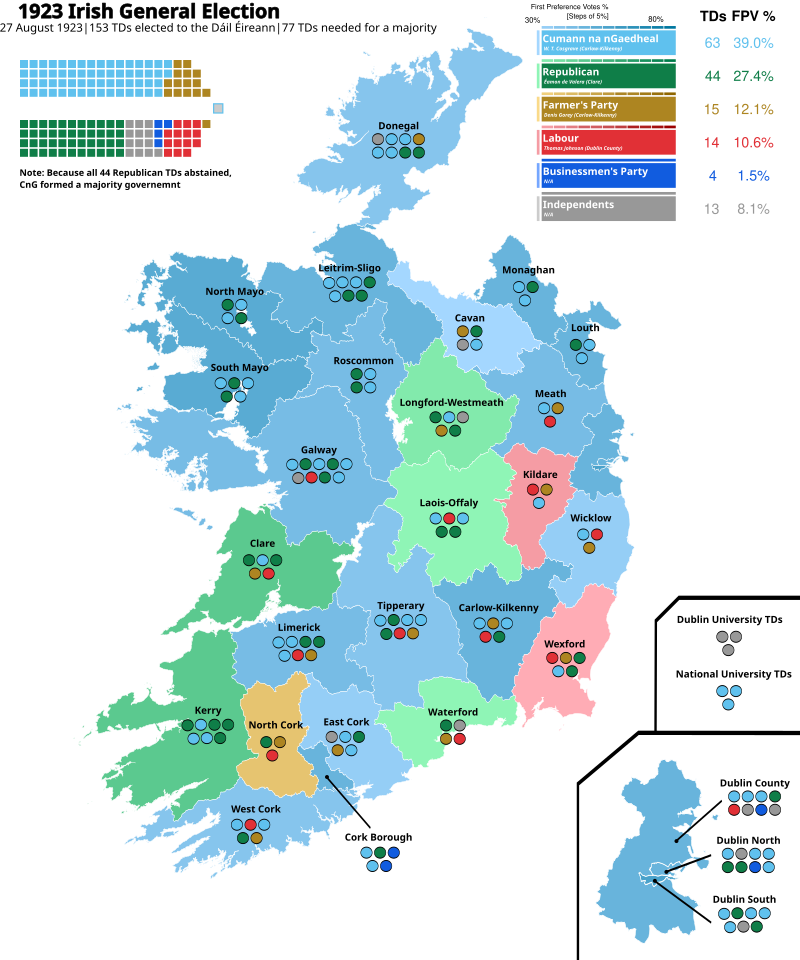
- The election results were a significant victory for Cumann na nGaedheal, which won 63 seats, the largest number of any party, compared to Sinn Féin's 44 seats.
- This result gave W.T. Cosgrave's government the mandate it needed to continue leading the Free State and to focus on the difficult task of nation-building.
- Sinn Féin's decision to abstain from taking their seats meant that Cumann na nGaedheal could govern with relative ease despite other smaller parties in the Dáil.
- The 1923 election also marked a shift in Ireland's political dynamics, as many voters who had previously supported Sinn Féin now backed Cumann na nGaedheal, recognising the need for stability and governance.
- The election was a turning point that allowed the Free State government to consolidate its power and begin healing the deep divisions created by the Civil War.
The Army Mutiny (Background, Key Events, and Results)
- The Army Mutiny of 1924 was a critical challenge faced by the Cumann na nGaedheal government in the early years of the Irish Free State.
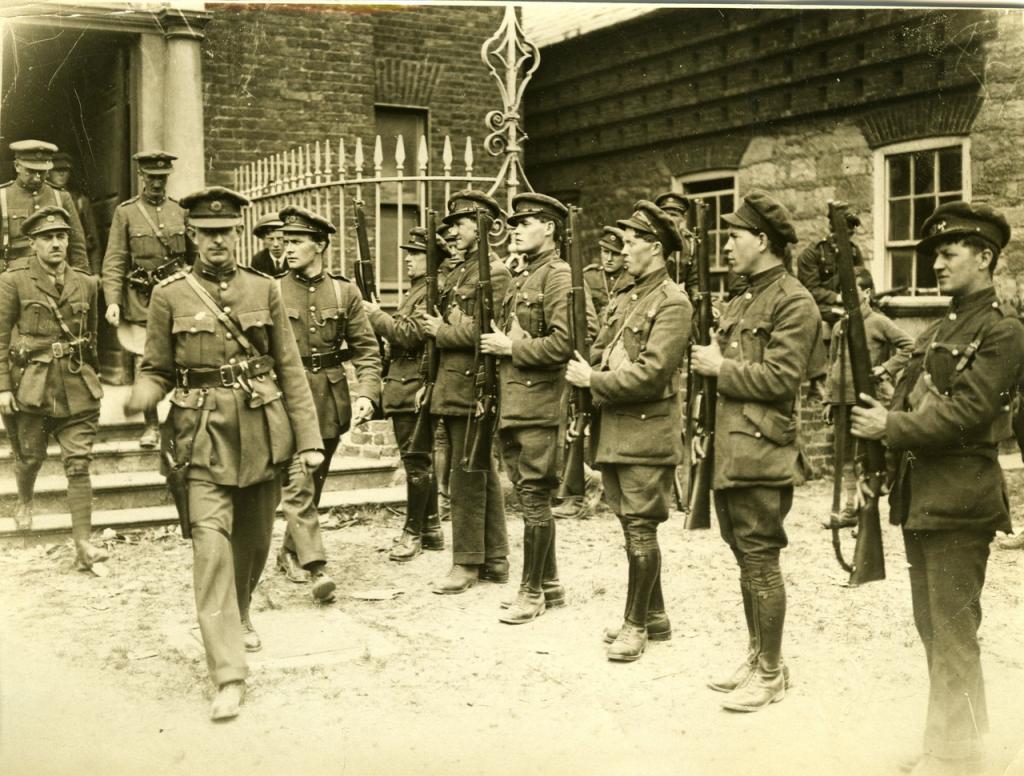
- This event, also known as the "Army Crisis," reflected the ongoing tensions and divisions within the National Army, which had been hastily assembled during the Irish Civil War from pro-Treaty IRA members and former British soldiers.
Background
- After the Civil War, the National Army was left with many officers and soldiers who were deeply loyal to Michael Collins and the ideals of the independence struggle.
- Many of these men were dissatisfied with the direction the Free State was taking, particularly regarding its handling of former anti-Treaty forces and the influence of former British officers within the National Army's leadership.
- There was also a growing frustration over the lack of recognition and rewards for their service during the Civil War, as well as fears that the government was moving away from the republican ideals they had fought for.
Key Events
- The mutiny began in March 1924 when a group of officers, led by Liam Tobin and Charles Dalton, both close associates of Michael Collins, issued an ultimatum to the government.
- They demanded the dismissal of the Army Council, the removal of senior officers whom they believed were not sufficiently republican, and better conditions for the rank-and-file soldiers.
- This group, known as the "Old IRA," had strong support within the lower ranks of the army and was prepared to take action if their demands were not met.
- The situation quickly escalated, with the mutineers threatening to seize control of army barracks and launch a coup against the government.
- The Cumann na nGaedheal government responded firmly, led by W.T. Cosgrave and with Kevin O'Higgins as Minister for Home Affairs.
- They refused to negotiate under threat and instead moved swiftly to assert control. Cosgrave ordered the arrest of the mutiny leaders and took decisive steps to reorganise and reduce the size of the army, effectively demobilising many of the disgruntled soldiers.
Results
- The government's firm response successfully quelled the mutiny without a descent into widespread violence, although tensions remained high for some time.
- The mutiny highlighted the fragility of the Free State and the deep divisions that persisted within its institutions.
- However, the government's handling of the crisis ultimately strengthened its authority and demonstrated its determination to maintain order and stability in the new state.
- In the aftermath, the government implemented reforms to professionalise the army and reduce the influence of factions within it.
- The mutiny also led to the resignation of Richard Mulcahy, the Minister for Defence, who was seen as having lost control of the army.
- Despite the challenges, the resolution of the Army Mutiny marked an important step in consolidating the Free State's power and stabilising its armed forces, allowing the government to focus on the broader task of nation-building.