The Blueshirts and the Establishment of Fine Gael (Leaving Cert History): Revision Notes
📚Revision Notes
The Blueshirts and the Establishment of Fine Gael
Below are key notes that will help you gain an insight into one of the key opponents that Fianna Fail faced in the 1930's. The Blueshirts have long been controversial due to their so-called ties to Fascism, but they are an important group to know about, particular for those with an interest in answering on Fianna Fail in the inter-war years. Below are some base notes on the foundation of the Blueshirts and the role of one Eoin O'Duffy, their founder.
Origins and Founding
-
The Blueshirts were a political movement in Ireland during the early 1930s, formally known as the Army Comrades Association (ACA).
-
The group was founded in 1932 by former members of the Irish Free State Army who were loyal to the pro-Treaty side during the Irish Civil War.
-
The Blueshirts emerged in response to the rise of Fianna Fáil and the increasing influence of former anti-Treaty republicans in Irish politics.
-
The founding of the Blueshirts was motivated by the belief that Fianna Fáil and its supporters threatened Ireland's democratic institutions.
-
Many Blueshirts were concerned about what they saw as the potential for authoritarianism under Éamon de Valera's government.
-
The movement was also a reaction to the widespread social unrest of the time, including violent clashes between rival political groups.
-
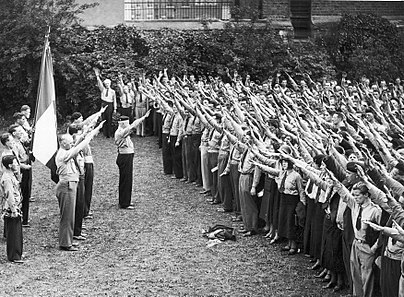
The Blueshirts were named after the blue shirts they wore as a uniform, which symbolised their militaristic and disciplined approach.
-
The organisation was heavily influenced by European fascist movements, particularly those in Italy under Mussolini.
-
The Blueshirts adopted fascist-style rhetoric, including an emphasis on strong leadership, nationalism, and anti-communism.
-
However, unlike their European counterparts, the Blueshirts operated within the framework of Irish democracy and never fully embraced the totalitarian aspects of fascism.
-
Initially, the Blueshirts were focused on protecting pro-Treaty politicians and public events from disruption by anti-Treaty forces.
-
However, as the group grew, it became more politically ambitious, advocating for broader social and political changes.
-
This included opposition to Fianna Fáil's economic policies and a desire to restore the Catholic Church's influence in Irish public life.
-
The Blueshirts became increasingly active in Irish politics, eventually becoming involved in the formation of Fine Gael.
The Blueshirts' March to Dublin
- One of the most significant and controversial events in the Blueshirts' history was their planned March to Dublin in August 1933.
- The march was intended to commemorate Michael Collins, Arthur Griffith, and Kevin O'Higgins, key figures of the Irish independence movement and pro-Treaty leaders who had been killed during or after the Irish Civil War.
- The march was also meant to demonstrate the strength and unity of the Blueshirts, who saw themselves as the defenders of the Irish Free State against what they perceived as the growing threat of Fianna Fáil's authoritarianism.
- The march was planned to be a massive display of power, with thousands of Blueshirts marching through the streets of Dublin.
- However, the event was highly controversial, raising significant concerns among the Irish government and the public.
- Many feared that the march was a prelude to a coup or an attempt to seize power by force, given the Blueshirts' militaristic nature and their fascist-style uniforms and rhetoric.
- The Fianna Fáil government, led by Éamon de Valera, saw the march as a direct challenge to the state's authority and a potential threat to democracy.
- In response, de Valera banned the march under the Public Safety Act, which gave the government broad powers to maintain public order.
- The ban was a significant setback for the Blueshirts, as it prevented them from carrying out what would have been their most high-profile event to date.
- Despite the ban, the planned march to Dublin solidified the Blueshirts' image as a forceful and potentially dangerous political movement.
- The event also marked a turning point for the organisation, as it faced increasing pressure from the government and public opposition.
- The failure to carry out the march contributed to the Blueshirts' decline as an independent political force, leading to their eventual merger with Fine Gael.
Eoin O'Duffy: A Key Figure in the Blueshirts
-
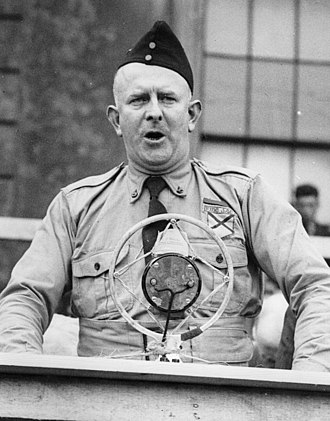
Eoin O'Duffy was a central figure in the history of the Blueshirts and one of the most controversial personalities in 20th-century Irish politics. Born in County Monaghan in 1892, O'Duffy had a distinguished career as a soldier and police officer before becoming involved in politics.
-
He served as a commander in the Irish Republican Army (IRA) during the War of Independence and later became the first Commissioner of the Garda Síochána (the Irish police force) in the newly established Irish Free State.
-
O'Duffy's leadership of the Garda Síochána earned him a reputation as a strong and decisive leader, but his tenure was also marked by controversy.
-
He was known for his authoritarian style and staunchly pro-Treaty views, making him a polarising figure. In 1933, after being dismissed from his position as Garda Commissioner by the Fianna Fáil government, O'Duffy was appointed as the leader of the Blueshirts.
-
As the leader of the Blueshirts, O'Duffy sought to transform the organisation into a powerful political force that could challenge Fianna Fáil's dominance. He was inspired by the fascist movements in Europe, particularly Mussolini's Blackshirts in Italy, and he sought to model the Blueshirts after them.
-
Under O'Duffy's leadership, the Blueshirts adopted a fascist-style uniform and held rallies that resembled those of European fascists.
-
O'Duffy's ambitions extended beyond Ireland. He envisioned the Blueshirts as part of a broader international movement against communism and what he saw as the threats to Western civilisation.
-
However, his leadership style and the overtly fascist elements of the Blueshirts alienated many potential supporters in Ireland, where memories of the Civil War and a strong commitment to democracy were still fresh.
-
In 1933, under O'Duffy's leadership, the Blueshirts attempted to stage their controversial March to Dublin, which was seen as a possible prelude to a coup.
-
The government banned the march, and the Blueshirts' momentum began to fade. O'Duffy's failure to lead the Blueshirts to power marked the beginning of his political decline.
-
After the Blueshirts merged with other pro-Treaty forces to form Fine Gael in 1933, O'Duffy became the party's first leader.
-
However, his extremist views and authoritarian tendencies soon led to his marginalisation within the party.
-
O'Duffy resigned as leader of Fine Gael in 1934 and later became involved in various far-right movements, including leading an Irish Brigade to fight for Franco in the Spanish Civil War.
-
His political career ended in relative obscurity, but his impact on Irish politics during the early 1930s remains significant.