Events that Consolidated Partition (Leaving Cert History): Revision Notes
📚Revision Notes
Events that Consolidated Partition
First Inter-Party Government (1948-1951)
- The first inter-party government in Ireland was formed after the 1948 general election, marking the first time Fianna Fáil was not in power since 1932.
- It was a coalition government consisting of Fine Gael, Labour, Clann na Poblachta, and other smaller parties.
- John A. Costello of Fine Gael became the coalition government's Taoiseach (Prime Minister).
- The government maintained the existing partition between Northern Ireland and the Republic of Ireland but aimed to assert the Republic's independence from Britain.
- The government focused on economic recovery and social reform, introducing measures like the Mother and Child Scheme, although this faced significant opposition.
- The coalition was fragile, with internal disagreements, particularly over the Republic of Ireland Act and other national issues, leading to its eventual collapse in 1951.
The Republic of Ireland Act (1948)
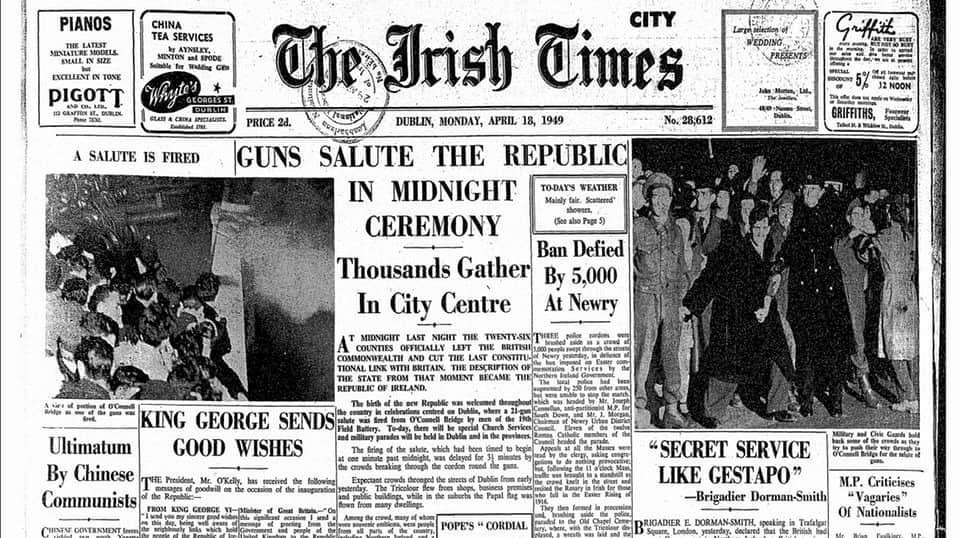
- The Republic of Ireland Act was passed in 1948 and was enacted on Easter Monday, 1949.
- The Act declared Ireland a republic, formally ending its status as a dominion within the British Commonwealth.
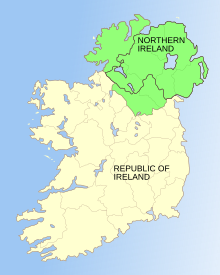
- While the Act affirmed Ireland's independence, it also solidified the partition, as Northern Ireland remained part of the United Kingdom.
- The Act removed any remaining ties to the British monarchy, but it did not alter Northern Ireland's status.
- The Act led to Ireland's recognition as a republic internationally and allowed it to seek membership in international organisations such as the United Nations.
- The British government recognised the Republic of Ireland but also reinforced Northern Ireland's position as part of the UK, stating that it would remain so unless the majority in Northern Ireland wished otherwise.
Differences in War Experience Between Northern Ireland and the Irish Free State
During World War II, Northern Ireland and the Irish Free State (later the Republic of Ireland) experienced the war differently due to their differing political statuses and geographical locations.
Northern Ireland
Active Participation
- Northern Ireland was part of the United Kingdom and, therefore, fully involved in the war effort.
- The region was subject to British conscription laws, and many Northern Irish men joined the British armed forces.
- The war effort in Northern Ireland was significant, with heavy industry, particularly in Belfast, contributing to the production of war materials, such as ships and aircraft.
The Belfast Blitz
- Northern Ireland experienced direct conflict during the war, most notably the Belfast Blitz in April and May 1941.
- German bombers targeted Belfast, resulting in significant destruction and loss of life.
- The Blitz revealed the inadequacy of civil defence preparations in Northern Ireland and brought the war's devastation to the region's doorstep.
Social Impact
- The war effort led to increased employment in Northern Ireland's industrial sectors, particularly in shipbuilding and munitions.
- However, the presence of British and American troops in Northern Ireland also created social tensions, particularly regarding housing and resources.
The Irish Free State
Neutrality
- The Irish Free State remained neutral during World War II, officially adopting a policy of "friendly neutrality."
- This meant that Ireland did not participate directly in the war, although it experienced significant pressures from both the Allies and Axis powers.
The Emergency
- The Irish government referred to the war as "The Emergency" and enacted strict measures to maintain neutrality, such as censorship, rationing, and control of essential supplies.
- The Emergency Powers Act gave the government wide-ranging powers to manage the state during this period.
Limited Conflict
- Unlike Northern Ireland, the Irish Free State was largely spared from direct attacks.
- However, there were a few instances of accidental bombings by German aircraft, such as the bombing of Dublin in May 1941, which caused casualties and damage.
Economic Challenges
- The war severely impacted the Irish Free State's economy, leading to shortages in food, fuel, and other essential supplies.
- Rationing was widespread, and the country's economic isolation exacerbated these challenges.
- The war experience was marked by austerity and hardship, in contrast to Northern Ireland's more active and direct involvement in the conflict.