Essay Q Prep - Impact of WW2 on economy and society of NI? (Leaving Cert History): Revision Notes
📚Revision Notes
Essay Q Prep - Impact of WW2 on the economy and society of NI?
1939-45
- The northern economy entered a boom period.
- South suffered the economic cost of neutrality.
- The South escaped the destruction caused by war, but the North, particularly Belfast, did not.
The North Wartime Economy
- The shipbuilding industry rose to meet wartime demands.
- 140 warships constructed in NI – Harland and Wolff.
- Shorts Bros built around 1200 Stirling bomber planes for RAF
- 1943 Government took over Harland, Wolff and Shorts Bros's management and merged them.
- NI linen industry disrupted by the war – Russia, Belgium and France were the main sources of flax but were invaded by the Nazi's.
- Textile industry benefited from the war – 2 million parachutes hundreds of thousands of uniforms manufactured in NI.
- Increase in employment opportunities in industry – unemployment fell to just 5%.
- Northern workers saw a wage increase.
- Britain turned to NI for most of its agricultural produce
- Cattle numbers grew from 750000 in 1939 to just under 1 million by 1945.
- Farmers benefited from government grants and subsidies.
Belfast during WW2
- Belfast felt it was under no threat of invasion in 1939.
- Life remained largely unchanged at the beginning of the war.
- Belfast's economy fared better than other British cities
- Shipyards benefited from wartime contracts, the main suppliers of planes and parts for the RAF.
- Major issue was the lack of preparation in case of an attack.
- Belfast City Council did little to make provisions for such an event – drills, bomb shelters, gas masks.
- Genuine belief in NI that the war wouldn't affect them.
- Calls for some measures to be put in place.
- 1939, Major Frank Eastwood appointed as a full-time air raid precautions officer.
- With the outbreak of war, he called for 16,000 volunteers to join the LDV force, but only 3,000 joined.
- Air Raid Precautions Act 1939 – structures were set up to deal with fire fighting, gas attacks, the evacuation of children, building air raid shelters and blacking out lights at night.
- Ministry of Home Affairs asked the British government for 1 million gas masks – received only 420000
- Insufficient bomb shelters to protect the population.
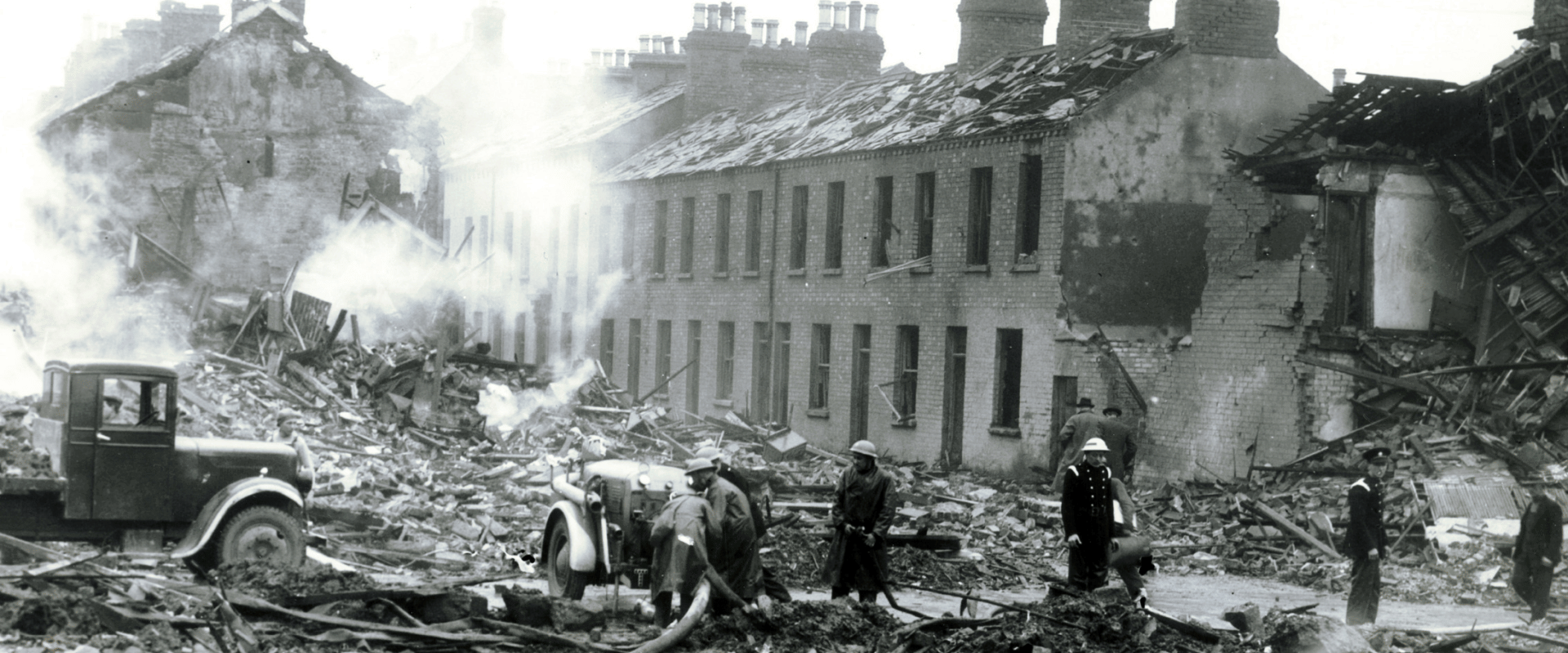
The Outbreak of WW2
- James Craig (Craigavon) in very poor health – many believed he was unable to carry out the necessary duties of a wartime leader.
- Declining support for Craig's leadership.
- Established the Ministry of Public Security – responsible for civil defence.
- 1939, the British introduced conscription – it didn't apply to NI.
- 1940 call for more volunteers to join the LDV – Sir Basil Brooke led the drive.
- Few willing volunteers – considered withholding unemployment assistance from those who refused to enlist.
- In August 1940, Churchill renamed the LDV the Home Guard – almost 26000 members.
Wartime Belfast
- After the Fall of France 1940 the Luftwaffe was within range of NI.
- Marked improvement in attempts to defend against attack.
- Belfast was an area of vital military importance.
- Extra anti-aircraft machinery was put in place to protect key areas.
- Nov 1940, JM Andrews replaced Craig.
- Feb 1941 Andrews stated he was 'very concerned at our anti-aircraft defences' and at the 'position which might arise in Belfast after a severe air attack'.
- Fears came true on 7-8 April 1941.
The Blitz
The Dockside Raid, 7-8 April 1941
- Luftwaffe planes dropped bombs on the dockside area of Belfast.
- Air raid sirens hadn't sounded to warn of an attack.
- 13 people were killed, 81 injured.
- The government attempted to create a false sense of security by reassuring the public that it had been well-prepared for the attack.
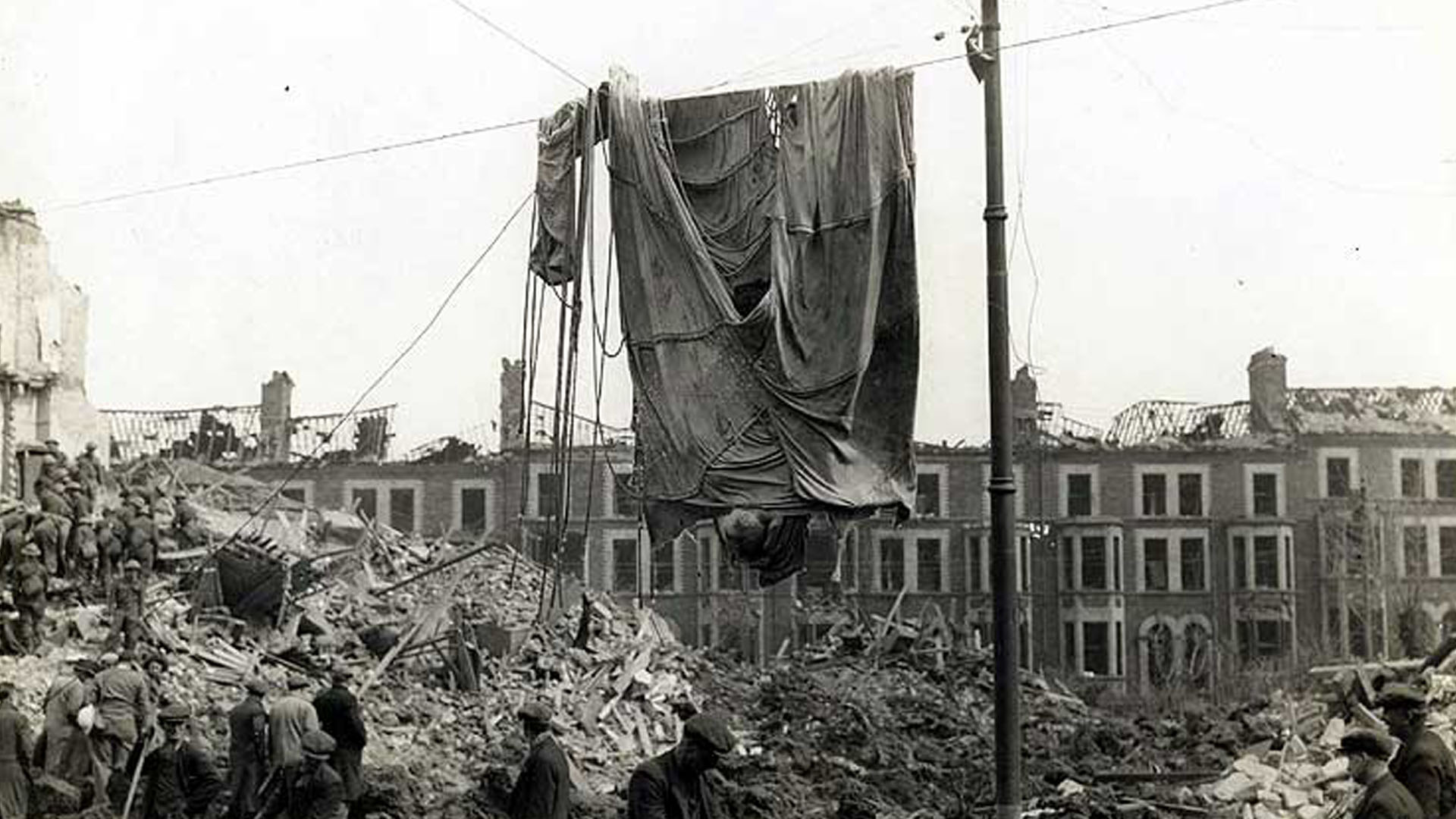
Easter Tuesday Raid, 15 April, 1941
-
10:40 pm, sirens sounded across the city to warn of an attack.
-
Home guard took up positions to prepare the anti-aircraft weapons.
- RAF estimated that 90 bombers flew over Belfast; German air ministry recorded that 180 aircraft were active over NI.
- Seventy-six landmines were dropped – caused massive damage.
-
900 dead, with 600 injured
-
Electricity output was at half power; gas output was at 75%; the telephone network was seriously disrupted.
-
Industrial output dropped to 25% of its pre-Blitz levels.
-
Home guards unable to cope with the scale of attacks.
-
De Valera agreed to send help.
-
Seventy firemen and 13 fire engines sent to Belfast from the south.
-
Cardinal Joseph MacRory feared that NI firemen might just concern themselves with Protestant areas.
-
Southern firemen cheered as they arrived in Ulster.
-
The sending of firemen was important as it was the first official 'contact' between North and South in almost twenty years.
Fire Raid, 4-5 May, 1941
- The last major attack on Belfast by the Luftwaffe.
- Approximately 100000 bombs were dropped on the city.
- Many buildings were badly damaged; the question of conscription was brought up again.
- Some 48000-53000 men would be called up if conscription was introduced.
- As a result of growing opposition from Belfast, the British government decided against introducing conscription.
Wartime Evacuation
- 3200 houses destroyed and 56000 damaged.
- 150000 people were made permanently homeless; 100000 people made temporarily homeless.
- Public morale very low – many people fled the city.
- Ministry of Public Security attempted to organise the city's evacuation, but mothers and small children, old and sick, were given priority.
- By June 1941, around 220000 had temporarily left Belfast – many were middle class.
Wartime Output
- Lost 45% of its shipbuilding capacity.
- Valuable contribution to wartime output.
- December 1944, 30801 workers at Harland and Wolff.
- Launched 170 military and merchant ships.
- King's Hall used for making parts for cars and machinery.
- Sirocco Works produced grenades, radar equipment and gun mountings.
- Higher proportion of female workers in Belfast than in other parts of Britain – women entered jobs that men traditionally did.
The End of the War
- Four hundred metric tonnes of explosives dropped on Belfast during the war.
- 1100 people were killed, 650 injured.
- Extensive damage to churches
- Major shortage of housing.
- People accustomed to rationing, blackouts and strict censorship.
- VE Day – 8 May 1945