Art and Artists in the Irish Free State (Leaving Cert History): Revision Notes
📚Revision Notes
Art and Artists in the Irish Free State
The Role of Artists Like Paul Henry and Jack Yeats
- In the Irish Free State, artists like Paul Henry and Jack B. Yeats played significant roles in shaping the cultural identity of the new nation. Both artists are celebrated for their contributions to Irish art and their ability to capture the spirit of Ireland during a time of profound change.
- Paul Henry was known for his evocative landscapes, which portrayed the rugged beauty of the Irish countryside. His works often featured the west of Ireland, particularly Connemara, with its dramatic skies, mountains, and remote cottages.
- Post-Impressionism influenced his style, but he adapted it to create a distinctively Irish aesthetic that was both modern and rooted in tradition.
- Jack B. Yeats, the younger brother of the famous poet W.B. Yeats, was another key figure in Irish art during this period.
- Unlike Henry, who focused on landscapes, Yeats' work often depicted scenes of everyday Irish life, capturing the energy and vibrancy of the people and places he encountered.
- Expressionism influenced his early work, and his style became more abstract and symbolic over time. Yeats' paintings are known for their bold use of colour and dynamic brushstrokes, which convey a sense of movement and emotion.
- Both Henry and Yeats played vital roles in the cultural life of the Irish Free State, contributing to the nation's artistic renaissance.
- Their work not only documented Ireland's physical landscape and social life but also helped to define a national artistic identity that was distinctly Irish yet informed by broader European movements.
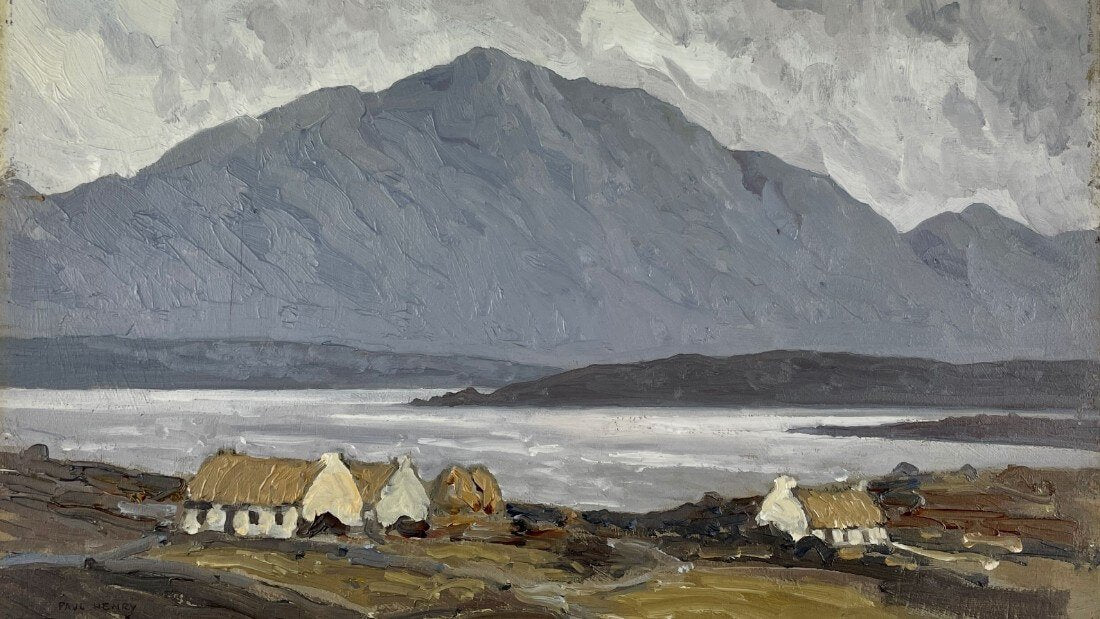
Paul Henry's contribution
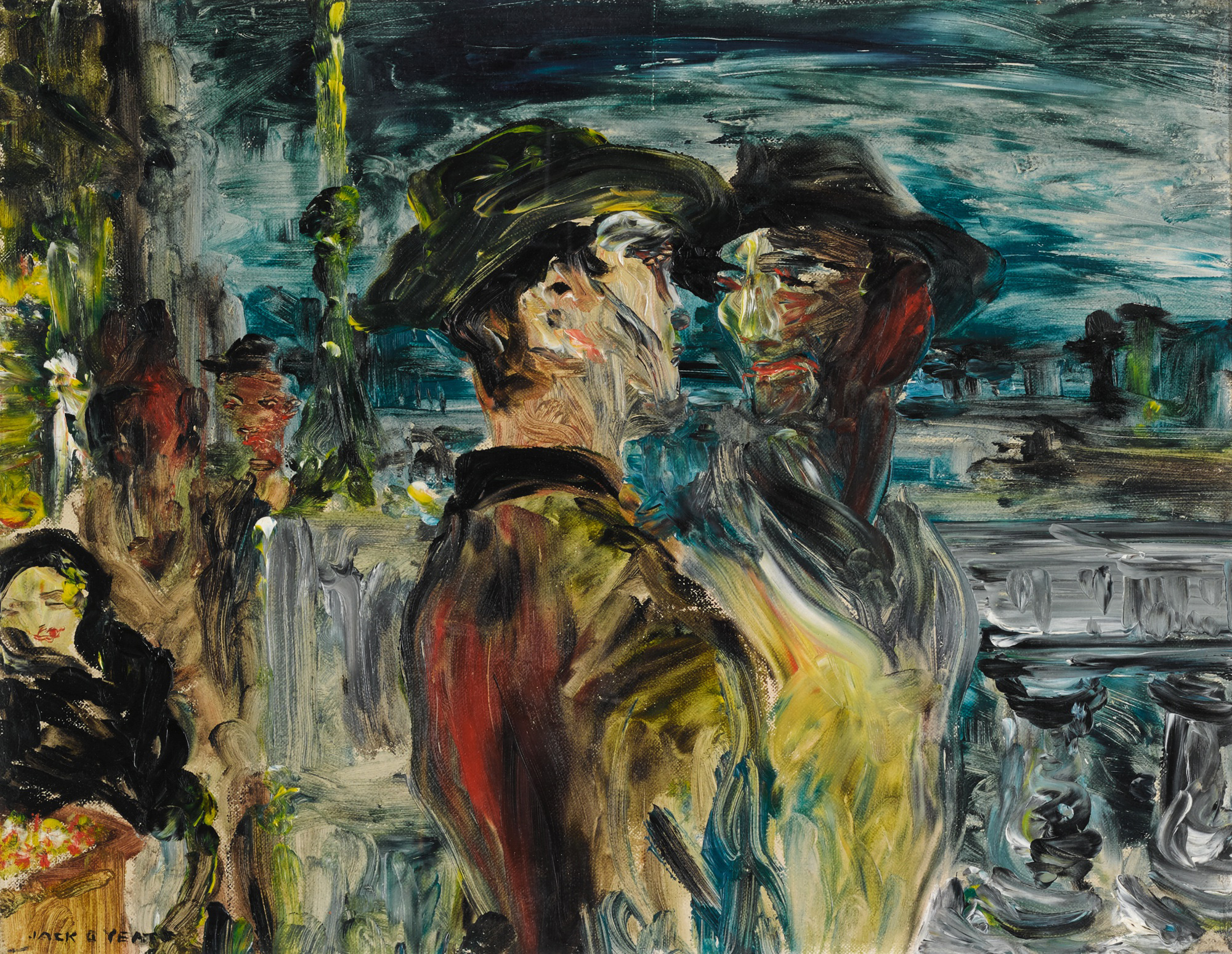
Jack B. Yeats contibution
10 Key Points on Evie Hone and Her Contribution
-
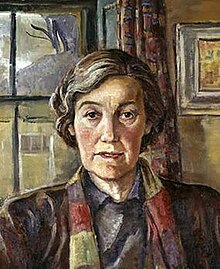
Evie Hone was an influential Irish artist known primarily for her work in stained glass.
-
Born in 1894, Hone was a member of the White Stag Group, a collective of modernist artists in Ireland.
-
Cubism and other avant-garde movements influenced her early work she encountered while studying in Paris.
-
Hone became a leading figure in the revival of stained glass art in Ireland, a medium integral to the Irish cultural renaissance.
-
She collaborated with fellow artist Wilhelmina Geddes and was greatly influenced by the work of Harry Clarke, a stained glass master.
-
Hone's work is characterised by its vibrant colours and complex, symbolic compositions, often incorporating religious themes.
-
One of her most famous works is the East Window of Eton College Chapel, completed in 1949 and considered a masterpiece of modern stained glass.
-
Hone's contributions to the Church of Ireland and Roman Catholic churches across Ireland helped to establish stained glass as a significant Irish art form.
-
She was also a founding member of the Irish Exhibition of Living Art, which showcased modernist art in Ireland and promoted new artistic talent.
-
Hone's legacy lies in her ability to blend modern artistic techniques with traditional Irish themes, making her one of the most important Irish artists of the 20th century.
What Was So Unusual About the Abbey Theatre in the 1920s?
-
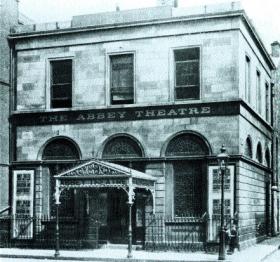
The Abbey Theatre in Dublin, founded in 1904, was already a prominent cultural institution by the 1920s, but what made it particularly unusual during this decade was its role in both reflecting and shaping the new identity of the Irish Free State.
-
The theatre was not just a venue for plays; it was a cultural battleground where ideas about Irish identity, politics, and society were explored and contested.
- In the 1920s, the Abbey Theatre became known for its commitment to producing works that dealt with Irish life's complexities, particularly in the recent struggle for independence and the subsequent civil war.
- It was unusual in its willingness to tackle controversial and politically charged subjects at a time when the nation was still adjusting to its newfound independence.
-
The plays often depicted the harsh realities of life in Ireland, challenging romanticised notions of Irish identity that were prevalent in popular culture.
-
One of the most striking aspects of the Abbey Theatre during this period was its support for new Irish playwrights, many exploring themes of nationalism, identity, and social change.
-
Playwrights like Sean O'Casey gained prominence with works such as The Shadow of a Gunman (1923), Juno and the Paycock (1924), and The Plough and the Stars (1926).
-
These plays were notable for their unflinching portrayal of working-class life in Dublin and their critical perspective on the Irish nationalist movement.
-
The Abbey also faced censorship and controversy, particularly with the production of The Plough and the Stars. This led to riots in the theatre due to its perceived criticism of Irish nationalism.
-
Despite this, the Abbey remained committed to artistic freedom and continued to produce challenging works that provoked discussion and debate about the direction of the new Irish state.
-
In summary, the Abbey Theatre's unusual role as a space for cultural and political expression, its support for innovative Irish playwrights, and its fearless engagement with the pressing social and political issues of the day made it a unique institution in the 1920s.
-
The theatre's willingness to confront uncomfortable truths about Irish society made it a central institution in the cultural life of the Irish Free State.
Key Terms
- Post-Impressionism: An art movement that reacted against Impressionism, focusing on more symbolic and abstract styles.
- Expressionism: An artistic style that seeks to depict not objective reality but the subjective emotions and responses that objects and events arouse in the artist.
- Stained glass: Coloured glass used to create decorative windows, particularly in churches, often featuring intricate designs and religious imagery.
- Cubism: An early 20th-century art movement that abandoned traditional perspective, representing objects from multiple viewpoints within the same composition.
- White Stag Group: A group of modernist artists active in Ireland during the 1930s and 1940s, known for promoting avant-garde art in the country.
- Irish Exhibition of Living Art: An annual exhibition established in 1943 to showcase contemporary art in Ireland and support modernist artists.
- The Plough and the Stars: A play by Sean O'Casey, first performed in 1926 at the Abbey Theatre, which caused controversy for its critical portrayal of Irish nationalism.