An Appliance with a Motor (Leaving Cert Home Economics): Revision Notes
📚Revision Notes
An Appliance with a Motor
A food processor is a kitchen appliance that uses a motor to power various attachments, making food preparation tasks faster and more efficient. This versatile tool can handle multiple cooking tasks, from chopping vegetables to whipping cream. Understanding how it works and how to use it safely will help you make the most of this valuable kitchen equipment.
Design and construction
Base unit
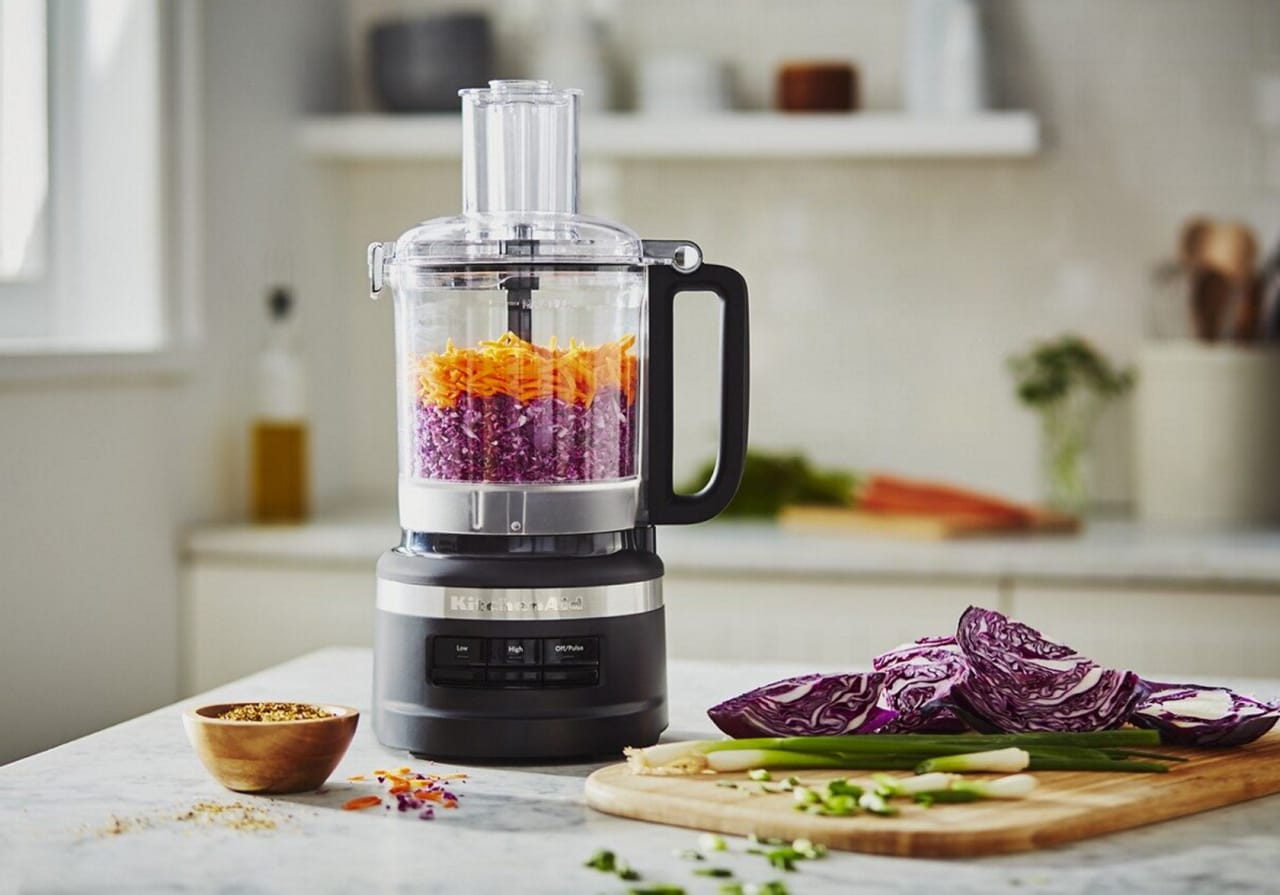
The base unit forms the foundation of the food processor and contains several crucial components. This sturdy section houses the motor that powers the entire appliance and includes all the control buttons and switches. Manufacturers typically build the base from heavy-duty materials such as durable plastic or metal to ensure the appliance remains stable during operation, even when processing tough ingredients.
Important
The motor is the heart of the food processor, converting electrical energy into mechanical motion that drives the attachments.
Processing bowl
The bowl sits on top of the base unit and serves as the container where all food processing takes place. Most bowls are made from clear plastic, which allows you to monitor your ingredients as they're being processed. The size of the bowl varies between different models - larger food processors can handle family-sized portions or batch cooking, while smaller models suit individual needs or limited kitchen space.
Attachments for different tasks
Food processors come equipped with various attachments, each designed for specific food preparation tasks:
- Knife blade: This is the most commonly used attachment, perfect for chopping, mincing, and mixing ingredients. It excels at creating pastes, working dough, and finely chopping vegetables
- Julienne blade: Creates thin, uniform strips of food that work brilliantly for salads, stir-fries, or decorative garnishes
- Egg whisk: Incorporates air into mixtures by whipping eggs or cream, resulting in light, fluffy textures ideal for meringues or whipped cream
How food processors work
Motor power and operation
The motor serves as the powerhouse that drives all the attachments. Motor strength is measured in watts - higher wattage motors can handle more demanding tasks and tougher ingredients. When you turn on the processor, the motor spins a spindle inside the bowl, which connects to whichever attachment you've chosen.
Note
Higher wattage motors provide more power for processing tough ingredients, but they also consume more electricity. Consider your typical usage when choosing a food processor.
Feed tube system
The design includes a feed tube that allows you to add ingredients while the machine operates. This clever feature means you can continuously add ingredients during processing, creating smooth, consistent results without stopping the machine.
Safety mechanisms
Food processors include a safety locking lid that prevents operation unless properly secured. This essential safety feature ensures the high-speed blades only operate when the appliance is correctly assembled, protecting users from potential accidents.
Using your food processor safely and effectively
Before you start
- Always read the instruction manual to understand your specific model's features and safety requirements
- Check that the bowl locks securely onto the base and the lid fastens properly before operating
- Select the appropriate attachment for your intended task to achieve the best results
Important
Never attempt to operate a food processor without ensuring all safety mechanisms are properly engaged. The high-speed blades can cause serious injury if the appliance is incorrectly assembled.
During operation
- Avoid overfilling the bowl, as this can lead to uneven processing and potentially strain the motor
- Use the pulse function when you need more control over the processing - this gives you better control over texture and prevents over-processing
- Cut ingredients into uniform pieces before processing to ensure even results and reduce motor strain
Note
The pulse function is particularly useful when you want to achieve a specific texture without over-processing your ingredients. It gives you precise control over the final result.
Maintenance and cleaning
Immediate care after use
Taking care of your food processor immediately after use extends its lifespan and maintains hygiene standards. Remove the bowl, lid, and attachments for thorough cleaning as soon as you finish processing.
Proper cleaning routine
- Clean all removable parts promptly to prevent food from hardening and becoming difficult to remove
- Most components are dishwasher safe, but always check your manual to confirm
- Ensure all parts are completely dry before reassembling to prevent mould growth
- Store attachments separately from the base unit to prevent blade damage and make them easier to access
Note
Proper drying is crucial to prevent bacterial growth and maintain the longevity of your appliance. Pay special attention to areas where water might collect, such as around blade assemblies.
Regular maintenance
Perform periodic checks for signs of wear, particularly on the blades and motor components. This proactive approach helps identify potential issues before they become serious problems, ensuring your appliance continues to work effectively.
Summary
Key Points to Remember:
- The motor is the key component that powers all food processor functions
- Safety locking mechanisms prevent operation unless the appliance is properly assembled
- Different attachments serve specific purposes - knife blade for chopping, julienne blade for strips, egg whisk for incorporating air
- Proper cleaning and maintenance immediately after use keeps your food processor in excellent working condition
- Never overfill the bowl and always cut ingredients into uniform pieces for best results