19: Broite ar Scoil (Leaving Cert Irish): Revision Notes
📚Revision Notes
19: Breoite ar Scoil
Pictiúr 1
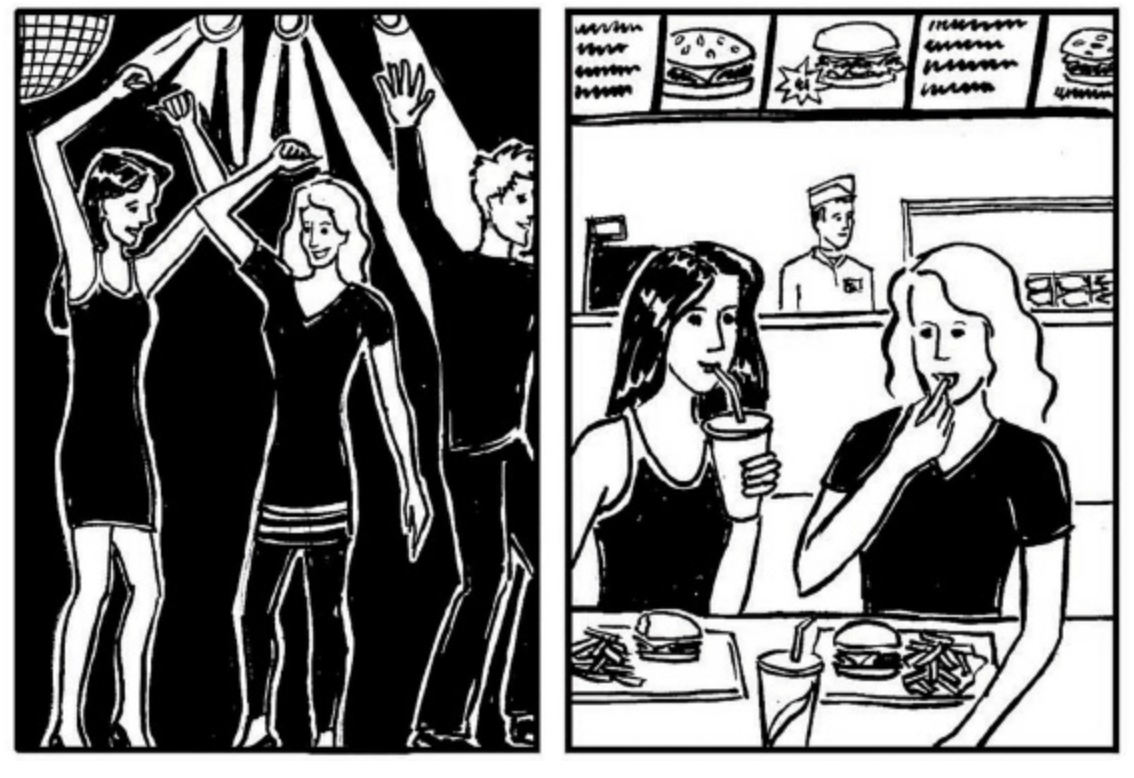
Sa chéad phictiúr, tá Róisín agus Clíodhna ag spraoi go sona sásta ag an dioscó lena gcairde. Tá siad ag canadh agus ag damhsa agus níl cíos, cás ná cathú orthu. Ag deireadh na hoíche, socraíonn siad bia tapa a cheannach mar tá siad stiúgtha leis an ocras.
English translation:
In the first picture, Róisín and Clíodhna are happily enjoying themselves at the disco with their friends. They are singing and dancing and have not a care in the world. At the end of the night, they decide to buy fast food because they are starving.
Example
Nath Cainte – Idiomatic Expression
- Níl cíos, cás ná cathú orthu
(They have not a worry in the world.)
A common Irish idiom used to describe someone carefree and relaxed.
Pictiúr 2
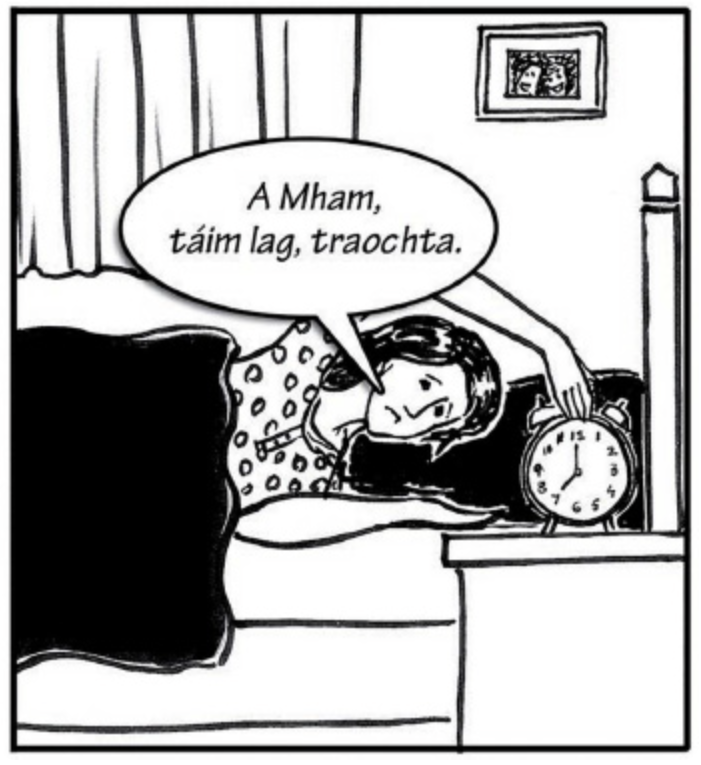
Ar maidin an lá dar gcionn, buaileann clog aláraim Róisín. Múchann sí é ach is ar éigean atá sí in ann éirí mar tá sí chomh lag sin. Glaonn sí ar a máthair agus deir sí go bhfuil sí traochta agus tinn.
English translation:
The following morning, Róisín’s alarm clock rings. She turns it off but can barely get up because she is so weak. She calls her mother and says she is exhausted and unwell.
Note
Struchtúr: “chomh + aidiacht + sin”
- chomh lag sin – so weak
This structure is used to emphasise how extreme something is.
Pictiúr 3
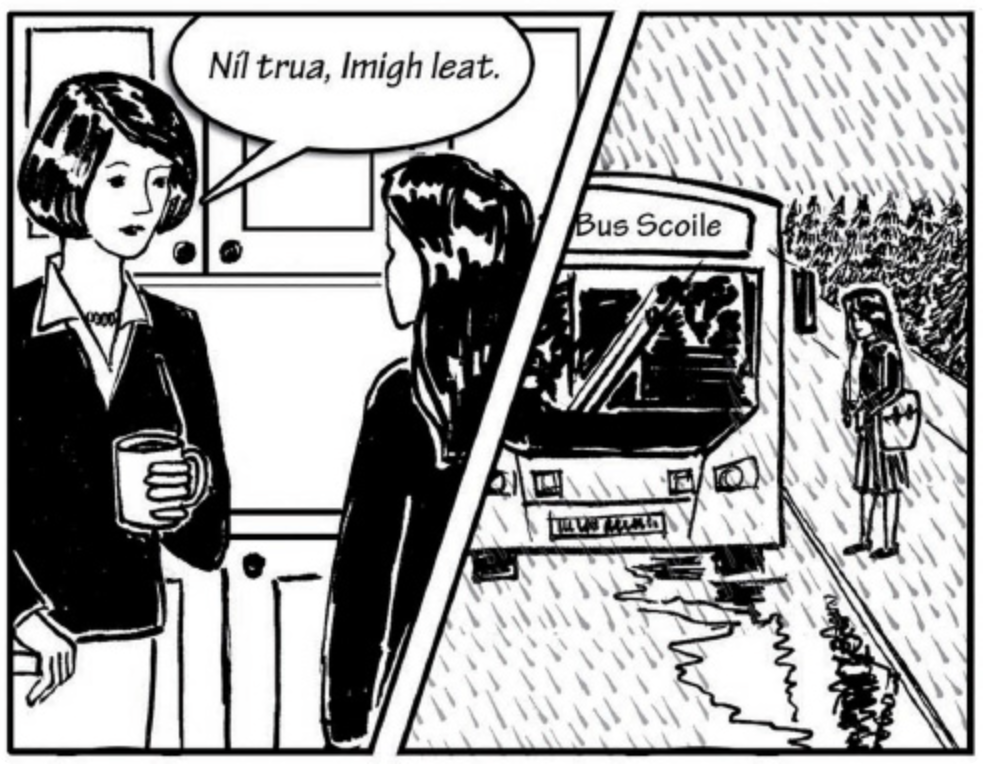
Cé go bhfuil sí in umar na haimléise, níl mórán trua ag a máthair di agus cuireann sí ar scoil í. Faigheann sí an bus ag geata an tí agus tá an bháisteach ag stealladh anuas uirthi.
English translation:
Although she is in a bad way, her mother has little sympathy for her and sends her to school. She gets the bus at the gate of the house and the rain is pouring down on her.
Important
An Tuiseal Ginideach – The Genitive Case
- Geata an tí
(The gate of the house)
The second noun changes form to show possession.
Pictiúr 4
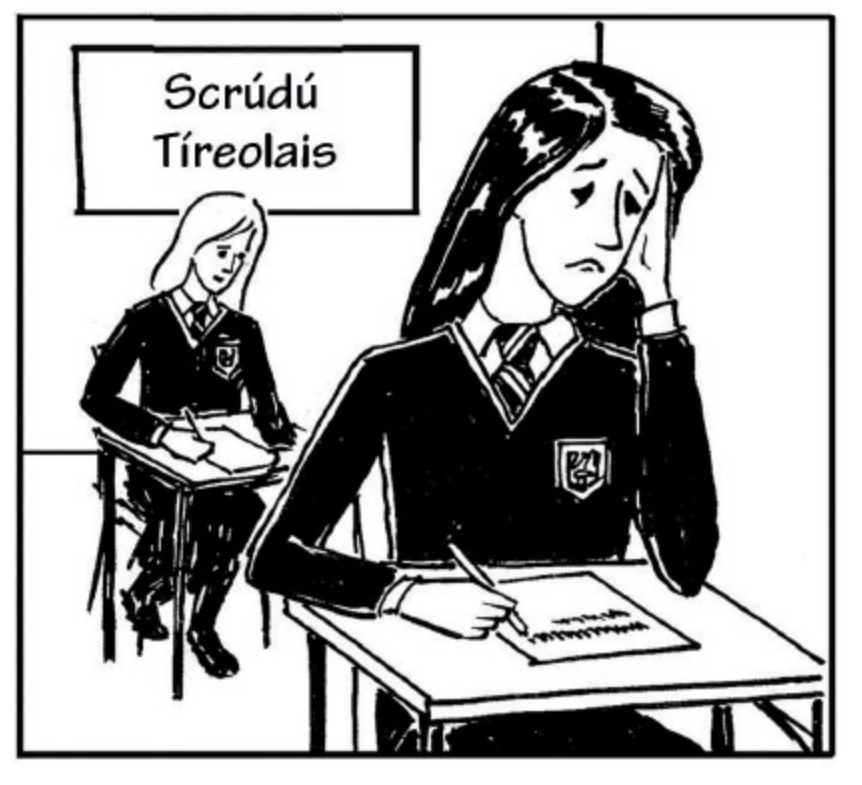
Sa rang eolaíochta, tá scrúdú ar siúl. Ní féidir le Róisín díriú mar tá tinneas cinn uirthi agus fonn cur amach uirthi freisin. Tá sí i gcruachás ceart.
English translation:
In science class, an exam is taking place. Róisín cannot concentrate because she has a headache and feels like getting sick. She is in real difficulty.
Pictiúr 5
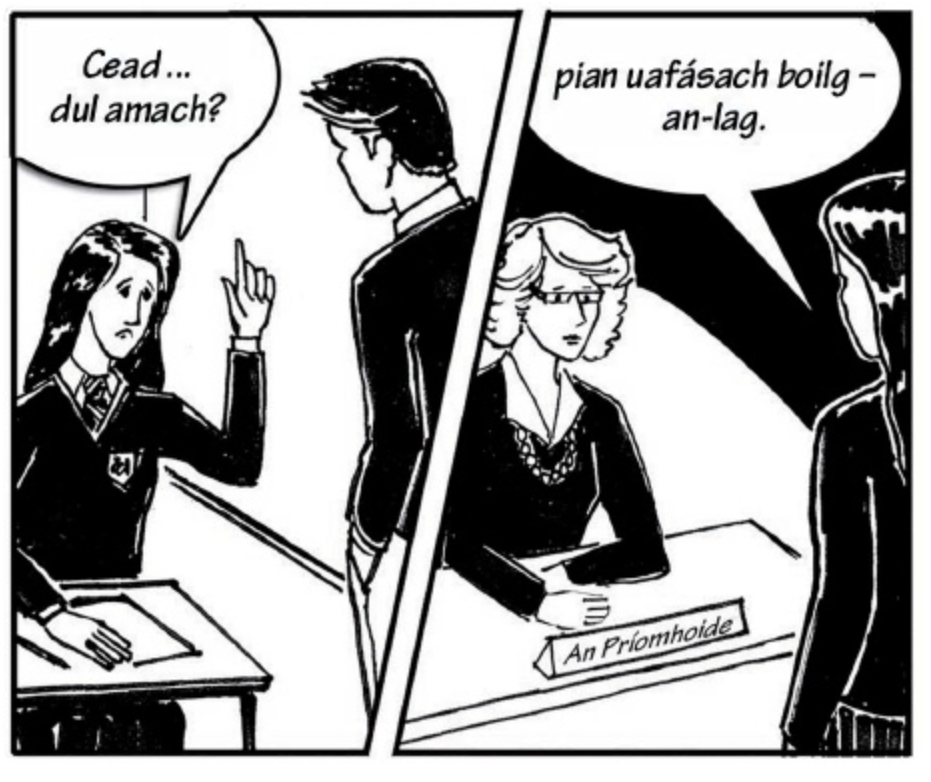
Iarrann Róisín cead dul amach agus ligeann an múinteoir amach í. Téann sí chuig oifig an phríomhoide agus insíonn sí di go bhfuil pian mhór ina bolg aici. Tá cuma bhuartha ar an bpríomhoide.
English translation:
Róisín asks for permission to leave and the teacher lets her out. She goes to the principal’s office and tells her she has severe stomach pain. The principal looks worried.
Pictiúr 6
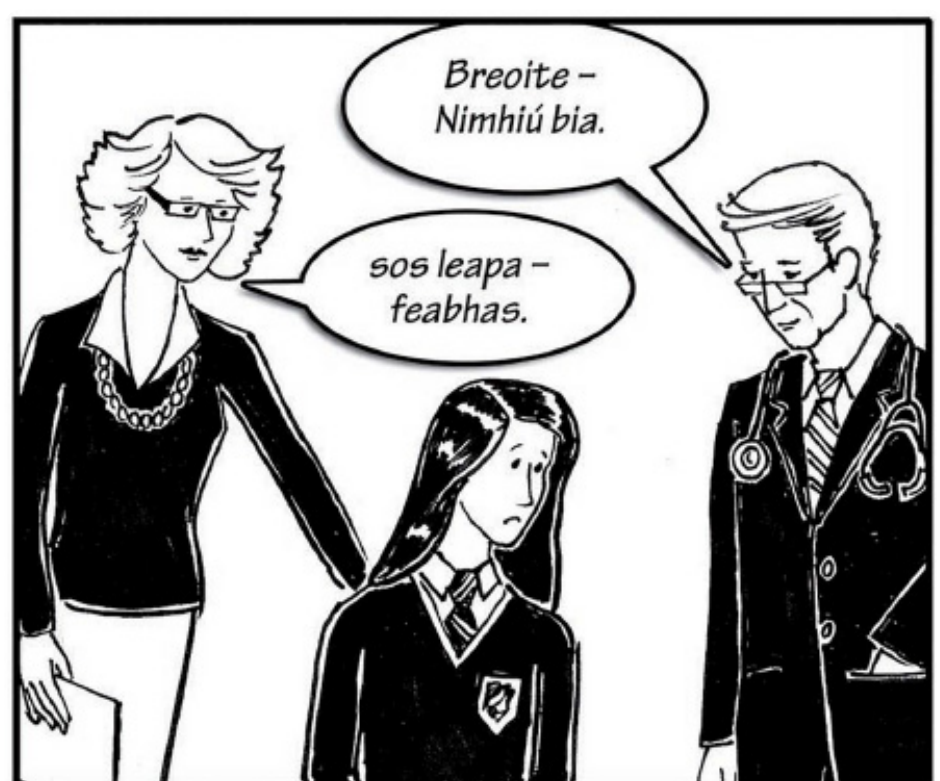
Tugann an príomhoide chuig an dochtúir í. Aithníonn an dochtúir láithreach gur rinneadh nimhiú bia uirthi. Molann sé sos leapa di agus a lán uisce a ól. Ní dócha go mbeidh sí ag ithe bia tapa arís go ceann i bhfad!
English translation:
The principal brings her to the doctor. The doctor immediately recognises that she has food poisoning. He recommends bed rest and drinking plenty of water. She probably won’t be eating fast food again for a long time!
Example
An Chéim Chéasta (Passive Voice)
- Rinneadh nimhiú bia uirthi
(Food poisoning was done to her / She was food poisoned.)
Used when the person who caused the action is not mentioned.
Ceisteanna (le Freagraí Samplacha)
| Ceist (Irish) | English | Freagra Samplach (Irish) | Sample Answer (English) |
|---|---|---|---|
| Cá raibh na cailíní i bpictiúr a haon? | Where were the girls in picture one? | Bhí siad ag an dioscó ag baint taitneamh as an oíche. | They were at the disco enjoying the night. |
| Conas a mhothaigh Róisín ar maidin? | How did Róisín feel in the morning? | Mhothaigh sí lag agus traochta. Ní raibh sí in ann éirí. | She felt weak and exhausted. She could not get up. |
| Cén fáth nach raibh sí in ann díriú sa rang? | Why couldn’t she concentrate in class? | Bhí tinneas cinn agus fonn cur amach uirthi. | She had a headache and felt like being sick. |
| Cad a rinne an príomhoide? | What did the principal do? | Thug sí chuig an dochtúir í láithreach. | She brought her to the doctor immediately. |
| Cad a mhol an dochtúir? | What did the doctor recommend? | Mhol sé sos leapa agus uisce a ól. | He recommended bed rest and drinking water. |
Gramadach
1. Chomh + Aidiacht + Sin
- chomh lag sin – so weak
Used to emphasise an adjective.
2. An Tuiseal Ginideach
- Geata an tí – the gate of the house
Shows possession.
3. An Chéim Chéasta (Passive Voice)
- Rinneadh nimhiú bia uirthi – She was food poisoned
Used when the doer is not mentioned.
Foclóir (Vocabulary)
| Gaeilge | English |
|---|---|
| Umar na haimléise | In a bad way |
| Traochta | Exhausted |
| Tinneas cinn | Headache |
| Fonn cur amach | Feeling like getting sick |
| Cruachás | Difficulty |
| Sos leapa | Bed rest |
| Nimhiú bia | Food poisoning |
| Buartha | Worried |
| Go ceann i bhfad | For a long time |
An Bhéaltriail – Ceisteanna Gaolmhara (Related Oral Questions)
These questions connect the theme of the story (health, school, food, responsibility) to your own life. Be ready to give personal, detailed answers.
1. An raibh tú riamh tinn ar scoil?
(Have you ever been sick at school?)
Freagra Samplach:
Bhí mé tinn ar scoil cúpla bliain ó shin. Bhí tinneas cinn orm agus bhí mé an-lag. Ní raibh mé in ann díriú ar an obair ar chor ar bith. Thug an múinteoir cead dom dul abhaile agus ghlac mé sos leapa ar feadh cúpla lá.
(I was sick at school a few years ago. I had a headache and I was very weak. I couldn’t concentrate on my work at all. The teacher gave me permission to go home and I took bed rest for a few days.)
2. An itheann tú bia tapa go minic?
(Do you eat fast food often?)
Freagra Samplach:
Ní itheann mé bia tapa go ró-mhinic mar tá a fhios agam nach bhfuil sé sláintiúil. Uaireanta, áfach, faighim sceallóga nó píotsa leis na cairde ag an deireadh seachtaine. Déanaim iarracht cothromaíocht a choinneáil idir bia sláintiúil agus bia blasta.
(I don’t eat fast food too often because I know it’s not healthy. However, sometimes I get chips or pizza with friends at the weekend. I try to keep a balance between healthy food and tasty food.)
3. Cad a dhéanann tú nuair a mhothaíonn tú tinn?
(What do you do when you feel unwell?)
Freagra Samplach:
Nuair a mhothaím tinn, fanann mé sa bhaile agus glacaim sos. Ólaim go leor uisce agus téim a luí go luath. Má bhíonn sé dáiríre, téim chuig an dochtúir. Tá sé tábhachtach aire mhaith a thabhairt duit féin.
(When I feel sick, I stay at home and rest. I drink plenty of water and go to bed early. If it’s serious, I go to the doctor. It’s important to take good care of yourself.)
4. An gceapann tú go n-itheann daoine óga bia míshláintiúil rómhinic?
(Do you think young people eat unhealthy food too often?)
Freagra Samplach:
Sílim go n-itheann roinnt daoine óga bia míshláintiúil rómhinic mar tá sé tapa agus saor. Ach tá sé níos fearr bia sláintiúil a ithe chun fuinneamh agus sláinte mhaith a choinneáil. Dar liom, ba chóir níos mó oideachais a bheith ann faoi chothú.
(I think some young people eat unhealthy food too often because it is quick and cheap. But it is better to eat healthy food to maintain energy and good health. In my opinion, there should be more education about nutrition.)