Structures, Strategies and Compositional Elements (Leaving Cert Physical Education): Revision Notes
📚Revision Notes
Structures, Strategies, and Compositional Elements
Note
Learning Outcomes:
- Understand compositional elements and strategies within physical performance.
- Explore how these elements can be utilised to gain an advantage in competition.
Note
Significance: Evaluating structures, strategies, and compositional elements is crucial for enhancing performance in various physical activities. This knowledge organises teams, applies effective methods, and designs planned movements for optimal outcomes.
- Structures
- Strategies
- Compositional Elements
Structures
Note
Learning Focus:
- Understanding Structures: This refers to how physical activities are organised, including how teams and formations are set up for a competition.
Note
Structure: A structure in physical activities is the set-up of a competition or team formation. The format depends on the type of sport and can influence performance. For example:
- In soccer, a common structure is a 4-4-2 or 3-4-3 formation, where players are distributed in different areas of the pitch.
- In Gaelic games, formations can include backs, midfielders, and forwards.
- In individual sports like cycling, different stages such as mountain stages or time trials make up the structure of the race.
Structure of a Team:
Teams consist of groups of more than two players who perform different roles within a match. The roles of each player vary according to their positions and responsibilities.
For example:
- Attackers focus on advancing towards the goal.
- Midfielders help control play and transition between defence and attack.
- Defenders are responsible for preventing the opposition from scoring. This structure allows for efficient organisation and a clear strategy during the game.
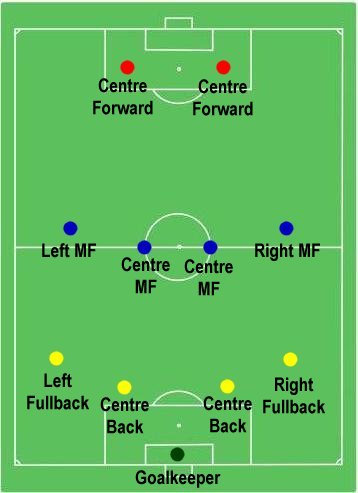
Things to Consider When Organising a Team:
- Squad Strengths and Weaknesses: Understanding individual strengths and weaknesses helps the coach optimise player roles for maximum effectiveness.
- Opposition Strengths and Weaknesses: Analysing the opposition can provide insights on how to counter their play and exploit their weaknesses.
- Formation and Playing Style: Different situations in a game may require adjustments in formation or playing style, such as shifting between defensive and attacking approaches.
- Training Opportunities: Ensure the team has enough training to understand and practice the structure, enhancing teamwork and coordination.
- Previous History: Review past performances to identify successful strategies and refine current team structures. When to modify a structure or strategy: Poor performance, score line, low confidence levels of performer, time running out, injuries or sending offs.
Formation
The way in which a team is organised for a match or event. Different formations suit different styles of play and can be adjusted based on the opposition.
Example:
- 4-4-2 Formation in Soccer: This formation uses four defenders, four midfielders, and two strikers, balancing defence and attack.
Positioning
Deciding the specific roles and spaces that players occupy during a game. Effective positioning can enhance a team's ability to defend, attack, and control the game.
Example:
- Basketball Zones: Players are positioned in specific zones on the court to optimise defence and create scoring opportunities.
Strategies
Note
Learning Focus:
- Understanding strategies and tactics: These are essential game plans used by teams or individuals to maximise performance and exploit weaknesses in the opponent.
Note
Strategies: Strategies and tactics are plans designed to improve a team's chances of success. These plans must be adaptable as the game unfolds and can be applied in team games or individual sports. Performers need to be aware of factors that might affect the game, such as changing conditions or unexpected challenges, and adjust their tactics accordingly.
These include tactics that help showcase talents, mitigate weaknesses, and adapt to different scenarios in sports and fall into three categories:
- Offensive Strategies
- Defensive Strategies
- Situational Strategies
1. Offensive Strategies
Techniques and plans designed to maximise scoring opportunities and put pressure on the opposition. These strategies focus on creating scoring chances and exploiting the opponent's weaknesses.
Example:
- Fast Breaks in Basketball: A tactic where the team moves quickly down the court to score before the defence can set up. By capitalising on speed and quick transitions, teams can catch the defence off guard and increase their chances of scoring.
2. Defensive Strategies
Methods to prevent the opposition from scoring and to regain possession. These strategies aim to disrupt the opponent's offensive plays and protect the goal or scoring area.
Example:
- Full Press in Soccer: Applying constant pressure on the opponent's defence to force errors and regain the ball. By pressuring the opposing players, the team can create turnovers and reduce the opposition's scoring opportunities.
3. Situational Strategies
Adjusting tactics based on specific situations during the game, such as a player being sent off or a critical point in the match. These strategies are flexible and responsive to the changing dynamics of the game.
Example:
- Time Management in Rugby: Controlling the pace of the game in the final minutes to secure a lead. By managing the clock effectively, the team can maintain possession and minimise the opponent's chances to score, ensuring a strategic advantage as the game concludes.
Key Tactical Considerations:
- Who: Deciding which players should be involved in the play at any given moment.
- How: Determining how space is used and when to engage the opponent.
- Why: Understanding the overall purpose and intended outcome of each tactical decision. Strategies can be specific to a game or adaptable depending on the opponent. By assessing the opponent's strengths and weaknesses, players can make better tactical decisions. Analysing and making tactical adjustments in real-time is a crucial skill for high-performance athletes.
Note
Basic Strategies in Sports:
- Hockey: Use high pressing to regain possession quickly.
- Basketball: Focus on full-court press for defence.
- Gaelic Football: Utilise a defensive wall to hold off opposition attacks.
- Badminton: Aim shots at the opponent's weak side.
- Swimming: Maintain an even pace over long distances.
- Middle-Distance Running: Position strategically for sprints near the race finish.
Here is the rephrased tactical plan using soccer as the sport, with the same structure and format:
Sample Soccer Strategy/Tactical Plan
| Tactical Problem | Tactical Solution | On the Ball | Off the Ball |
|---|---|---|---|
| Attacking — Maintaining possession | • Keep possession through controlled passing. • Pass to an open teammate. | • Control the ball. • Choose the best passing option. • Signal movement to teammates. | • Draw defenders away. • Move into space to receive the ball. • Support the ball carrier. |
| Defending — Regaining possession | • Win the ball back through pressing. • Anticipate opponent's movement. | • Tackle the ball-carrier. • Intercept passes. • Pressure the opponent on the ball. | • Anticipate the pass. • Close down passing options. • Stay goal-side of attackers. |
| Attacking — Advancing territory | • Break through the defence with quick passes. • Support forwards runs. | • Dribble forwards. • Look for through-ball options. • Take shots when in range. | • Make forwards runs. • Stay wide to stretch the defence. • Support the attack by staying open. |
Note
Knowledge Check:
- Define the term "structure" in sports.
- Why are effective structures important in physical activities?
- Identify four factors to consider when setting up a team structure.
- Examine two different structures used in competitive sports.
Compositional Elements
Note
Compositional Elements: Compositional elements refer to the arrangement and coordination of movements within a performance. These movements are organised in a deliberate and structured manner to optimise performance. Whether in dance, gymnastics, rugby, or swimming, mastering the following five elements is crucial to delivering an effective performance:
- Space
- Shape
- Timing
- Dynamics
- Rhythm
- Relationships
1. Space
The area available for movement during a performance. Effective use of space can enhance the flow and impact of a routine by creating visual interest and ensuring all parts of the performance area are utilised effectively.
Example:
- Dance Routine: Dancers utilising different areas of the stage to create visual interest and movement variety. By moving across the entire stage, dancers can engage the audience from all angles and create a more dynamic and captivating performance.
2. Shape
Shape refers to the use of space in performance, where body shapes or formations are key to visual impact.
- Levels of Shape:
- Low Levels: Movements are close to the ground.
- Medium Levels: The performer is standing or moving at an intermediate height.
- High Levels: The performer is elevated, such as jumping or reaching above ground.
- Symmetry and Asymmetry: Symmetry is when movements on one side of the body mirror those on the other side, creating balance. Asymmetry contrasts by differing movements on each side, adding visual interest and variation.
3. Timing
Timing is the execution of movements in relation to rhythm and tempo. It plays a critical role in ensuring the performance is coordinated and effective.
Key Factors in Timing:
- Tempo: Whether the pace of movements is steady or varies throughout the performance.
- Rhythm: Refers to the repetition of patterns in movement or sound, ensuring fluidity and coherence in the routine.
4. Dynamics
Dynamics involve variations in energy levels, whether movements are powerful or gentle. Dynamic changes are used to maintain interest and variety. For example, explosive, sharp movements in rugby or fluid, controlled motions in gymnastics demonstrate different uses of dynamics.
Example:
- Gymnastics Routine: Combining explosive jumps with graceful, controlled movements. This contrast in dynamics showcases the athlete's versatility and enhances the overall impact of the routine.
5. Rhythm
The timing and flow of movements. Consistent rhythm can make a performance smooth and aesthetically pleasing, allowing the audience to follow the sequence of movements effortlessly.
Example:
- Synchronized Swimming: Athletes moving in perfect timing with the music and each other. This synchronisation creates a visually stunning effect and demonstrates the athletes' precision and coordination.

6. Relationships
Relationships refer to how performers interact with space, objects, and other individuals. In sports like hockey or dance, these interactions influence the overall performance, with relationships either enhancing or restricting movement possibilities. Examples include maintaining proximity to a teammate in rugby or mirroring a partner in dance.
This includes the use of props and the synchronisation with other performers, which can add complexity and depth to a performance.
Example:
- Pair Skating: Skaters coordinating their movements with each other to perform lifts and spins in harmony. This interaction requires trust and timing, enhancing the aesthetic appeal and technical difficulty of the performance.
Note
Knowledge Check
- Define the five compositional elements of performance.
- Explain how shape and space can influence performance.
- Analyse how timing impacts a performer's effectiveness.
- Describe the role of dynamics in a named physical activity.
Analysing and Modifying Performance
Importance of Analysis
Regular analysis helps identify strengths and weaknesses, allowing for targeted improvements and strategic adjustments. By systematically examining performance data, athletes and coaches can make informed decisions to refine techniques, enhance strategies, and improve overall performance.
Example:
- Video Analysis in Soccer: Reviewing game footage to analyse team formations and strategies used by opponents. This allows the coach to identify patterns, strengths, and weaknesses in both their own team and the opposition, leading to more effective training sessions and match preparations.
Modifying Strategies
Adjusting tactics based on real-time feedback and changing conditions during a performance. This dynamic approach ensures that athletes and teams can respond to unexpected challenges and opportunities, maintaining a competitive edge.
Example:
- In-Game Adjustments in Basketball: Changing defensive tactics if the initial strategy is not working effectively. For instance, if the team is struggling to contain an opposing player who is scoring freely, the coach might switch from a man-to-man defence to a zone defence to better protect the basket and disrupt the opponent's rhythm.
The RAR Method
Note
The RAR Method: A systematic three-step approach to modifying strategies during performance, designed to enhance decision-making and improve outcomes in competitive situations. The three steps include:
- Recognise
- Anticipate
- React
1. Recognise
Identify areas needing improvement. This involves observing the current performance, pinpointing weaknesses or ineffective strategies, and understanding the specific aspects that require adjustments to enhance overall performance.
Example:
- Football Coaching: During a match, a football coach notices that the team's defence is consistently being outpaced by the opposing team's forwards. The coach recognises that the defensive strategy needs to be modified to prevent further goals.
2. Anticipate
Plan for potential changes and outcomes. This step requires the coach or athlete to foresee possible scenarios and prepare alternative strategies. Anticipation involves thinking ahead about how the opponent might react and what adjustments could be made to counter these actions effectively.
Example:
- Football Coaching: Anticipating that the opposing team will continue exploiting the defensive gaps, the coach plans to switch to a more compact formation, instructing the defenders to stay closer together and maintain a higher line to intercept through balls.
3. React
Implement the changes and evaluate their impact. In this step, the planned adjustments are executed, and their effectiveness is closely monitored. Reacting quickly and effectively can turn the tide of the performance, and it's crucial to assess whether the changes are having the desired impact or if further modifications are needed.
Example:
- Football Coaching: The coach implements the new defensive strategy in the second half, instructing the players to adopt the compact formation. The coach then observes the changes' impact, noting that the team is now better able to intercept passes and reduce the number of scoring opportunities for the opposition. If the strategy proves successful, it reinforces the team's defensive stability; if not, further tweaks might be necessary.
Exploiting an Opponent's Weaknesses in Performance
In competitive sports, identifying and exploiting an opponent's weaknesses is essential to gain an advantage. Coaches and athletes can analyse their opponents' performance, highlighting areas of weakness and developing strategies to capitalise on them.
Examples of Exploiting Weaknesses:
- In Gaelic football:
- Weakness: A defender marking a player is slower.
- How to Exploit: The attacking player should position themselves behind the defender and use their speed to run into open space and receive the ball.
- In hockey:
- Weakness: The goalkeeper has difficulty saving low shots.
- How to Exploit: Direct shots towards the lower corners of the goal to challenge the goalkeeper's weak area.
- In middle-distance running:
- Weakness: An opponent struggles to maintain speed in the final lap.
- How to Exploit: Increase the pace during the last 150 metres to overtake them before the finish line.
Demands of Performance: Physical, Personal, and Technical Qualities of the Performer
The qualities required for performance vary depending on the sport. Performers need to develop specific physical, personal, and technical qualities to enhance their ability to succeed.
- Physical qualities are those relating to fitness and physical attributes, such as strength, agility, and stamina.
- Personal qualities include characteristics like motivation, focus, and confidence.
- Technical qualities refer to the specific skills needed to perform actions effectively, such as positioning and timing
Examples of Qualities in Performers:
| Performer | Physical Quality | Personal Quality | Technical Quality |
|---|---|---|---|
| Goalkeeper (Hockey) | Strong | Good communicator | Tactically aware |
| Goalkeeper (Hockey) | Agile | Resilient | Excellent positioning |
| Gymnast | Flexible | Motivated | Execution of skills |
| Gymnast | Balanced | Fearless | Spatial awareness |