Gravity (Leaving Cert Physics): Revision Notes
📚Revision Notes
Gravity
Introduction to universal gravitation
In 1666, Sir Isaac Newton revolutionised our understanding of the universe when he first stated his theory of gravitation. Newton realised that the force causing objects to fall to Earth is the same force that keeps celestial bodies in motion throughout the cosmos. This fundamental force is what keeps the planets of the Solar System orbiting the Sun and prevents them from flying off into space.
Newton called this the Force of Gravity, and his groundbreaking theory described what is now known as Newton's law of universal gravitation. This law explains that every object in the universe attracts every other object with a gravitational force.

Note
Newton's 1666 discovery was revolutionary because it unified terrestrial and celestial mechanics - showing that the same physical laws govern both falling apples and orbiting planets. This was a major breakthrough in our understanding of the universe as a unified system.
Newton's law of universal gravitation
Newton's law states that any two point masses in the universe attract each other with a force that is:
- Directly proportional to the product of their masses
- Inversely proportional to the square of the distance between them
The mathematical formula for this relationship is:
Where:
- F is the gravitational force between the objects (in newtons, N)
- G is the universal gravitational constant
- m₁ and m₂ are the masses of the two objects (in kilogrammes, kg)
- d is the distance between the centres of the two objects (in metres, m)
The universal gravitational constant
The value of G is 6.7 × 10⁻¹¹ N m² kg⁻². This is an extremely small number, which explains why we don't notice gravitational forces between everyday objects - the forces involved are incredibly tiny unless at least one of the masses is enormous (like a planet or star).
Note
The tiny value of the gravitational constant means that gravitational forces between everyday objects are negligible. For example, the gravitational force between two 70 kg people standing 1 metre apart is only about 0.000000003 N - far too small to feel!
Newton was able to demonstrate that the gravitational force between two spherical bodies is the same as if each had all its mass concentrated at its centre, allowing us to treat planets and stars as point masses for gravitational calculations.
The inverse square law
A crucial aspect of Newton's law is that gravitational forces follow an inverse square law. This means:
- If the distance between two bodies is doubled, the force becomes four times smaller
- If the distance is tripled, the force becomes nine times smaller
- If the distance is halved, the force becomes four times larger
Important
The inverse square law is critical to understanding gravity's behaviour. Remember: double the distance = 1/4 the force, triple the distance = 1/9 the force. This rapid decrease explains why gravitational effects are only significant when objects are close together or involve very large masses.
This rapid decrease in force with distance explains why gravitational effects are only significant when objects are relatively close together or when very large masses are involved.
Gravity in the Solar System
The force of gravity is what keeps the planets of the Solar System orbiting the Sun. It also keeps moons orbiting planets, maintaining the gravitational dance that has continued for billions of years. The gravitational forces involved are enormous because the masses of celestial bodies are so large.
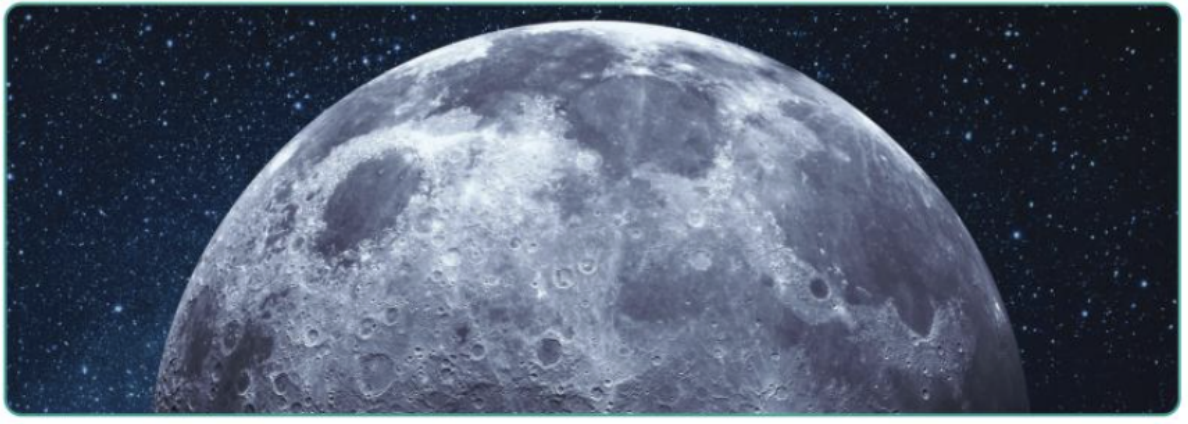
The Moon's gravity is too weak to maintain an atmosphere - any gas molecules placed there would eventually escape into space. This is why our Moon has no atmosphere, unlike Earth where gravity is strong enough to hold onto our atmospheric gases.
Note
The same gravitational principles apply throughout the universe, making Newton's law truly universal in its application. Whether we're looking at binary stars, galaxy clusters, or our own Solar System, the same F = Gm₁m₂/d² relationship governs all gravitational interactions.
Gravity and weight
It's essential to understand that weight is a force (measured in newtons) and that the weight of an object is the force of gravitational attraction between it and the Earth. Weight is given by:
Where:
- W is weight (in newtons, N)
- m is mass (in kilogrammes, kg)
- g is acceleration due to gravity (in metres per second squared, m s⁻²)
Important
Common Mistake Alert: Weight and mass are NOT the same thing!
- Mass is the amount of matter in an object (measured in kg) - this never changes
- Weight is the gravitational force acting on that mass (measured in N) - this varies with location
Your mass is the same on Earth and the Moon, but your weight on the Moon would be about 1/6 of your Earth weight.
Variation of weight with distance
The value of acceleration due to gravity (and therefore weight) decreases as you move away from the Earth. At sea level, g ≈ 9.8 m s⁻², but this value decreases with altitude according to:
Where M is the mass of the Earth and R is the distance from Earth's centre.
This formula applies to other planets too. On Mars, for example, the acceleration due to gravity is approximately 3.8 m s⁻², meaning objects weigh much less there than on Earth.
Gravitational fields
Another way to understand gravity is through the concept of a gravitational field. A gravitational field exists in the space around any mass, and this field exerts a gravitational force on any other mass brought into it.
Gravitational field strength
The gravitational field strength at any point in a gravitational field is defined as the force per unit mass at that point. The gravitational field strength is the force per kilogramme:
This can also be written as:
The SI unit of gravitational field strength is the newton per kilogramme (N kg⁻¹).
Understanding gravitational fields
If a mass of 1 kg experiences a force of 400 N at a point in a gravitational field, we can say that the gravitational field strength there is 400 newtons per kilogramme (400 N kg⁻¹).
Note
Gravitational fields can be represented using field lines - these show the direction of the gravitational force and indicate field strength through line density. Where field lines are closer together, the field is stronger. Think of these field lines as invisible "tracks" that show how objects would be pulled by gravity.
Escape velocity
If an object is projected vertically upwards from the ground at a very high speed, and if acceleration due to gravity remained constant with height, the object would always reach a greatest height and then fall back to the ground.
However, because acceleration due to gravity decreases with distance from Earth's centre, it is possible for an object to escape completely from Earth's gravitational field if given a large enough initial velocity.
The escape velocity formula
The escape velocity is the minimum speed needed for an object to escape from a celestial body's gravitational field. For any celestial body, the escape velocity is:
Where:
- vₑ is the escape velocity (in m s⁻¹)
- M is the mass of the celestial body (in kg)
- G is the universal gravitational constant
- r is the distance from the centre of the celestial body (in m)
Escape velocity applications
For Earth, the escape velocity is approximately 11,200 m s⁻¹. This means any object must be travelling faster than 11.2 km/s to completely escape Earth's gravitational pull.
Important
Escape velocity is independent of the mass of the escaping object! A feather and a rocket need the same escape velocity - the difference is in the energy required to reach that velocity. This is why rockets need such powerful engines - they must accelerate enormous masses to incredible speeds.
The same formula applies to other celestial bodies by substituting their mass and radius values. This concept is crucial for space exploration, as rockets must achieve escape velocity to leave planetary surfaces and travel to other worlds.
Summary
Key Points to Remember:
-
Newton's law of universal gravitation: Every mass attracts every other mass with a force proportional to the product of their masses and inversely proportional to the square of the distance between them
-
Key formula: , where N m² kg⁻²
-
Inverse square law: Gravitational force decreases rapidly with distance - doubling the distance makes the force four times weaker
-
Weight vs mass: Weight is the gravitational force on an object (), while mass is the amount of matter in an object
-
Escape velocity: The minimum speed needed to escape a celestial body's gravitational pull, given by