Reflection and Mirrors (Leaving Cert Physics): Revision Notes
📚Revision Notes
Reflexion and Mirrors
What is reflexion of light?
When light strikes an object, some of the light is absorbed into the object while some bounces back from the surface. This bouncing of light from an object is called reflection of light.
The way light bounces off an object depends on two main factors:
Note
Factors Affecting Reflexion:
- The material the object is made from
- The surface texture of the object (whether it's rough or smooth)
Understanding these factors is essential for predicting how different surfaces will interact with light.
Types of reflexion
Understanding how different surfaces reflect light helps explain why we can see objects clearly in some surfaces but not in others.
Diffuse reflexion
Diffuse reflexion occurs when light hits a rough or uneven surface. In this type of reflexion, light rays scatter in many different directions from the surface.
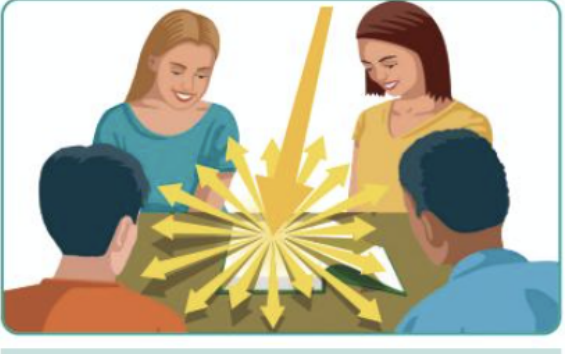
Key characteristics of diffuse reflexion:
- Light reflects in all directions from the surface
- Most objects around us reflect light diffusely
- This scattering allows us to see objects from all angles
- Examples include painted walls, paper, and most everyday objects
Note
For example, when light strikes a rough surface like an unpolished piece of marble or a painted wall, the surface appears extremely smooth to us, but under magnification, it's actually quite rough. This roughness causes light to scatter in all directions.
Regular reflexion
Regular reflexion happens when light strikes a smooth, polished surface like a plane mirror. The word 'plane' simply means the mirror surface is flat rather than curved.
Key characteristics of regular reflexion:
- Light reflects in a predictable, organised manner
- The reflected ray makes the same angle with the mirror as the original ray
- Creates clear, sharp reflections
- Examples include mirrors, still water, polished metal surfaces
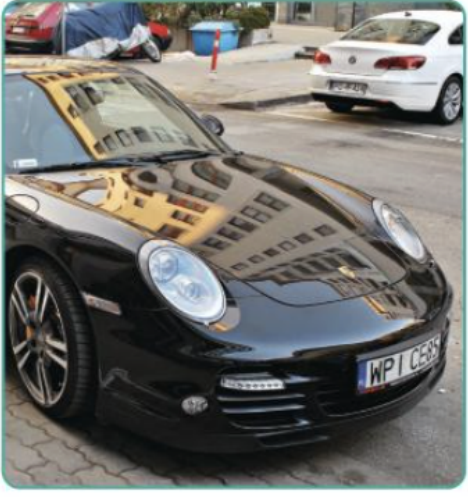
You can observe regular reflexion when looking at a shiny car surface. Light reflects clearly from the smooth paintwork, but you can also see mirror-like reflections in the car's surface.
Laws of reflexion of light
Scientists have discovered that all reflexion follows two fundamental laws, regardless of the type of surface involved.
Key terminology
Before understanding the laws, you need to know these important terms:
Note
Essential Terminology:
- Incident ray: The light ray that strikes the mirror surface
- Reflected ray: The light ray that bounces from the mirror
- Normal: An imaginary line drawn at right angles to the mirror surface at the point where the incident ray strikes
- Angle of incidence (i): The angle between the incident ray and the normal
- Angle of reflexion (r): The angle between the reflected ray and the normal
The two laws of reflexion
Important
Law 1: The incident ray, the normal at the point of incidence, and the reflected ray all lie in the same plane.
This means that if you imagine the mirror surface as lying flat on a table, all three elements (incident ray, normal, and reflected ray) would exist in the same flat surface perpendicular to that table.
Important
Law 2: The angle of incidence is equal to the angle of reflexion.
Mathematically:
This law tells us that light always reflects at exactly the same angle it arrives, but on the opposite side of the normal line.
Demonstrating the laws of reflexion
These laws can be easily demonstrated using simple equipment:
- A ray box (or laser) to produce narrow light beams
- A plane mirror
- A protractor to measure angles
- A sheet of paper
When you shine a light ray at different angles onto a mirror, you'll consistently observe that both laws hold true for every measurement.
Image formation in plane mirrors
One of the most fascinating aspects of mirrors is how they create images that appear to exist behind the mirror surface.
Virtual images
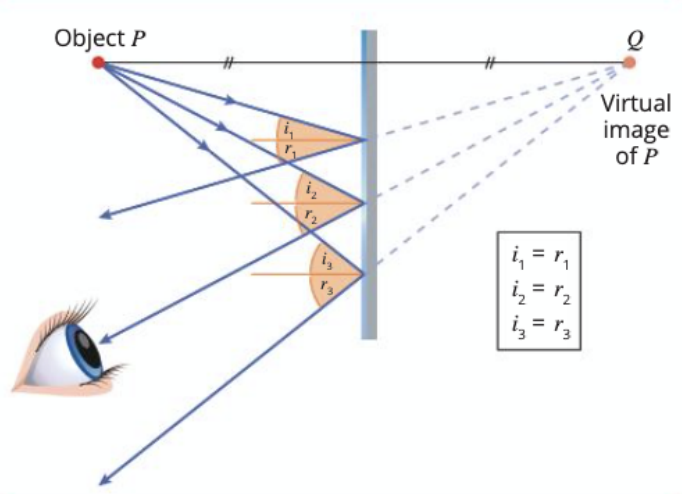
When you look into a plane mirror, you see what appears to be another version of yourself behind the mirror. However, no light actually travels to the space behind the mirror. This type of image is called a virtual image.
Note
How virtual images form:
- Light rays from an object strike the mirror and reflect according to the laws of reflexion
- These reflected rays enter your eye
- Your brain traces these rays backwards in straight lines
- The point where these imaginary backwards extensions meet appears to be the location of the image
- Since no actual light rays pass through this point, the image is "virtual"
Properties of images in plane mirrors
Virtual images formed by plane mirrors have several consistent characteristics:
- Same size: The image appears exactly the same size as the original object
- Same distance: The image appears to be the same distance behind the mirror as the object is in front
- Upright: The image appears the right way up (not inverted)
- Laterally inverted: The image appears reversed left-to-right (like reading backwards writing)
Extended objects in mirrors
Most real objects aren't just single points of light - they're extended objects with height, width, and depth. When these objects are reflected in plane mirrors, each point on the object forms its own virtual image behind the mirror.
Example
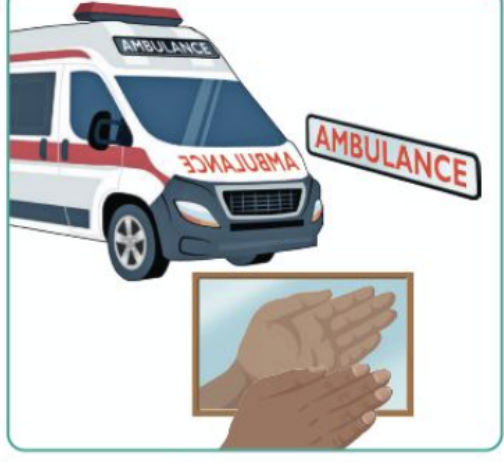
Practical Example: Ambulance Writing
The word "AMBULANCE" is written backwards on the front of emergency vehicles so that drivers seeing it in their rear-view mirrors can read it normally. This demonstrates lateral inversion - the mirror reverses the left-right orientation of the image.
Applications of mirrors
Understanding reflexion principles helps explain many practical applications of mirrors in technology and everyday life.
Periscopes
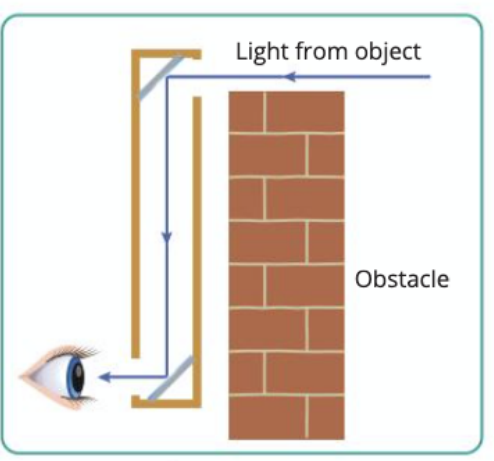
A periscope is a simple but ingenious device that uses two plane mirrors to see over or around obstacles.
Example
How Periscopes Work:
Step 1: Light from the object you want to see travels to the first mirror
Step 2: The first mirror reflects this light down through the periscope tube
Step 3: The second mirror reflects the light horizontally towards your eye
Step 4: Both reflections follow the laws of reflexion
Result: This allows you to see objects that would otherwise be blocked by obstacles
Periscopes are used in submarines, by military personnel, and even in some everyday situations where you need to see around corners safely.
Parabolic mirrors and solar furnaces
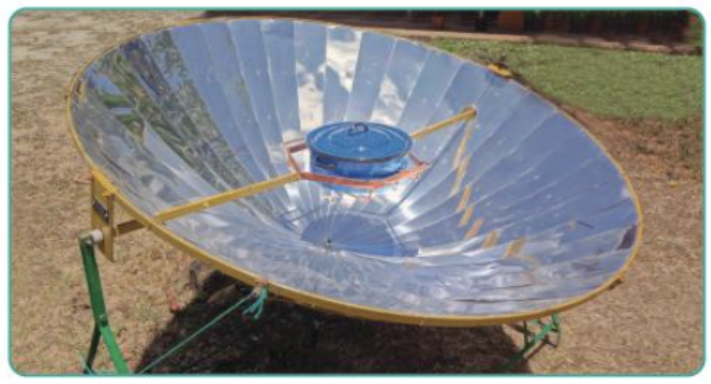
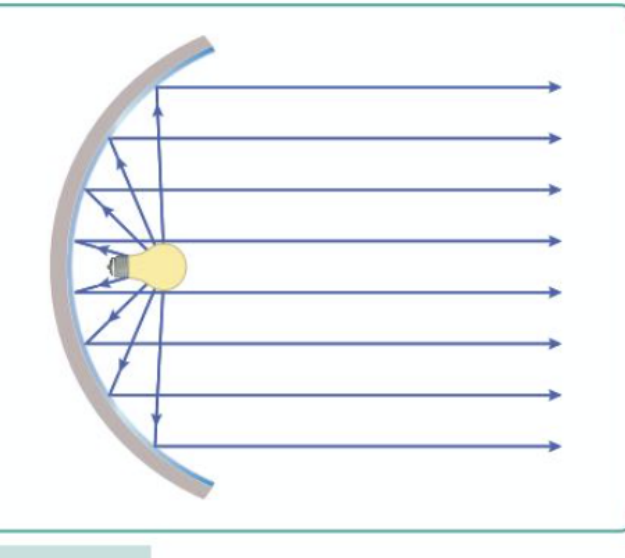
While plane mirrors create parallel reflections, curved mirrors can focus light in useful ways. Parabolic mirrors have a special curved shape that can concentrate parallel light rays to a single focal point.
Example
Solar Furnaces: Concentrating Solar Energy
Step 1: Large parabolic mirrors collect sunlight over a wide area
Step 2: All the parallel light rays from the sun reflect and converge at the focal point
Step 3: This concentration of light energy creates intense heat at the focus
Result: Temperatures of over 3000°C can be achieved
Applications: This renewable energy technology can be used for cooking, heating, or even industrial processes
Medical and technological applications
Mirrors play crucial roles in many modern technologies:
Makeup and magnifying mirrors:
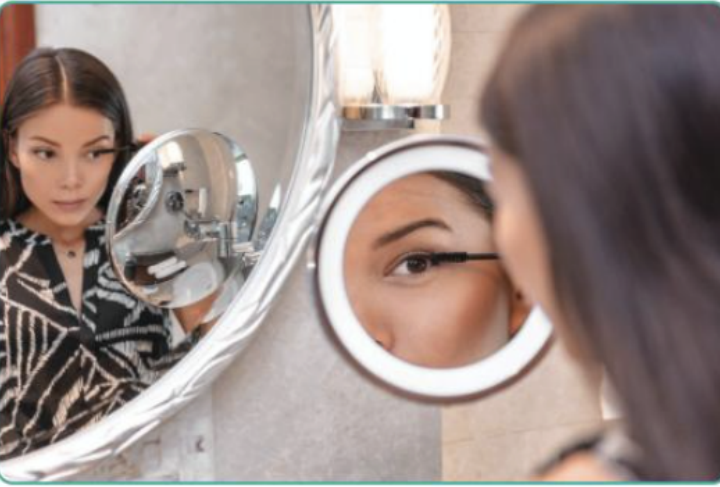
These often use curved mirrors to magnify images, making detailed work easier. The curved surface changes how light reflects, creating enlarged virtual images.
Vehicle mirrors:
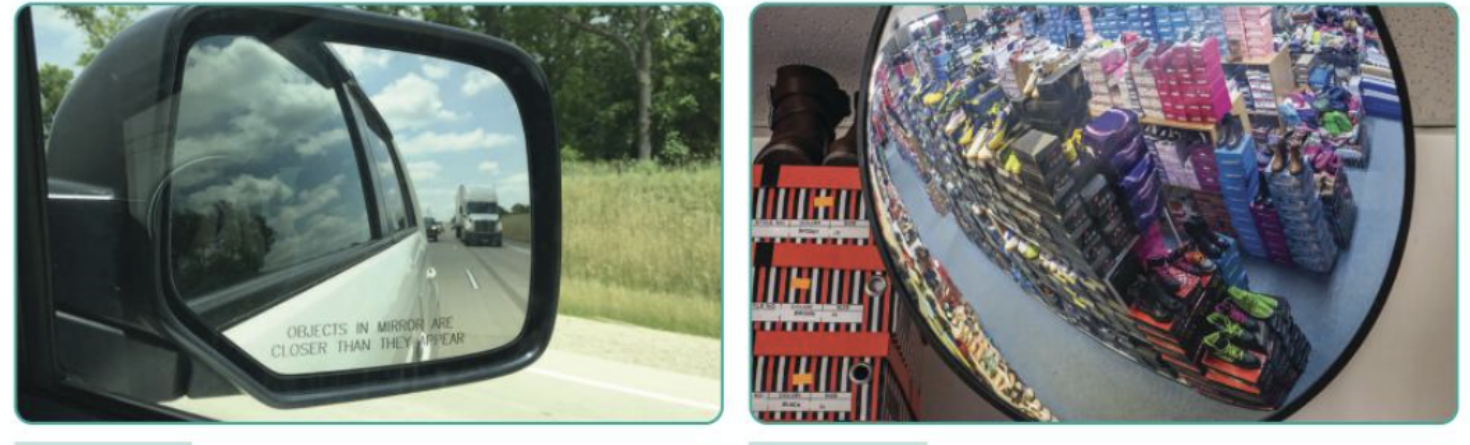
Note
Car Side Mirrors:
- Car side mirrors often use convex (outwardly curved) mirrors
- These provide a wider field of view than flat mirrors
- However, they make objects appear smaller and farther away than they actually are
- This is why mirrors carry the warning "objects in mirror are closer than they appear"
Security mirrors: Convex mirrors are commonly used in shops and at road junctions because they provide a wide-angle view of large areas, helping to eliminate blind spots.
Summary
Key Points to Remember:
- Reflection of light occurs when light bounces off surfaces - the type depends on surface smoothness
- Diffuse reflection scatters light in all directions from rough surfaces, while regular reflection creates clear images from smooth surfaces
- Two laws of reflection always apply: rays lie in the same plane as the normal, and angle of incidence equals angle of reflexion ()
- Virtual images in plane mirrors appear behind the mirror surface but no actual light travels there - they're the same size, upright, but laterally inverted
- Mirror applications range from simple periscopes using two plane mirrors to sophisticated parabolic mirrors that can focus sunlight for renewable energy systems