Opportunities and Threats in the External Environment (Grade 10 NSC Matric Business Studies): Revision Notes
📚Revision Notes
Opportunities and Threats in the External Environment
What are opportunities and threats?
Every business operates within an external environment that presents both opportunities and threats. These external factors are beyond the direct control of businesses, but understanding them helps companies make better strategic decisions. While businesses cannot control these external factors, they can learn to respond to them effectively and sometimes even influence them to some degree.
Note
Understanding the external environment is crucial for business success. Companies that actively monitor and respond to external changes are more likely to thrive in competitive markets.
Understanding opportunities
What are opportunities?
Opportunities are positive factors in the external business environment that can help a company succeed or grow. These are external conditions that businesses can take advantage of to improve their performance, increase profits, or expand their operations.
Key characteristics of opportunities:
- They exist outside the business (external environment)
- They can contribute to business success
- Businesses must actively look for them to stay competitive
- They can be turned into advantages with the right strategy
Example
Real-World Example: Opportunity Recognition
When the COVID-19 pandemic began, many restaurants faced the threat of lockdowns. However, smart businesses recognised the opportunity in increased demand for food delivery services. Companies like DoorDash and Uber Eats experienced massive growth by capitalising on this external opportunity.
Examples of business opportunities:
- Lower taxes: When the government reduces business taxes, companies keep more of their profits
- Competitor closure: If a rival business closes down, there are more customers available
- Declining interest rates: Makes it cheaper for businesses to borrow money for expansion
- Favourable government legislation: New laws that support business growth
- Reliable suppliers: Access to dependable suppliers who provide quality materials
- Reduced competition: Fewer competitors in the market means more market share opportunities
Understanding threats
What are threats?
Threats are negative factors in the external environment that can harm a business or prevent it from achieving its goals. These external challenges require businesses to develop strategies to minimise their impact or find ways to turn them into opportunities.
Important
The key to managing threats is early identification and proactive planning. Businesses that wait until threats become serious problems often struggle to recover effectively.
Key characteristics of threats:
- They come from outside the business
- They can prevent businesses from reaching their objectives
- Companies must constantly watch for new threats
- Smart businesses develop plans to deal with threats before they become serious problems
Example
Threat Management Example: Rising Interest Rates
When interest rates increase, businesses face higher borrowing costs. A construction company might respond by:
- Securing fixed-rate loans before rates rise further
- Reducing expansion plans that require significant borrowing
- Focusing on cash flow management to reduce dependence on loans
Examples of business threats:
- Higher taxes: Increased business taxes reduce profits
- New competitors: When new businesses enter the market, competition increases
- Rising interest rates: Makes borrowing money more expensive
- Unfavourable legislation: New laws that make business operations more difficult or costly
- Industrial action: Employee strikes or protests that disrupt business operations
- Inflation: General increase in prices that reduces purchasing power
- Supplier shortages: When suppliers cannot provide needed materials
SWOT analysis tool
What is SWOT analysis?
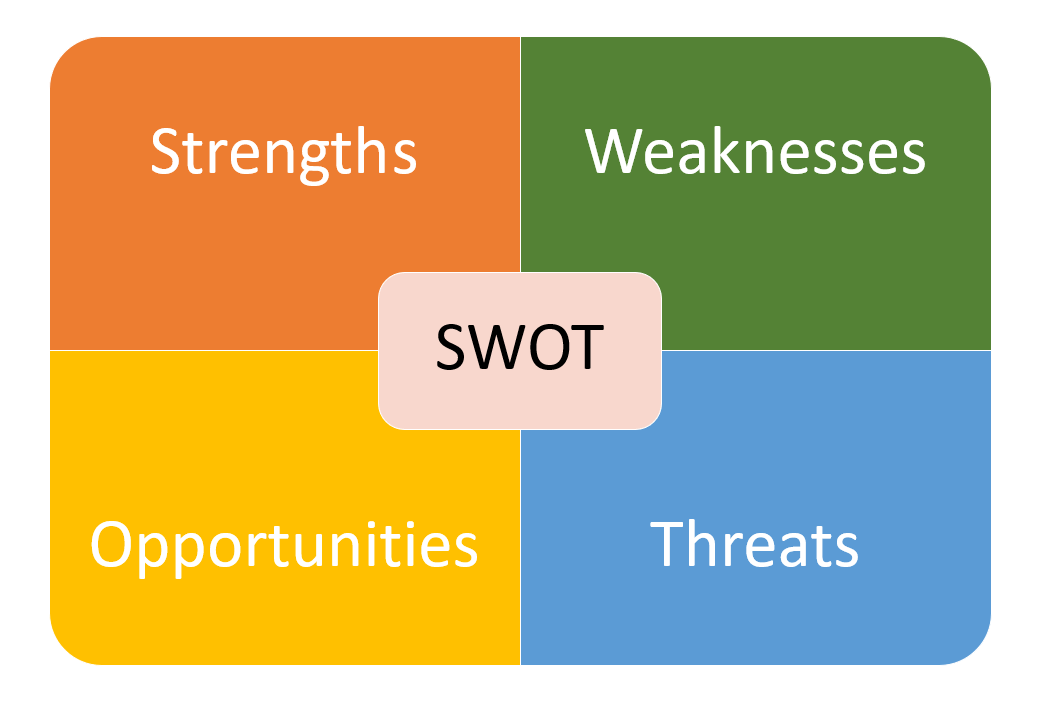
SWOT analysis is a strategic planning tool that helps businesses examine four key areas:
- Strengths (internal positive factors)
- Weaknesses (internal negative factors)
- Opportunities (external positive factors)
- Threats (external negative factors)
Note
SWOT analysis is one of the most widely used business analysis tools because it provides a comprehensive view of both internal capabilities and external environment factors.
How SWOT analysis works:
The SWOT matrix divides factors into four quadrants:
Internal factors (things the business can control):
- Strengths: What the business does well
- Weaknesses: Areas where the business struggles
External factors (things outside the business):
- Opportunities: External factors that could help the business
- Threats: External factors that could harm the business
Example
SWOT Analysis Example: Local Coffee Shop
Strengths:
- Experienced baristas
- Prime location
- Loyal customer base
Weaknesses:
- Limited seating capacity
- No online ordering system
Opportunities:
- Growing demand for specialty coffee
- Potential for delivery partnerships
Threats:
- New Starbucks opening nearby
- Rising coffee bean prices
Using SWOT analysis:
Businesses use SWOT analysis to:
- Identify their current position in the market
- Plan strategies that use strengths to take advantage of opportunities
- Address weaknesses that might prevent them from seizing opportunities
- Prepare for external threats
- Make informed business decisions
Important
The most effective SWOT analyses go beyond just listing factors. Successful businesses use SWOT to develop specific action plans that leverage strengths and opportunities while addressing weaknesses and threats.
Key vocabulary
- Taxes: Compulsory payments that businesses and individuals must make to the government from their income
- Legislation: The process of creating new laws for the country
- Industrial action: Actions taken by employees during protests, such as strikes
- Inflation: A general increase in prices that reduces the purchasing power of money
- External environment: All the factors outside a business that can affect its operations
Summary
Key Points to Remember:
- Opportunities are external factors that can help your business succeed - always be on the lookout for them!
- Threats are external factors that can harm your business - develop strategies to deal with them before they become serious problems
- Businesses cannot control external factors, but they can influence how they respond to them
- SWOT analysis is a powerful tool that helps businesses understand their internal strengths and weaknesses alongside external opportunities and threats
- Strategic thinking involves constantly monitoring the external environment and adapting business plans accordingly