Production, Exchange, and Consumption (Grade 10 NSC Matric Economics): Revision Notes
📚Revision Notes
Production, Exchange, and Consumption
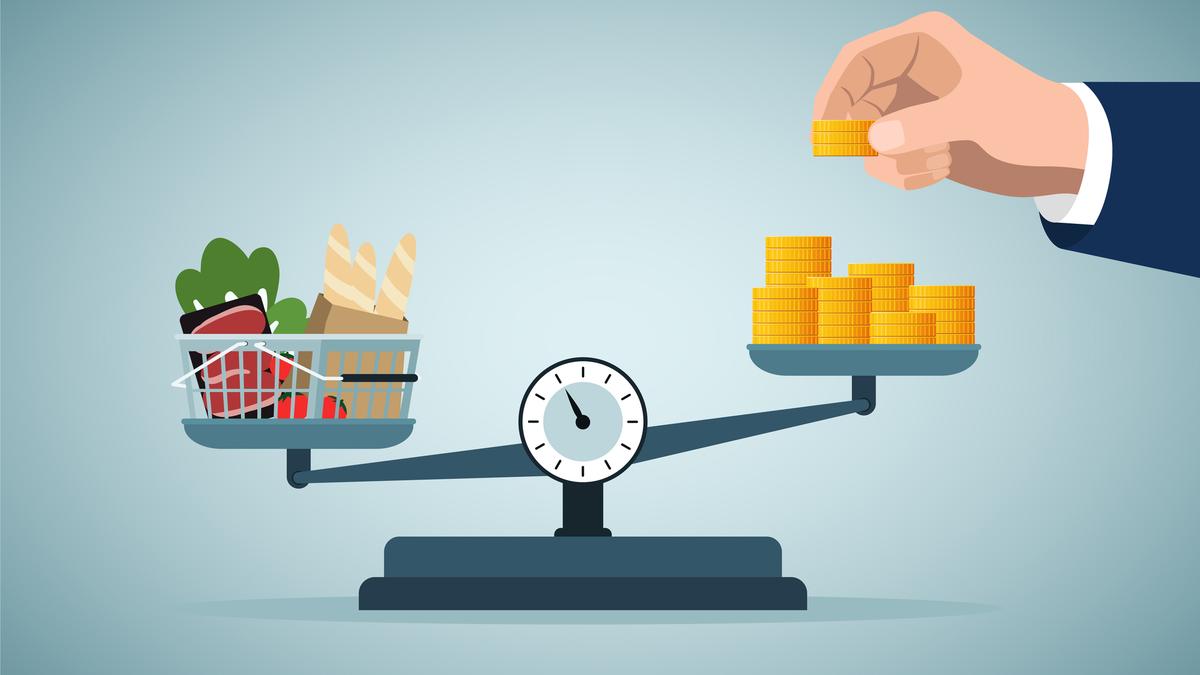
The three basic economic processes
Every modern economy operates through three fundamental processes that work together to meet people's needs and wants. These interconnected processes form the backbone of all economic activity:
- Production - creating goods and services using available resources
- Exchange - trading goods and services between different parties
- Consumption - using goods and services to satisfy needs and wants
Note
These three processes are deeply interconnected - production creates the goods and services that flow through exchange systems to reach consumers. Understanding how these processes work together helps us see how an economy functions as a complete system where each part depends on the others.
Production
Production is the process of creating goods and services that people need and want. To understand production fully, we need to look at what makes it possible and how it's organised in the economy.
The four factors of production
All production requires four essential ingredients, known as the factors of production. Think of these as the building blocks that must come together to create anything useful:
Land represents all the natural resources our planet provides. This includes not just the physical space where businesses operate, but also natural materials like minerals, timber, water, and fertile soil for farming. South Africa's rich mineral deposits, for example, provide the land factor for our mining industry.
Labour is the human element in production. This includes all the workers, managers, and other people who contribute their skills, knowledge, and effort to create goods and services. Each person brings different abilities and qualifications to the production process - this combination of skills and knowledge is often called human capital.
Capital refers to all the manufactured resources used in production. This includes buildings, machinery, vehicles, tools, and materials that businesses purchase to help them produce goods and services. For instance, a bakery's ovens, mixers, and delivery trucks are all examples of capital.
Entrepreneurship is the special factor that brings the other three together. Entrepreneurs are the people who organise land, labour, and capital to create businesses that produce goods and services. They take risks with their own money and resources, hoping to make a profit by meeting customers' needs.
Example
Worked Example: The Four Factors in a Bakery
Let's see how all four factors work together in a local bakery:
Land: The building space, access to clean water, and wheat from farmland\
Labour: The baker's skills, shop assistants, and delivery drivers\
Capital: Ovens, mixing equipment, delivery vehicles, and cash registers\
Entrepreneurship: The owner who organized everything, invested money, and took the risk of starting the business
Without any one of these factors, the bakery couldn't operate successfully.
Economic sectors
Production in any economy is organised into different sectors based on ownership and how businesses operate.
Public and private sectors
The public sector includes all industries and businesses owned and controlled by the government. In South Africa, this includes public hospitals and clinics, government schools, correctional facilities like prisons, provincial and municipal offices, water supply systems, and railways. The government runs these services to benefit society as a whole, not necessarily to make a profit.
The private sector consists of all businesses owned and controlled by private individuals or groups. These businesses operate to make profits for their owners. Most shops, restaurants, private schools, and manufacturing companies belong to the private sector.
Note
Most modern economies have a mixed system where both public and private sectors play important roles. The balance between these sectors varies from country to country based on political and economic philosophies.
Formal and informal sectors
The formal sector includes all registered businesses in the country. These businesses keep official records of their activities, pay taxes, and follow government regulations. When economists calculate a country's Gross Domestic Product (GDP), they only count production from the formal sector because these businesses provide reliable data.
The informal sector consists of businesses that aren't officially registered with the government. Street vendors, small home-based businesses, and informal traders are examples. Because these businesses don't keep official records, there's no reliable data about their production, income, or expenses.
Important
The informal sector poses challenges for economic measurement and policy-making. Since informal businesses don't appear in official GDP calculations, governments may underestimate the true size of their economies. This makes it difficult to create accurate economic policies and provide appropriate support to all economic participants.
Primary, secondary, and tertiary sectors
Economic activity is also classified by what type of work is being done:
The primary sector involves collecting raw materials directly from nature. This includes mining, agriculture, fishing, and forestry. For example, farmers growing maize, miners extracting gold, and fishermen catching fish all work in the primary sector. This sector is particularly important in developing countries like South Africa, where natural resources play a major role in the economy.
The secondary sector transforms raw materials from the primary sector into finished products through manufacturing and processing. Food processing plants, car assembly factories, paper mills, and oil refineries all belong to the secondary sector. They take raw materials and turn them into products people can use.
The tertiary sector provides services rather than producing physical goods. This includes hairdressing, banking, education, healthcare, transport, and entertainment. As economies develop, the tertiary sector usually becomes increasingly important.
Consumption
Consumption happens when people and businesses use goods and services to meet their needs and wants. Understanding consumption helps us see how the economy completes its cycle from production to final use.
Types of goods and services
There are two main categories of goods in the economy:
Capital goods are items used to produce other goods and services. Tools, machinery, factory buildings, and computers used in businesses are all capital goods. These goods don't directly satisfy consumer needs - instead, they help create the products that consumers eventually buy.
Consumer goods are the final products that people buy for their own use. These goods directly satisfy our needs and wants and can be further classified into several types:
Durable goods last for a long time and can be used repeatedly. Examples include refrigerators, cars, furniture, and washing machines. These goods represent significant purchases that households make infrequently.
Semi-durable goods last for a moderate amount of time but not as long as durable goods. Clothing, shoes, textiles, and small household items fall into this category. You might replace these items every few months or years.
Non-durable goods (also called perishable goods) are consumed quickly and can only be used once. Food, petrol, washing powder, and newspapers are examples. These goods form a regular part of household spending.
Services are intangible products that provide value without creating physical objects. Banking, healthcare, education, telecommunications, entertainment, and transport are all services. The service sector has become increasingly important in modern economies.
Example
Worked Example: Classifying Everyday Items
Let's classify some common purchases:
Capital Goods: A computer used for business work, factory machinery\
Durable Consumer Goods: Television, refrigerator, bicycle\
Semi-durable Consumer Goods: Winter jacket, school bag, running shoes\
Non-durable Consumer Goods: Milk, bread, petrol, newspaper\
Services: Haircut, bank account, movie ticket, bus ride
Notice how each category serves different needs and has different replacement patterns.
Types of consumers
Different groups in the economy consume different types of goods and services for different reasons:
Households are the most familiar type of consumer. Families and individuals spend their income mainly on durable goods (like appliances), non-durable goods (like food), and services (like healthcare and education) to meet their daily needs and improve their quality of life.
Businesses consume goods and services to support their production processes. They primarily spend money on capital goods like machinery and buildings, raw materials for production, and services like accounting and legal advice. Business consumption is often called investment because it helps create future production capacity.
Government consumes goods and services to provide public benefits. Government spending focuses on public goods like roads, street lighting, and national parks, as well as merit goods like education and healthcare that benefit society as a whole.
Note
Each type of consumer has different priorities and spending patterns. Households focus on immediate needs and quality of life, businesses invest in future productivity, and government aims to provide services that benefit society overall.
Exchange
Exchange is the process by which goods and services move from producers to consumers. Without exchange, people would have to produce everything they need themselves, which would be extremely inefficient.
Exchange and bartering
Disposable income is the money people have left to spend after paying taxes. This income allows people to exchange money for the goods and services they want to consume. People can also save part of their disposable income for future purchases.
While money makes exchange convenient, people can also trade through bartering - swapping goods or services directly without using money. For example, you might trade some books you've finished reading for DVDs from a friend. In earlier times, most economic activity involved bartering, but money has made exchange much more efficient and convenient.
Exchange rates become important when trading with other countries. An exchange rate tells us how much of one currency we can get for another currency. If you want to buy goods from another country, you first need to exchange your South African rand for that country's currency. The exchange rate determines the value at which this trade takes place.
Example
Worked Example: Modern Bartering
Sarah has outgrown her bicycle but wants a guitar. Instead of selling the bike for money and then buying a guitar, she finds Tom who has a guitar but needs a bicycle for commuting. They agree to swap directly:
- Sarah gives: Her bicycle (worth approximately R2,000)
- Tom gives: His guitar (worth approximately R2,000)
- Result: Both get what they need without using money
This shows how bartering can still work in modern economies, though it requires finding someone who wants exactly what you have to offer.
Note
Money serves as a "medium of exchange" that makes trading much easier than bartering. Instead of finding someone who wants your exact item and has exactly what you want, you can sell your item for money and use that money to buy what you need from anyone who accepts that currency.
Summary
Key Points to Remember:
-
The three basic economic processes - production, exchange, and consumption - work together to make any economy function effectively
-
The four factors of production - land (natural resources), labour (human input), capital (manufactured resources), and entrepreneurship (organisation and risk-taking) - are essential ingredients for all production
-
Economic sectors can be classified in multiple ways: public vs private ownership, formal vs informal registration, and primary vs secondary vs tertiary activities
-
Different types of goods serve different purposes: capital goods help produce other goods, while consumer goods directly satisfy needs and wants through durable, semi-durable, and non-durable categories
-
Exchange through money and bartering allows people to trade efficiently, with exchange rates facilitating international trade between different currencies