Structure of Volcanoes (Grade 10 NSC Matric Geography): Revision Notes
📚Revision Notes
Structure of Volcanoes
Basic components of a volcano
All volcanoes share the same fundamental structural elements that work together as a connected system. Understanding these key components helps explain how volcanic eruptions occur and why volcanoes take different shapes.
Note
The interconnected nature of volcanic systems means that changes in one component directly affect all others. This is why understanding the complete structure is essential for predicting volcanic behavior.
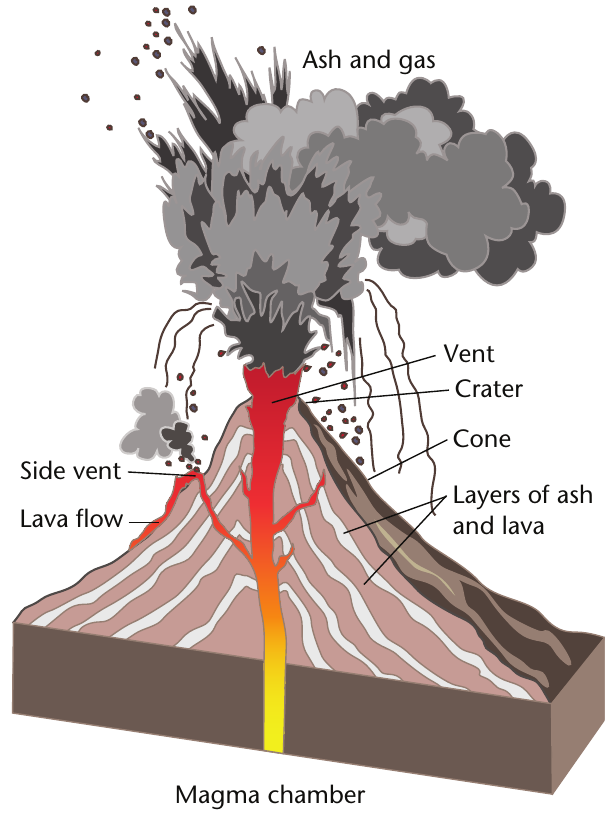
The vent acts as the main pathway connecting the underground magma source to the Earth's surface. This pipe-like opening allows molten rock, gas, and ash to travel upward during an eruption. Think of it as the volcano's main "throat" through which all volcanic material must pass.
The magma chamber serves as an underground reservoir where molten rock collects before eruption. This deep chamber stores magma under tremendous pressure, and when this pressure becomes too great, it forces material upward through the vent system. The size and depth of the magma chamber significantly influences the type and intensity of volcanic eruptions.
At the surface, the crater forms a bowl-shaped depression at the volcano's summit. This circular or oval-shaped opening marks where the vent reaches the surface and where most volcanic activity is visible during eruptions. Craters can vary dramatically in size depending on the volcano's eruption history.
The volcanic cone represents the mountain-like structure we typically associate with volcanoes. These sloping sides build up gradually over time as layers of hardened lava, ash, and other volcanic materials accumulate around the central vent. Each eruption adds new layers, making the cone taller and wider.
Secondary volcanic features
Many volcanoes develop additional structural features beyond their main components. Side vents can form along the slopes when magma finds alternative pathways to the surface. These create lava flows that stream down the volcano's sides, often following the path of least resistance.
Secondary cones may develop around these side vents, creating smaller volcanic structures on the main volcano's flanks. These secondary features contain all the same basic elements as the main volcano but operate on a smaller scale.
Note
Secondary volcanic features can make eruption prediction more challenging because magma may find multiple pathways to the surface, creating complex eruption patterns that don't follow the main vent system.
Caldera formation
Sometimes volcanic eruptions become so massive and explosive that they fundamentally change the volcano's structure. When enormous eruptions completely empty the underground magma chamber, the overlying rock and volcanic cone lose their support system.
Important
Caldera-forming eruptions are among the most devastating natural disasters on Earth. The explosive power required to create a caldera is thousands of times greater than typical volcanic eruptions, capable of affecting global climate patterns.
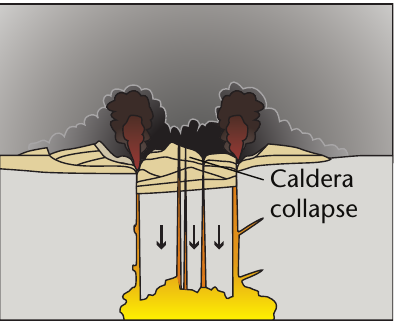
This process creates a caldera - a much larger crater formed when the volcanic cone collapses inward into the emptied magma chamber below. Caldera formation typically occurs in three main stages:
Stage 1: Violent eruptions weaken the volcanic cone structure while simultaneously draining the magma chamber. The intense explosive activity creates instability in the entire volcanic system.
Stage 2: As the magma chamber empties, the unsupported cone structure collapses downward into the hollow space. This collapse can happen gradually or catastrophically, depending on the specific conditions.
Stage 3: Over time, the collapsed area may experience renewed volcanic activity, potentially forming new cones within the original caldera. Water can also collect in the depression, creating caldera lakes.
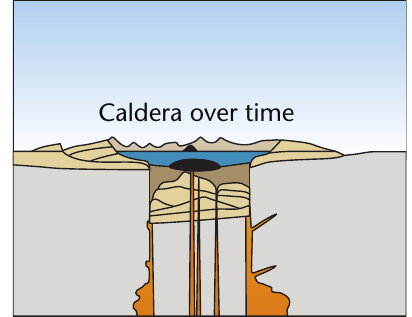
Real-world example: Crater Lake
Example
Real-World Example: Crater Lake Formation
Crater Lake in Oregon, USA, provides an excellent example of caldera formation and structure. This stunning circular lake sits within a large caldera formed approximately 7,700 years ago when Mount Mazama experienced a catastrophic eruption.
The Formation Process:
- The eruption was so powerful that it ejected enormous quantities of volcanic material, creating ash deposits across much of North America
- When the magma chamber emptied, the mountain's peak collapsed inward, forming the caldera we see today
- The lake now fills the collapsed crater, reaching depths of nearly 2,000 feet
Evidence of Structure:
- The topographic map clearly shows the characteristic circular shape of a caldera
- Steep walls rise dramatically from the lake surface
- Wizard Island within the lake represents a new volcanic cone that formed after the original collapse
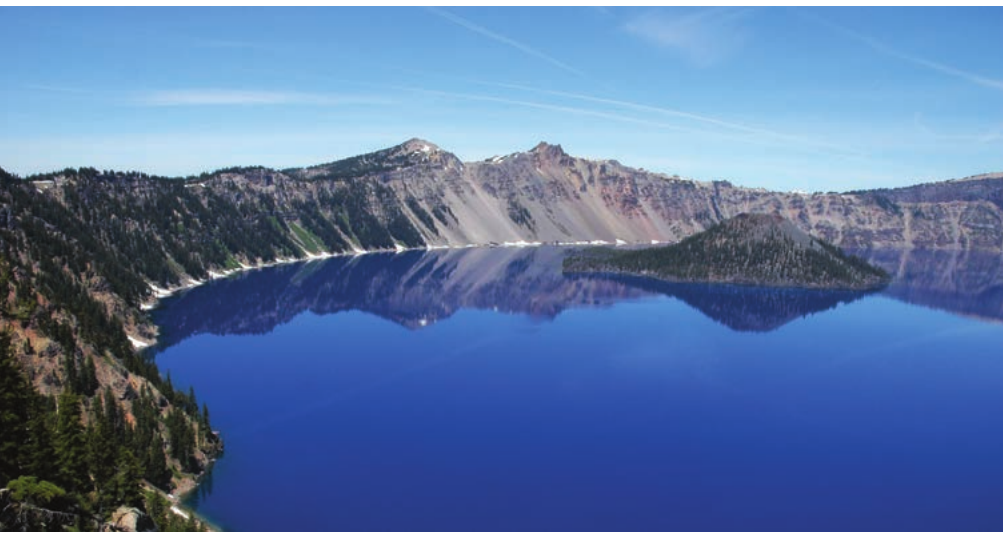
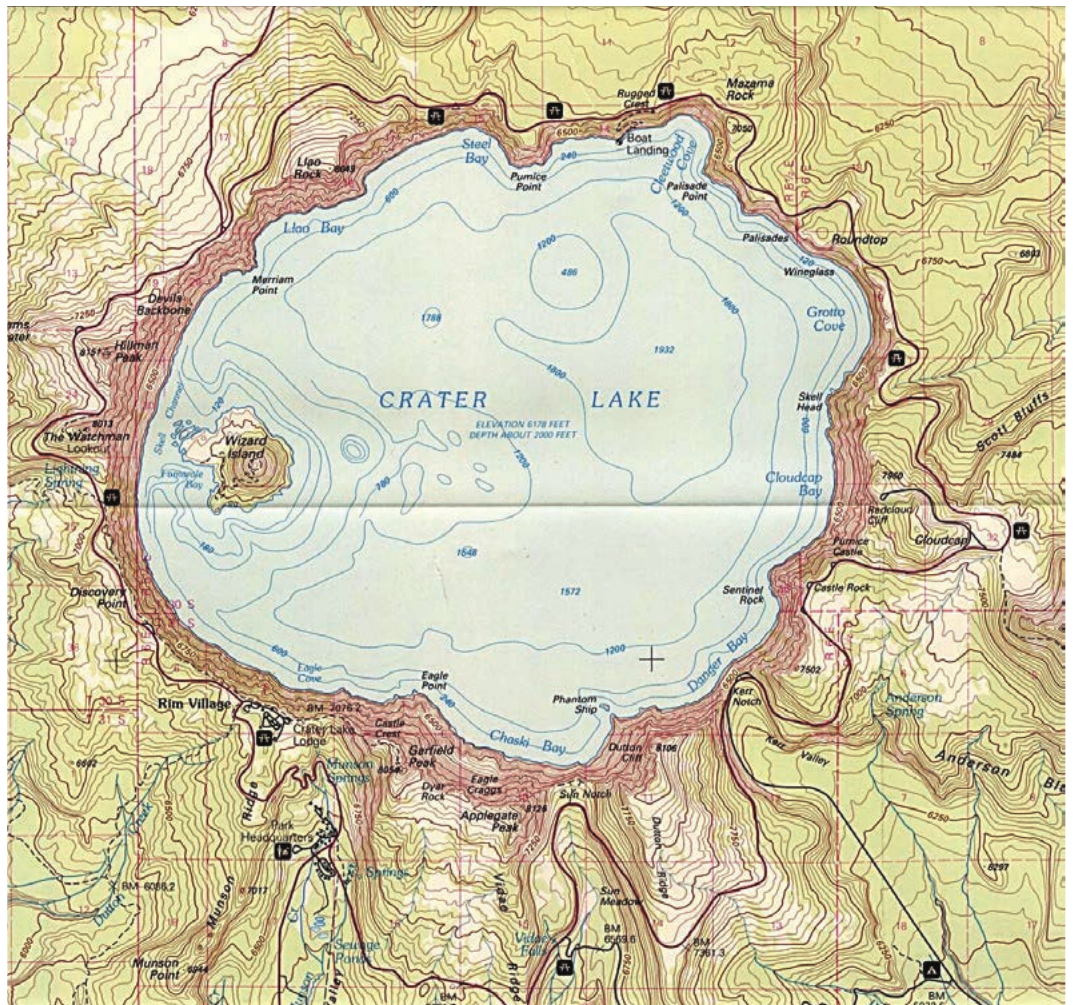
The topographic map of Crater Lake clearly shows the characteristic circular shape of a caldera, with steep walls rising dramatically from the lake surface. The close spacing of contour lines around the rim indicates the sharp elevation changes typical of collapsed volcanic structures. Wizard Island, visible within the lake, represents a new volcanic cone that formed after the original collapse, demonstrating how calderas can experience renewed volcanic activity over time.
Summary
Key Points to Remember:
-
All volcanoes contain four basic structural elements: vent (the pipe), magma chamber (underground reservoir), crater (surface opening), and volcanic cone (built-up sides from erupted materials)
-
Secondary features can develop when magma finds alternative pathways, creating side vents, lava flows, and smaller secondary cones on the main volcano's slopes
-
Calderas form through dramatic collapse when massive eruptions empty the magma chamber, causing the volcanic cone to fall inward and create a much larger crater structure
-
Crater Lake demonstrates caldera evolution - from catastrophic collapse to water-filled depression with potential for new volcanic activity, showing how volcanic structures can transform over time
-
Understanding volcanic structure helps predict behaviour - the size and type of magma chamber, vent system, and cone development all influence how a volcano will erupt and what hazards it may pose