The Impact of HIV and AIDS on Population Structure (Grade 10 NSC Matric Geography): Revision Notes
📚Revision Notes
The Impact of HIV and AIDS on Population Structure
Introduction
HIV and AIDS have dramatically affected population structures, particularly in countries with high infection rates like those in Southern Africa. Understanding how this disease impacts demographic patterns is crucial for geography students studying population dynamics.
How HIV and AIDS affect demographic rates
HIV and AIDS significantly alter key population statistics in affected countries. The disease creates distinct patterns that demographers can measure and predict:
Important
Critical Demographic Effects of HIV/AIDS
HIV/AIDS creates measurable changes in four key demographic indicators that fundamentally alter population dynamics in affected regions.
Key demographic effects
- Increases the crude death rate - More people die from AIDS-related illnesses, raising overall mortality
- Decreases life expectancy - People with HIV/AIDS typically have shorter lifespans, reducing average life expectancy across the population
- Decreases the birth rate - Infected individuals may have fewer children due to illness or early death
- Increases infant and under-five mortality rates - Babies born to HIV-positive mothers face higher risks of infection and death
Note
These demographic changes don't occur in isolation - they create a cascading effect where changes in one rate influence others. For example, when life expectancy decreases, it reduces the number of people in reproductive age groups, which then affects birth rates.
These changes combine to create significant shifts in how populations grow and develop over time.
Patterns of HIV infection by age and gender
HIV infection does not affect all groups equally. Research shows clear patterns in who is most at risk:
Age patterns
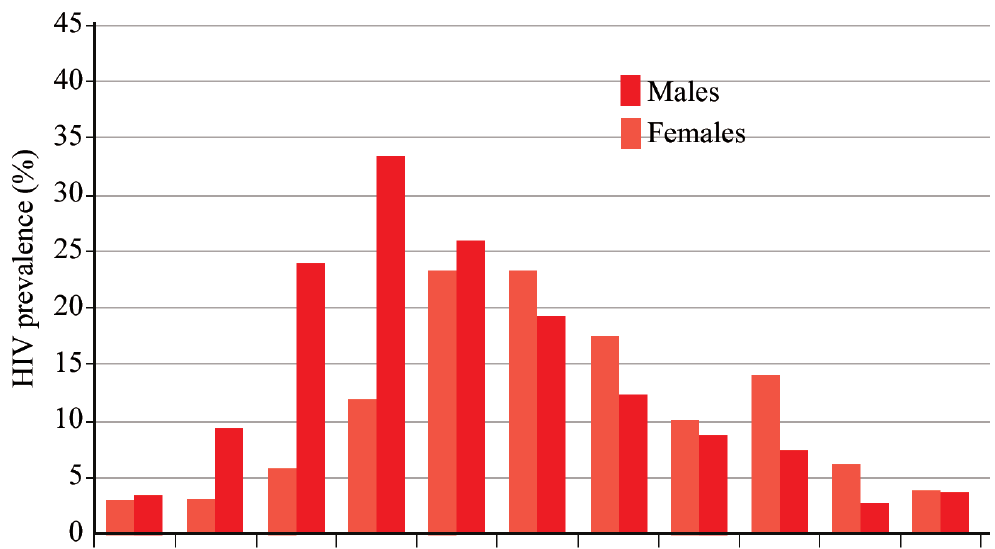
The data from South Africa reveals that HIV prevalence peaks in the 25-29 age group, with infection rates reaching over 30% in some cases. This pattern is significant because:
- It affects people in their most productive years
- These are typically the ages when people start families
- The economic impact is severe as the workforce is heavily affected
Important
Why the 25-29 Age Group is Most Affected
This age group represents the intersection of several risk factors: peak sexual activity, economic mobility that increases exposure, and social behaviors that may increase transmission risk. Understanding this pattern is essential for targeted prevention efforts.
Gender differences
The infection patterns show important differences between males and females:
- Females often have higher infection rates than males, especially in certain age groups
- Young women (20-34 years) are particularly vulnerable
- These gender differences reflect social, economic, and biological factors that increase women's risk
Note
Gender differences in HIV infection rates reflect complex interactions between biological vulnerability, social power dynamics, and economic factors. Young women may face particular risks due to age-gap relationships, economic dependence, and limited negotiating power in sexual relationships.
Impact on population structure
The way HIV affects different age groups creates distinctive changes in population pyramids - the graphs demographers use to show population structure.
Population pyramids and AIDS
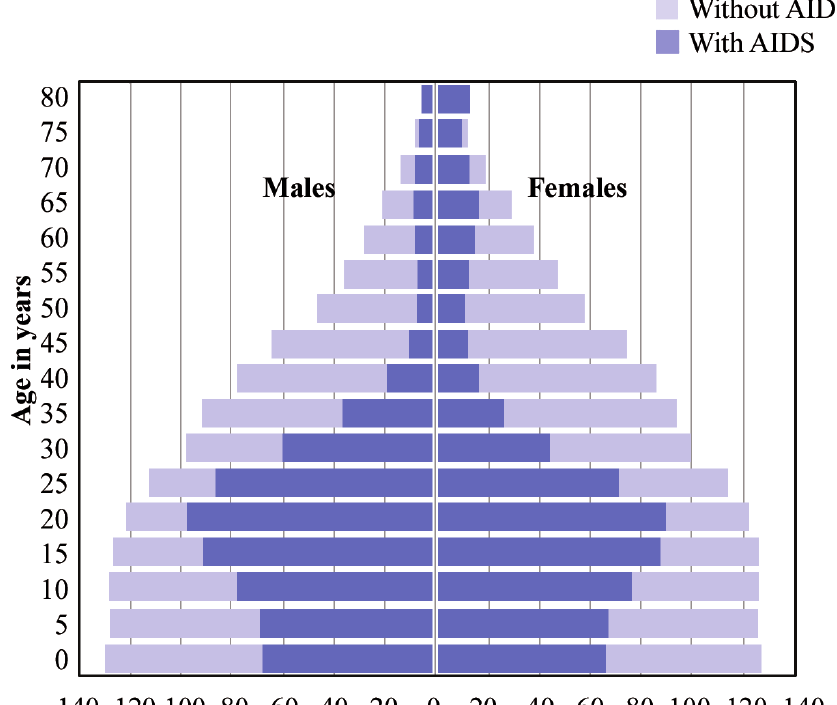
Projected population refers to the future population that demographers expect from their calculations based on current trends.
The "chimney shape" effect
When AIDS significantly impacts a population, demographers predict that population pyramids will develop a distinctive chimney shape rather than the traditional pyramid form. This happens because:
- Reduced numbers in adult age groups - High death rates in the 25-40 age groups create narrower sections in the middle of the pyramid
- Fewer births - Lower birth rates mean smaller cohorts of young people
- Uneven gender distribution - Different infection rates between males and females create asymmetrical patterns
Example
Understanding the Chimney Shape
Imagine a traditional population pyramid as a triangle with a wide base (many young people) and narrow top (few elderly). The "chimney shape" occurs when the middle sections become narrower due to AIDS deaths, creating a structure that looks more like a chimney - narrow in the middle with a wider base and top remaining relatively unchanged.
The comparison between populations "with AIDS" and "without AIDS" clearly shows how the disease hollows out the middle sections of the population structure, creating a shape that resembles a chimney rather than a traditional broad-based pyramid.
Understanding the long-term consequences
These population structure changes have serious implications for affected countries:
Economic impacts
- Loss of working-age population reduces economic productivity
- Increased dependency ratios as fewer working adults support children and elderly
- Reduced tax base and increased healthcare costs
Social impacts
- More orphaned children requiring care
- Breakdown of traditional family structures
- Loss of knowledge and skills as experienced adults die
Important
The Generational Impact
The effects of HIV/AIDS on population structure extend far beyond the immediate health crisis. Countries can experience demographic disruptions for decades as smaller age cohorts move through the population pyramid, affecting everything from education planning to pension systems.
Planning implications
- Governments must plan services for different population structures
- Healthcare systems need to adapt to changing age profiles
- Economic development strategies must account for demographic changes
Summary
Key Points to Remember:
- HIV and AIDS significantly alter population demographics by increasing death rates, decreasing life expectancy and birth rates, and raising infant mortality
- Infection patterns vary by age and gender - the 25-29 age group has the highest prevalence, and females are often more affected than males in certain age ranges
- Population pyramids change shape - high infection rates create chimney-shaped pyramids instead of traditional broad-based ones
- The impacts are long-lasting - demographic changes from HIV/AIDS affect countries for generations through altered population structures
- Understanding these patterns helps with planning - governments and organisations use this data to prepare appropriate responses and allocate resources effectively