Causes and Effects of Population Movements (Grade 10 NSC Matric Geography): Revision Notes
📚Revision Notes
Causes and Effects of Population Movements
Population movements occur when people relocate from one place to another, and these movements can have significant impacts on the places people leave, the places they move to, and the people themselves. Understanding why people move and what happens as a result is essential for geographers studying human settlement patterns.
Understanding population movements
Population movements happen for many different reasons, and often several causes work together at the same time. These movements create impacts in three main areas: the origin (where people come from), the destination (where people go to), and on the migrants themselves.
There are two main types of population movements:
- Forced migration: When people have no choice but to leave their homes
- Voluntary migration: When people choose to move to improve their lives
Note
The distinction between forced and voluntary migration is crucial for understanding the different causes, experiences, and outcomes of population movements. However, in reality, the line between these two types can sometimes be blurred, as people may face a combination of pressures that limit their choices.
Causes of forced population movements
Forced migration occurs when people are compelled to leave their homes due to circumstances beyond their control. There are three primary causes:
Conflict
Wars, ethnic tensions, or religious disputes can force people to flee their homes for safety. These conflicts make it dangerous for people to remain in their communities.
Development projects
Large-scale construction projects such as building dams, airports, or declaring nature reserves can displace entire communities. People living in these areas must relocate to make way for development.
Disasters
Both natural disasters (floods, earthquakes, droughts) and human-made disasters (nuclear accidents, industrial explosions) can force people to abandon their homes quickly.
Important
Remember the three main causes of forced migration: Conflict, Development projects, and Disasters. These are often referred to as the "3 D's" and can sometimes work in combination to force people to move.
Effects of forced population movements
When people are forced to leave their homes, they often depart hastily and face numerous challenges both during their journey and upon arrival at their destination.
Immediate impacts when leaving
People experiencing forced migration face immediate challenges:
- People must abandon their homes, jobs, and possessions
- Families often become separated during the chaos of departure
- There is little time to plan or prepare for the journey
Challenges at the destination
People who have been forced to migrate often face difficult conditions when they arrive:
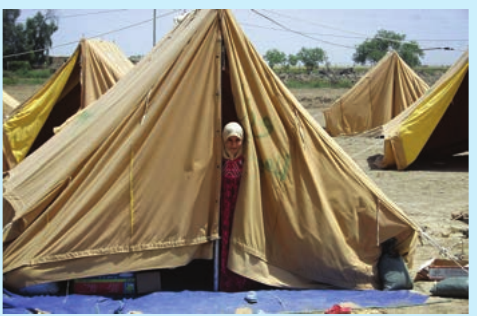
The living conditions for forced migrants are typically challenging:
- Living in inadequate temporary shelters with poor sanitation and limited access to clean water and food
- Children cannot attend school regularly, disrupting their education
- Adults struggle to find employment and may lose confidence in their abilities
- Migrants may face exploitation by others who take advantage of their desperate situation
- Some local people may be hostile towards newcomers
- The entire experience can cause lasting psychological trauma
Note
The psychological impact of forced migration is often overlooked but can be severe and long-lasting. Trauma from both the original cause of migration and the difficult conditions afterward can affect people for years, even after their living situation improves.
Long-term outcomes
Despite initial hardships, many forced migrants eventually manage to establish new lives. Some build homes and find work in their new locations, while others may eventually return to rebuild their original communities.
Example
Case Study: Forced Migration in Iraq
In 2006, violence following the bombing of the Al-Askari mosque in Samarra forced over 1.5 million people to flee their homes. This religious site was particularly important to Shia Muslims, and its destruction by Sunni Muslims led to widespread retaliation and conflict between the two religious groups.
Impact on families: Many Iraqi families spent years living in temporary camps with limited access to basic necessities like clean water, electricity, and proper healthcare or education for their children.
Long-term effects: This case demonstrates how religious and ethnic conflicts can trigger massive population movements with lasting consequences for entire communities.
Example
Case Study: The Three Gorges Project in China
The construction of the Three Gorges Dam on the Yangtze River in China represents one of the world's largest forced migration projects.
Scale of the project:
- Dam covers 632 square kilometres of land
- Designed to generate hydroelectric power and control flooding
- Forced 1.5 million people to relocate

Communities affected: When completed, the dam submerged 13 cities, 140 towns, and over 1,300 villages.
Outcomes: The Chinese government relocated many people to higher ground or to different provinces entirely. While some people found improved living conditions in modern apartments, others struggled with the loss of their ancestral farmland and the difficulty of adapting to urban life after generations of farming.
This case shows how development projects can create both opportunities and challenges for displaced populations.
Causes of voluntary population movements
Unlike forced migration, voluntary migration occurs when people choose to move because they believe it will improve their quality of life. Geographer E.S. Lee developed a model to help explain how people make these decisions.
The push-pull model
Lee's model identifies several key components in migration decisions:
Push factors are negative aspects of a place that encourage people to leave. These might include:
- Lack of job opportunities
- Poor living conditions
- High crime rates
- Limited access to healthcare or education
Pull factors are positive aspects of a destination that attract people to move there. Examples include:
- Better employment prospects
- Higher wages
- Improved quality of life
- Better educational opportunities
Neutral factors are aspects of places that don't significantly influence migration decisions one way or the other.
Intervening obstacles are barriers that make migration difficult, such as:
- High costs of moving
- Physical barriers like mountains or borders
- Legal restrictions on movement
Important
The push-pull model is fundamental to understanding voluntary migration. Remember that migration decisions involve weighing negative factors at the origin against positive factors at the destination, while also considering the obstacles that might prevent or complicate the move.
Individual decision-making
Each person weighs push and pull factors differently based on their personal circumstances, age, and priorities. For example, a young person might prioritise job opportunities, while an older person might focus more on healthcare services or climate. People at different life stages will find certain factors more important than others when deciding whether to migrate.
Example
Examples of Individual Migration Decisions
The following cases illustrate how different people weigh push and pull factors:
Young man from Nelspruit:
- Push factors: Struggled to find work in his small village in Mpumalanga after completing school
- Pull factors: Cousin's offer of factory work in Gauteng provided better opportunities and the chance to send money home to support his mother
Widow in Ramsgate:
- Push factors: Expensive, cold conditions in Johannesburg
- Pull factors: Quieter retirement village near the coast with lower property costs, warmer climate, and better facilities for elderly residents
Doctor from Durban:
- Push factors: Frustrated with working conditions in a South African state hospital
- Pull factors: Job advertisements offering better salaries and working conditions in the UK
- Intervening obstacles: Challenges of leaving family behind
Effects of voluntary migration
The impacts of voluntary migration vary depending on who is moving and the characteristics of both origin and destination areas. However, several general patterns emerge:
Brain drain
One significant effect is brain drain - the loss of skilled and educated people from their home countries or regions. When professionals like doctors, teachers, and engineers emigrate, it can create skills shortages in the places they leave behind.
Effects on origin areas
Areas that people leave experience several impacts:
- Skills shortages: The departure of educated, working-age people can leave behind an older population with fewer skills
- Economic decline: Fewer people means less money circulating in local businesses and reduced demand for services
- Service closure: As populations shrink, it becomes expensive to maintain schools, clinics, and other services, leading to closures
- Reduced tax base: Fewer working people means less tax revenue for local governments
Effects on destination areas
Areas that receive migrants experience different impacts:
- Skills boost: The arrival of educated migrants can fill skills gaps and boost economic activity
- Increased demand: More people require more housing, healthcare, education, and other services
- Strain on services: Rapid population growth can overwhelm existing infrastructure, especially in developing countries where cities grow faster than services can expand
- Cultural enrichment: International migration creates multicultural societies, bringing new foods, languages, religions, music, and art forms
Note
The concept of "multiculturalism" refers to the coexistence of diverse cultural groups within a society. This can bring both benefits (cultural diversity, new perspectives) and challenges (integration difficulties, cultural tensions) to destination areas.
Effects on migrants themselves
Migrants experience various outcomes from their decision to move:
- Exploitation risks: Migrants, especially illegal immigrants, may work long hours for low wages without job security
- Economic benefits: Many migrants earn more money than they could at home and send remittances to support family members
- Social challenges: Adapting to new cultures, languages, and social systems can be difficult
Example
Case Study: Migration from South Africa
South Africa has experienced significant emigration of skilled professionals since 1995, providing a clear example of brain drain in action.
Scale of the problem: The departure of doctors, engineers, nurses, and other qualified people has created shortages in key sectors. Between 1995 and 2009, the number of black graduates with advanced degrees doubled to 1.4 million, but many have chosen to emigrate.
Push and pull factors:
- Pull factors: Countries like Canada, Australia, and the United Kingdom actively recruit skilled professionals, offering better salaries, working conditions, and opportunities
- Push factors: Concerns about crime and economic uncertainty continue to push people away from South Africa
Economic impact: The result is a loss of investment in education and training, as the benefits of producing skilled workers flow to destination countries rather than South Africa itself. This represents a significant economic cost to the country that invested in educating these professionals.
This case demonstrates how brain drain can create a cycle where countries lose their investment in human capital development.
Summary
Key Points to Remember:
- Population movements have multiple causes and create impacts on origin areas, destination areas, and migrants themselves
- Forced migration results from conflict, development projects, or disasters and often leads to difficult living conditions and trauma
- Voluntary migration is explained by the push-pull model, where people weigh negative factors at home against positive factors at potential destinations
- Brain drain occurs when skilled people emigrate, creating shortages in origin areas but boosting destination areas
- Case studies like Iraq, China's Three Gorges, and South African emigration show how these principles work in real-world situations
- The push-pull model includes push factors, pull factors, neutral factors, and intervening obstacles
- Migration effects vary greatly depending on the type of migration, the characteristics of the migrants, and the conditions in both origin and destination areas