Managing Flooding (Grade 10 NSC Matric Geography): Revision Notes
📚Revision Notes
Managing Flooding
Managing flooding is a crucial skill that involves collecting information, making plans, and taking action to reduce flood damage. There are three main approaches to flood management: technical approaches (using engineering solutions), environmental approaches (working with nature), and human approaches (focusing on people and communities). The most effective flood management strategies usually combine all three approaches to create comprehensive protection systems.
Important
Critical Success Factor
The most effective flood management strategies combine technical, environmental, and human approaches rather than relying on just one method. Single-approach solutions often fail to address the complex nature of flooding challenges.
Managing floods in urban areas
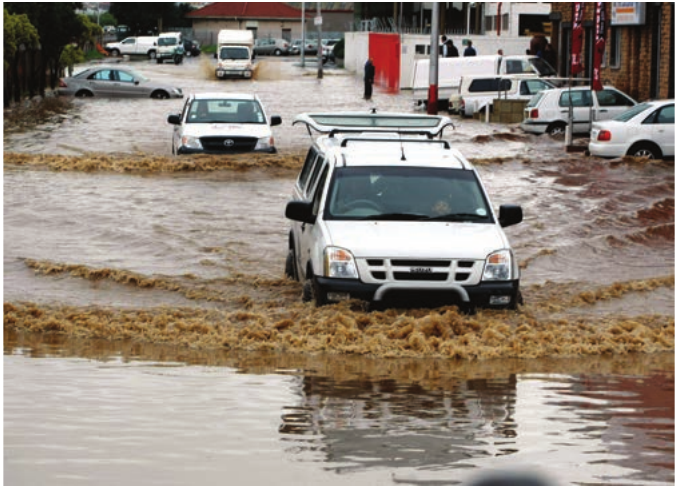
Urban areas present unique flooding challenges because they contain many human-made structures like roads, buildings, sports stadiums, and transport centres. These hard surfaces prevent water from soaking into the ground naturally, which can make flooding worse during heavy rainfall.
Note
Urban environments create what's known as the "urban heat island effect" and increased surface runoff, making flood management particularly challenging compared to natural landscapes.
Urban flood management focuses mainly on technical approaches that use engineering solutions to control water flow. These technical strategies include several key methods:
Drainage improvements help remove surface water quickly by upgrading storm drains and sewage systems. When urban areas have better drainage, rainwater can be channelled away from streets and buildings before it causes flooding.
Concrete barriers and raised riverbanks provide direct protection by building walls along rivers that flow through cities. These barriers raise the height that water must reach before it spills onto surrounding land.
River modifications involve changing the shape and flow of rivers to handle more water. This includes widening rivers, deepening river channels, and straightening river courses so water moves through urban areas more quickly.
Water storage and diversion systems channel excess river water into purpose-built storage dams or redirect it away from populated areas. This prevents the river system from becoming overwhelmed during heavy rainfall.
Flood barriers can be built across rivers to prevent high tides from pushing water upstream and causing coastal flooding in urban areas.
Managing flooding in rural areas
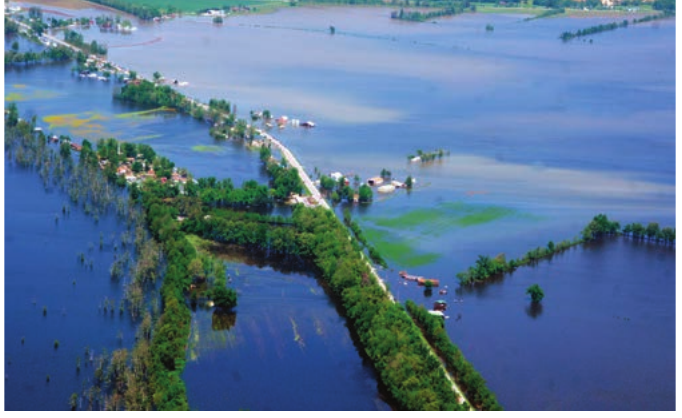
Rural areas, particularly flat farming land next to rivers, face high flood risks because they are naturally part of river floodplains. When rivers receive heavy seasonal rainfall, they quickly fill up and overflow onto the surrounding agricultural land. Poor land management practices like deforestation and intensive ploughing can make the situation worse by increasing surface water run-off.
Note
Natural Floodplains
Rural agricultural areas are often located on natural floodplains because these areas have historically provided fertile soil for farming. However, this also makes them naturally susceptible to periodic flooding.
Rural flood management uses a combination of technical, environmental, and human approaches:
Dam construction on rivers helps control seasonal water flow by storing excess water during wet periods and releasing it gradually. This prevents sudden flood surges downstream.
Catchment management focuses on managing the land areas above flood-risk zones to reduce the rate of water run-off. This includes maintaining vegetation cover and using farming practices that help soil absorb more water.
Wetland preservation and creation provides natural flood protection because wetlands act like giant sponges that absorb water from the soil and slow down run-off during heavy rainfall.
Drainage channels direct flood water away from rivers and farmland into designated water storage areas like reservoirs or detention ponds.
Protective walls can be built along river sections that frequently flood to contain the water within the river channel.
Improved farming methods help reduce surface run-off and increase water infiltration into the soil. This includes contour ploughing, maintaining vegetation strips along waterways, and avoiding overgrazing.
Managing flooding in informal settlements
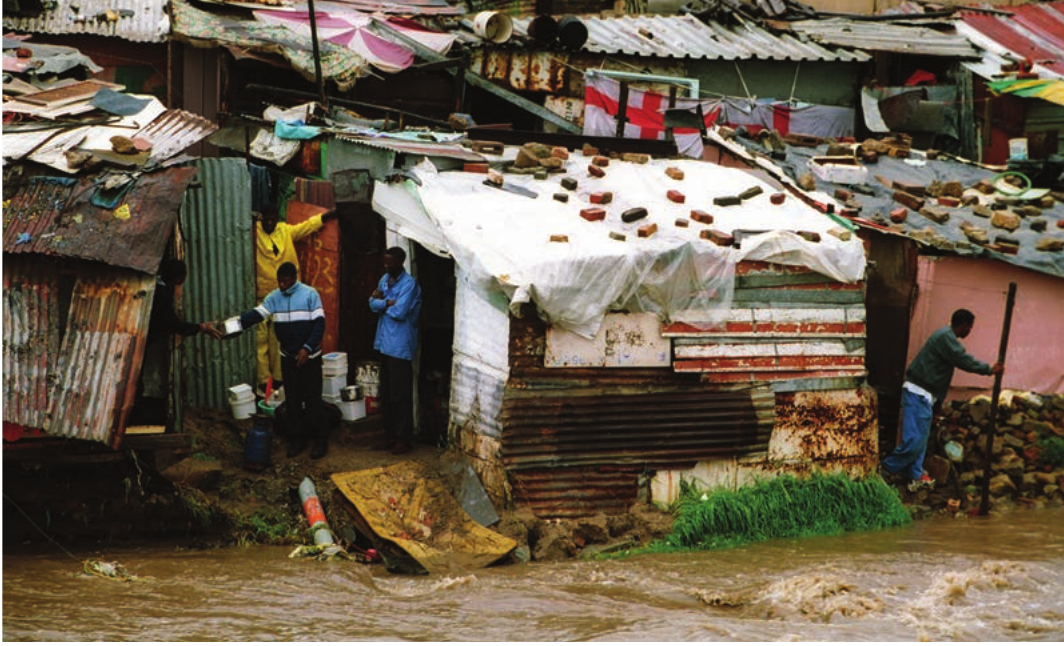
Informal settlements are unplanned communities that often develop in areas prone to flooding because these locations are typically the only affordable places where poor people can build homes. These settlements face particular flood management challenges because they often lack proper infrastructure and are frequently located very close to rivers or in low-lying areas.
Important
Vulnerability Factor
Informal settlements face a double vulnerability: they're located in high-risk flood zones AND lack the infrastructure and resources needed to protect against flooding. This creates a cycle where the most vulnerable populations face the greatest flood risks.
Managing flooding in informal settlements requires a combination of technical and human approaches:
Housing provision involves building formal housing in safer areas and relocating people away from high-risk flood zones. This addresses the root cause of vulnerability by moving people out of danger.
Building regulations and enforcement prevent people from constructing new houses in areas with high flood risk. This requires government intervention and community cooperation.
Improved house design helps existing homes better withstand flooding through raised foundations, flood-resistant building materials, and better construction techniques.
Drainage infrastructure installation provides proper storm drains and sewage systems that can handle heavy rainfall and prevent water from pooling in the settlement.
Community disaster planning ensures residents know what to do when flooding occurs, including evacuation procedures, emergency supply storage, and communication systems.
Education programmes teach community members about flood risks and safety measures, helping them make better decisions about where to build and how to prepare for floods.
Note
Community Involvement is Key
These approaches work best when they involve the community in planning and decision-making, as local residents often have valuable knowledge about flooding patterns and practical constraints.
Summary
Key Points to Remember:
-
Three-pronged approach: Effective flood management combines technical approaches (engineering solutions), environmental approaches (working with nature), and human approaches (community-focused solutions).
-
Urban solutions focus on drainage: Cities need improved drainage systems, concrete barriers, river modifications, and water storage to handle the increased run-off from hard surfaces.
-
Rural areas need catchment management: Countryside flood control works best when it manages entire river catchments through dams, wetlands, and improved farming practices.
-
Informal settlements require relocation and education: The most vulnerable communities need housing alternatives, improved building standards, and disaster preparedness programmes.
-
Prevention is better than reaction: All flood management strategies work best when they prevent flooding from occurring rather than just responding to floods after they happen.