Oceans and People (Grade 10 NSC Matric Geography): Revision Notes
📚Revision Notes
Oceans and People
The world's oceans are incredibly valuable to human life. They provide us with oxygen, influence our weather patterns, and serve as home to fish that feed over one billion people worldwide. The oceans are also potential sources of energy and fresh water through new technologies. However, despite their immense value, human activities are seriously threatening our oceans in several ways.
Important
Despite their immense value to human survival, human activities are creating a serious environmental crisis that threatens the very oceans we depend on.
This topic examines three major ways that people impact the oceans: pollution, overfishing, and the need for desalination as a solution to water scarcity.
1. Pollution
Throughout history, people have treated the oceans like massive rubbish dumps. This approach didn't cause major problems when the world's population was much smaller. However, with today's population of over seven billion people living in our pollution-generating society, the impact on our oceans has become a serious environmental crisis.
Sources of ocean pollution
There are five main sources of pollution that threaten our oceans:
- Industrial and agricultural chemicals - Toxic substances from factories and farms that wash into waterways
- Oil spills - Accidents involving tankers, oil rigs, and coastal refineries that release petroleum into the sea
- Plastic waste - Solid waste, mostly plastic items that don't break down naturally
- General waste dumping - Various types of rubbish directly dumped into ocean waters
- Sewage and wastewater - Untreated waste from coastal settlements that flows into the sea
Note
These pollution sources work together to create a cumulative effect that is far more damaging than any single source alone.
Effects of ocean pollution
Ocean pollution creates numerous serious problems that affect both marine life and humans:
- Marine life destruction - Plastic pollution kills millions of birds, fish, and other sea creatures every year
- Damaged fish populations - Pollution destroys fish breeding grounds, leading to reduced fish numbers
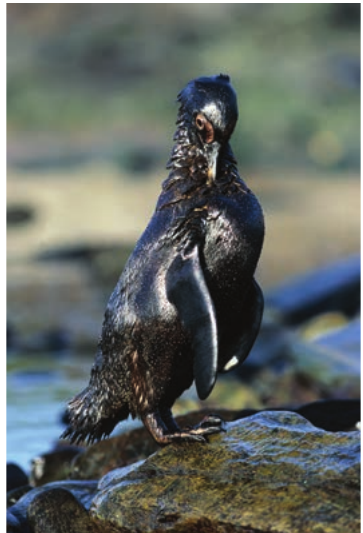
- Oil contamination - Floating oil clogs the feathers of seabirds, killing over one million birds annually
- Health and tourism threats - Sewage pollution contaminates beaches, making them unsafe for people and damaging tourism
Important
Oil spills are particularly devastating because they affect multiple levels of the marine ecosystem simultaneously - from microscopic organisms to large marine mammals.
Case study: Pollution in the Mediterranean Sea
Example
Case Study: The Mediterranean Sea Crisis
The Mediterranean Sea represents one of the world's most polluted water bodies, making it an excellent example of how human activities can severely damage marine environments.
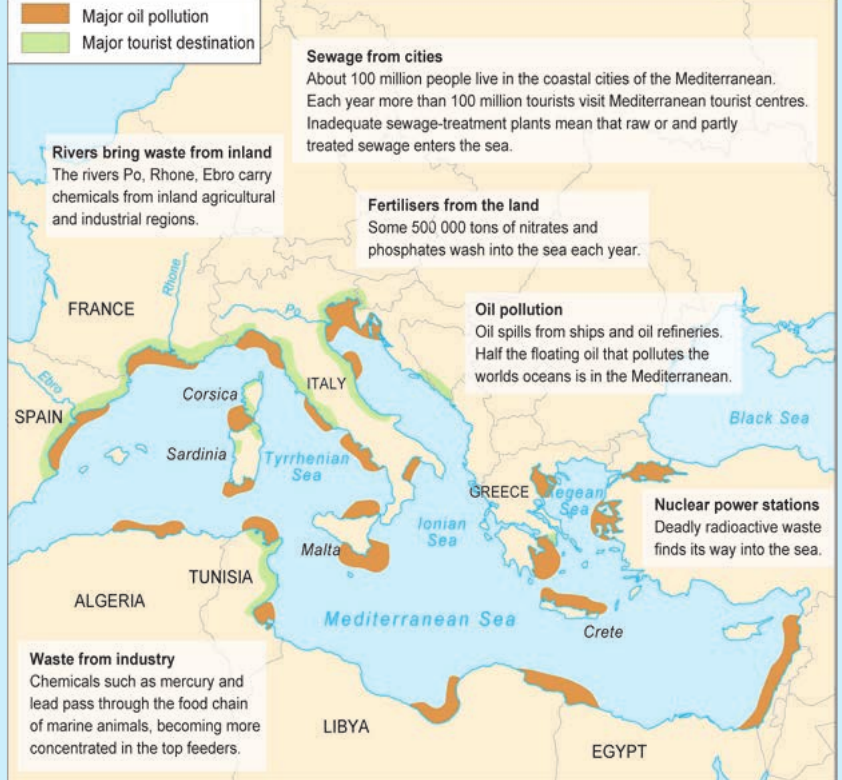
The Geographic Problem: The Mediterranean faces particularly severe pollution because of its unique geography. As a nearly enclosed sea with only a narrow connection to the Atlantic Ocean, it takes approximately 70 years for the water to completely renew itself. This means pollutants remain trapped for decades.
Key Pollution Sources:
- Urban sewage - Over 100 million coastal residents plus 100 million annual tourists generate massive amounts of untreated waste
- Agricultural runoff - Major rivers like the Po, Rhone, and Ebro carry fertilisers and pesticides, adding 500,000 tonnes of nitrates and phosphates annually
- Oil pollution - Ships and refineries contribute to half of the world's floating oil pollution
- Industrial chemicals - Mercury, lead, and other toxic substances enter the marine food chain
- Radioactive waste - Nuclear power stations release contaminated water
2. Overfishing
Overfishing occurs when people catch too many fish, causing fish populations in the oceans to decline dangerously. Fish species simply cannot reproduce fast enough to replace the estimated 90 million tonnes of fish removed from our oceans every year.
Reasons for overfishing
Several factors contribute to the overfishing crisis:
- Increased demand - More people and fishing companies are fishing in the world's oceans than ever before
- Economic necessity - Lack of alternative jobs in coastal communities forces people to depend on fishing for survival
- Advanced technology - Modern fishing equipment allows fishers to catch far more fish than traditional methods
- Weak regulations - There is insufficient international law to control how many fish can be removed from the oceans
Note
Modern fishing technology has revolutionized the industry's capacity to catch fish, but regulations haven't kept pace with these technological advances.
Effects of overfishing
Important
Overfishing creates serious consequences that extend far beyond just fewer fish in the ocean:
- Food security threats - Reduced fish populations threaten the food supply for entire communities
- Ecosystem disruption - Marine environments depend on interconnected feeding relationships, so overfishing one species affects many others
- Economic hardship - The fishing industry employs millions of people globally, so declining fish stocks lead to job losses and poverty
Case study: Overfishing in Mozambique
Example
Case Study: Mozambique's Fishing Crisis
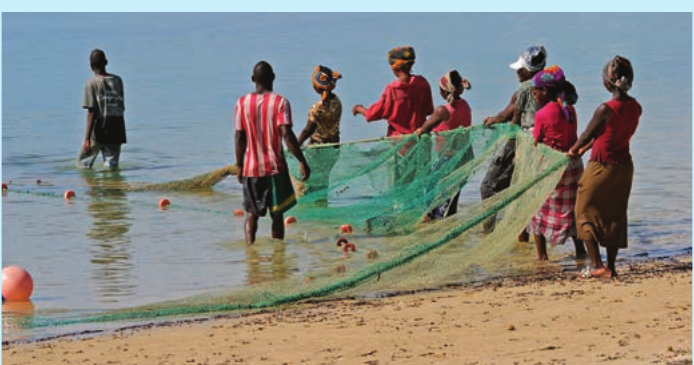
Mozambique provides a clear example of how overfishing affects local fishing communities. Fisherman Lucas Antonio Matibe has witnessed dramatic changes over his 40-year fishing career along Mozambique's coast.
The Local Impact: Local fishermen report catching fewer and smaller fish each year. The problem worsens because economic pressures force more people to turn to fishing for survival, while the deep sea waters that might contain more fish remain inaccessible to small local boats.
The International Factor: Foreign commercial fishing fleets also contribute to the problem by overfishing Mozambique's waters, leaving less for local subsistence fishing communities. This situation threatens both the immediate survival of fishing families and the long-term health of Mozambique's marine environment.
Checking if seafood is threatened
The Southern African Sustainable Seafood Initiative (SASSI) helps consumers make responsible choices by providing information about fish population status:
- Green list species (such as hake and yellowtail) - These fish have stable populations and are safe to buy
- Orange list species (such as kingklip and Cape salmon) - These species are overfished and should be avoided
- Red list species (such as galjoen and white stumpnose) - These are protected species that cannot be legally sold
Note
This traffic light system makes it easy for consumers to make environmentally responsible seafood choices while shopping.
3. Desalination
Desalination is the process of removing salt from seawater to create fresh water suitable for drinking and other uses. While this process occurs naturally through evaporation in the water cycle, humans have developed artificial methods to produce fresh water from ocean water.
How desalination works
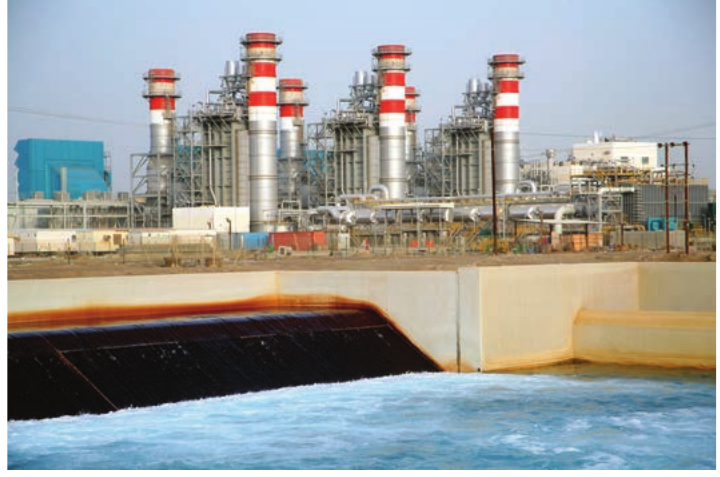
The most common desalination method is reverse osmosis, which involves forcing salt water under high pressure through a special membrane (a barrier that allows water to pass through but blocks salt and other dissolved chemicals).
Note
Think of a membrane as a highly selective filter that acts like a molecular sieve - it's sophisticated enough to separate water molecules from salt molecules.
Advantages of desalination
Desalination technology offers several important benefits:
- Reliable water source - Unlike rivers and dams, ocean water supply is unlimited and doesn't depend on rainfall
- Climate change adaptation - Desalinated water provides a valuable alternative as climate change increases droughts, particularly in Southern Africa
- Weather independence - Sea water is always available regardless of weather conditions, making it a dependable source
Disadvantages of desalination
However, desalination also has significant drawbacks:
- High energy costs - The process requires heating seawater and powering high-pressure systems, consuming valuable energy and releasing greenhouse gases
- Environmental damage - The process produces very concentrated salt solutions that are returned to the ocean, affecting marine life and reducing oxygen levels
- Expensive technology - Desalination plants cost billions of rand to build and operate, making them unaffordable for many less developed countries
Important
The high cost and environmental impact of desalination means it should be considered as part of a broader water management strategy, not as the only solution to water scarcity.
Use of desalination across the world
Currently, over 7,500 desalination plants operate worldwide, producing several billion litres of fresh water daily. World desalination capacity accounts for about 24% of total global water capacity. As water scarcity concerns increase, many countries are expanding their desalination programmes.
South Africa plans to obtain 10% of its water from desalination plants by 2030. The Department of Water Affairs is considering the Nelson Mandela Bay metro and Cape Town metro as potential centres for desalination development. However, costs are estimated to reach billions of rand, making this a significant national investment.
Summary
Key Points to Remember:
-
Ocean pollution comes from five main sources: industrial chemicals, oil spills, plastic waste, general dumping, and sewage, all of which seriously harm marine life and human health
-
Overfishing occurs when too many fish are caught, causing population decline and threatening both marine ecosystems and the livelihoods of fishing communities worldwide
-
The Mediterranean Sea case study shows how enclosed waters become severely polluted due to limited water renewal and multiple pollution sources
-
Mozambique's fishing crisis demonstrates how overfishing affects local communities, forcing more people into fishing while fish stocks decline
-
Desalination can provide reliable fresh water from seawater but requires expensive technology and creates environmental challenges through high energy use and salt waste disposal