Oceans as Sources of Oxygen, Food, and Energy (Grade 10 NSC Matric Geography): Revision Notes
📚Revision Notes
Oceans as Sources of Oxygen, Food, and Energy
The oceans play a crucial role in sustaining life on Earth by providing three essential resources: oxygen for breathing, food for nutrition, and energy for human activities. Understanding these oceanic contributions helps us appreciate why protecting our marine environments is so important.
Oceans as a source of oxygen
The oceans are Earth's most important oxygen factory. They contain vast stores of oxygen that are continuously replenished through natural processes.
Phytoplankton are microscopic algae that float in ocean waters and perform photosynthesis, just like plants on land. These tiny organisms are responsible for producing more than half of all oxygen on Earth. Without phytoplankton, life as we know it would not be possible.
Important
Critical Fact: Phytoplankton are so essential that if they disappeared, most life on Earth would cease to exist due to lack of oxygen. These microscopic organisms are literally keeping us alive!
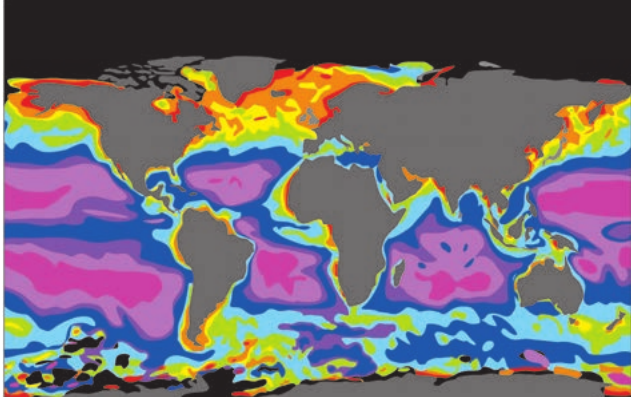
The distribution of phytoplankton varies across different ocean regions. Areas rich in phytoplankton appear as red and orange zones on scientific maps, whilst regions with low concentrations show up as blue and purple areas. These productive zones often coincide with excellent fishing areas because they support the entire marine food chain.
Note
The correlation between phytoplankton-rich areas and productive fishing zones demonstrates how the entire ocean ecosystem depends on these microscopic organisms as the foundation of the food web.
Oceans as a source of food
Marine environments are incredibly rich in biodiversity and provide food for millions of people worldwide.
Marine life statistics
- 90% of all animal and plant life exists in the oceans, making them the most biodiverse environments on our planet
- More than 90 million tonnes of fish are caught from the world's oceans every year
- Seaweed is also harvested and used as food by many cultures, particularly in Asian countries
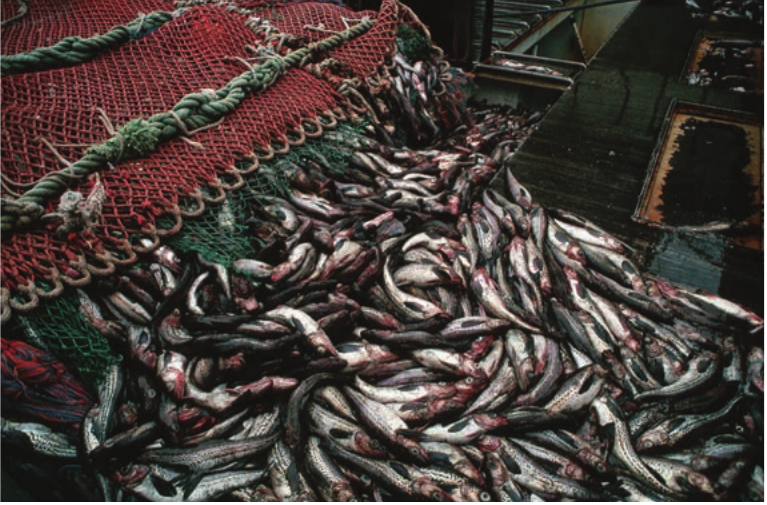
The abundance of marine life depends heavily on the presence of phytoplankton, which forms the base of the ocean food web. Small fish feed on phytoplankton, larger fish eat smaller fish, and this creates a complex network that supports commercial fishing industries worldwide.
Note
Ocean Biodiversity: The fact that 90% of all life exists in oceans, despite oceans covering about 71% of Earth's surface, shows just how incredibly productive and diverse marine environments are compared to terrestrial ecosystems.
Oceans as a source of energy
The oceans provide multiple forms of energy that humans can harness for electricity generation and fuel production.
Energy from the continental shelf
The continental shelf is the underwater area of continental crust that extends from the coastline into the ocean. This region contains significant deposits of oil and natural gas that formed over millions of years from compressed marine organisms.
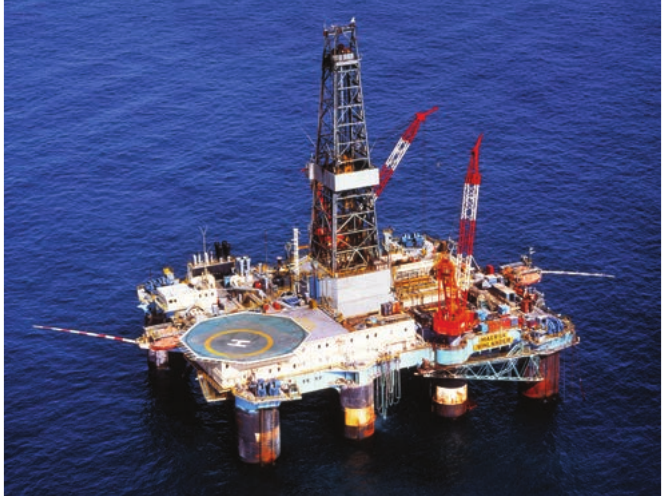
About half of the world's supply of natural gas and oil comes from rocks beneath the continental shelf. These fossil fuels can only be extracted when an impermeable layer of rock traps the oil and gas, preventing them from rising to the surface through the overlying rocks.
Example
Energy Extraction Process:
Step 1: Ancient marine organisms die and settle on the ocean floor
Step 2: Over millions of years, layers of sediment compress these organisms
Step 3: Heat and pressure transform them into oil and natural gas
Step 4: Impermeable rock layers trap these fuels beneath the seafloor
Step 5: Offshore drilling platforms extract the trapped resources
Tidal energy
Tides result from the gravitational pull of the moon and sun, combined with Earth's rotation. This predictable rise and fall of ocean levels can be used to generate clean electricity.
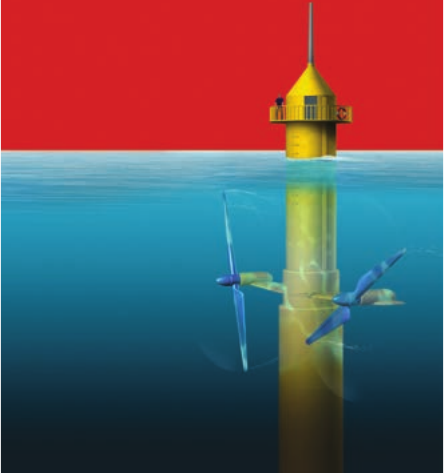
Tidal turbines work like underwater wind turbines, using the movement of water to spin generators. For tidal power to be effective, the tidal range (difference between high and low tide) needs to be at least five metres. Unfortunately, only a few places in the world meet this requirement, which limits where tidal power plants can be built.
Important
Tidal Energy Limitation: The requirement for a minimum 5-metre tidal range significantly restricts where tidal power can be effectively harnessed, making it suitable for only a few coastal locations worldwide.
Wave energy
Ocean waves contain enormous amounts of kinetic energy that can be converted into electricity using innovative technologies.
One promising wave energy technology uses devices called "sea snakes" - hinged chains of floats that bob up and down with the waves. Each movement of the floats generates a small amount of electricity. When many of these devices are placed together in turbulent ocean waters, they can produce significant amounts of clean energy.
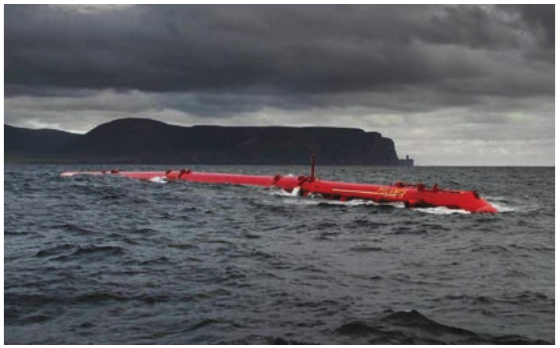
Rows of sea snakes have been successfully tested in the Atlantic Ocean, providing electricity to coastal settlements in Portugal and other European countries.
Example
Wave Energy "Sea Snake" Technology:
Step 1: Hinged chains of floats are deployed in ocean waters
Step 2: Wave motion causes the floats to move up and down
Step 3: Each float movement generates small amounts of electricity
Step 4: Multiple devices working together produce significant power
Step 5: Generated electricity is transmitted to coastal communities
Alternative energy solutions
Countries worldwide are increasingly interested in developing these ocean-based energy sources because they provide several key advantages:
- Provide clean, renewable energy
- Reduce dependence on fossil fuels
- Help combat climate change
- Create new industries and jobs in coastal communities
However, these technologies still face challenges including high setup costs, harsh marine conditions, and the need for more efficient energy conversion systems.
Note
Future Potential: As technology advances and costs decrease, ocean-based renewable energy sources are expected to play an increasingly important role in meeting global energy demands while reducing environmental impact.
Summary
Key Points to Remember:
-
Phytoplankton in oceans produce over half of Earth's oxygen - these microscopic organisms are essential for life on our planet
-
90% of all life exists in the oceans, making them incredibly biodiverse ecosystems that provide food for millions of people
-
The continental shelf contains about half the world's oil and gas reserves, extracted through offshore drilling platforms
-
Tidal energy harnesses gravitational forces from the moon and sun, but requires tidal ranges of at least 5 metres to be effective
-
Wave energy technologies like "sea snakes" convert ocean wave motion into clean electricity, offering promising renewable energy solutions