The Sustainable Use of Water (Grade 10 NSC Matric Geography): Revision Notes
📚Revision Notes
The Sustainable Use of Water
What does sustainable water use mean?
Using water sustainably means using water wisely without wasting it and recycling water where possible. It involves making sure we can continue using water in a way that doesn't significantly damage our environment. The goal is to make better use of the water that is already available rather than spending money on expensive new dam projects.
Note
Sustainable water use focuses on efficiency and conservation rather than simply increasing water supply through costly infrastructure projects like new dams. This approach benefits both the environment and the economy.
Both governments and individuals have important roles to play in making water use more sustainable across South Africa.
1. Government strategies towards sustainable use of water
The South African government creates water policies to help manage the country's water supplies effectively. These policies focus on sustainability and may require governments to reconsider expensive dam building projects in favour of more sustainable approaches.
More efficient water-delivery systems
Many South African municipalities lose large amounts of water due to problems like:
- Leaking pipes
- Burst water mains
- Old pumping systems
- Lack of proper water metering
These issues cause significant water losses and result in lost revenue from water payments. Local governments can improve their water delivery systems to reduce these losses.
Important
Water infrastructure problems don't just waste precious water resources - they also cost municipalities significant revenue that could be invested in further improvements and services.
Example
Case Study: Joburg Water Infrastructure Upgrade
Joburg Water is the municipal organisation responsible for providing water and sanitation services to Johannesburg. The city recognised that its water infrastructure was more than five decades old and needed urgent attention.
The Investment:
- Planned spending: Over R5-billion
- Timeline: Five years
- Scope: Complete upgrade of metro's entire ageing water infrastructure
This massive investment demonstrates how local governments can take responsibility for improving water efficiency and reducing water losses.
Reducing water pollution
River water and groundwater sources become polluted by chemicals from farms and industries. When water contains poisonous chemicals, it takes much longer and costs significantly more money to purify it for safe use. The government can help by implementing and enforcing laws that control water pollution at its source.
Example
Case Study: Emalahleni Water Reclamation Plant
The Emalahleni Water Reclamation Plant in Mpumalanga provides an excellent example of treating polluted water from mining activities.
Plant Capabilities:
- Processes 25 million litres per day of acid mine water
- Converts polluted water from old coal mines into clean drinking water
- Demonstrates successful water reclamation technology
The Challenge: Despite this success, an estimated 62 million litres of acid mine water still flow into the Olifants River Catchment daily. This reduces water quality for irrigation and municipalities, whilst also damaging freshwater ecosystems.
Environmental and agricultural management
When European settlers arrived in South Africa, they introduced plants from other countries. Some of these plants spread very quickly and crowded out local native plants. These introduced plants are called invasive aliens.
Note
What are Invasive Aliens?
Invasive aliens are plants introduced to South Africa from other countries that spread very quickly and crowd out local plants. These invasive plants are often weeds that use up valuable water supplies, reducing the amount of water available in rivers and groundwater sources.
Example
Case Study: Working for Water Programme
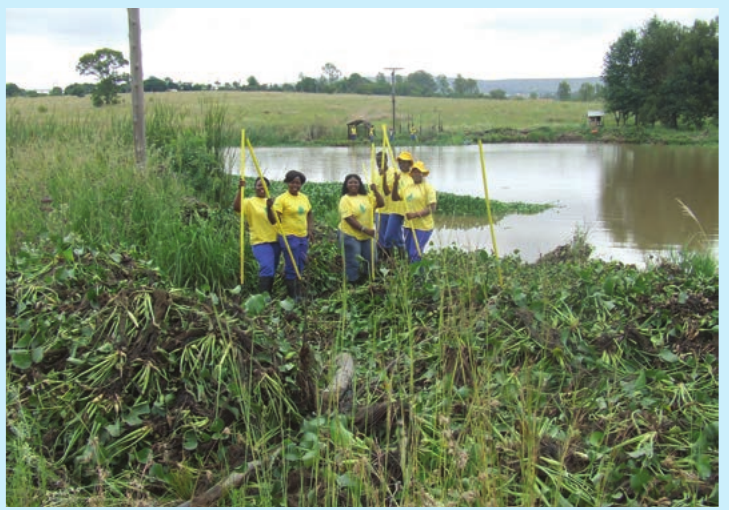
Working for Water was launched in 1995 by the South African government as a programme that tackles multiple challenges simultaneously.
Programme Objectives:
- Remove invasive alien plants
- Address unemployment among less skilled people
- Focus particularly on rural women, youth, and disabled people
Positive Results Achieved:
- Increased stream flow
- Improved water quality
- More productive wetlands
- Higher water tables
Target Species: Examples of invasive aliens removed include water hyacinth (a weed that grows in dams and rivers) and Port Jackson trees.
2. The role of individuals in water sustainability
While government policies are important, every individual can make a difference in using water more sustainably. Growing pressure on water supplies means that farmers, factory owners, and private individuals all need to take responsibility for their water use.
Sustainable water practices
There are many practical ways individuals can use water more sustainably:
In the house:
- Switch off taps when not actively using water
- Fix dripping taps and leaks promptly
- Take shorter and fewer baths
- Flush toilets less often
- Reuse dirty water for cleaning purposes (such as washing cars or floors)
In the garden:
- Use a watering can instead of a hosepipe
- Collect rainwater from roof gutters for garden use
- Use bath water to water vegetables
- Water plants in the evening when evaporation rates are lower
In the community:
- Report leaking pipes to the municipality
- Remove invasive alien plants from your property
- Educate others about using water sustainably
- Use water-saving showerheads
Important
Individual actions, when adopted by many people, can make a significant difference to overall water sustainability in South Africa. Every drop saved contributes to the larger conservation effort.
Summary
Key Points to Remember:
- Sustainable water use means using water wisely without wasting it, ensuring we can continue using water without damaging the environment
- Government strategies include improving water delivery systems, reducing pollution, and managing invasive alien plants through programmes like Working for Water
- Invasive aliens are introduced plants that crowd out local species and use up valuable water supplies
- Individual actions like fixing leaks, collecting rainwater, and educating others all contribute to water sustainability
- Both government and individuals have important roles to play in ensuring South Africa's water resources remain available for future generations