Songhai: An African Empire (Grade 10 NSC Matric History): Revision Notes
📚Revision Notes
Songhai: An African Empire
Introduction to the Songhai Empire
The Songhai Empire was one of Africa's most powerful kingdoms, located in West Africa around the area that is now Mali and Niger. The kingdom had been around since the 11th century, but it really became important when Sonni Ali took control in 1464.
Under Sonni Ali's leadership, Songhai grew to become the largest empire in Africa at that time. The empire's power centre was built around the Niger River, particularly near the city of Gao.
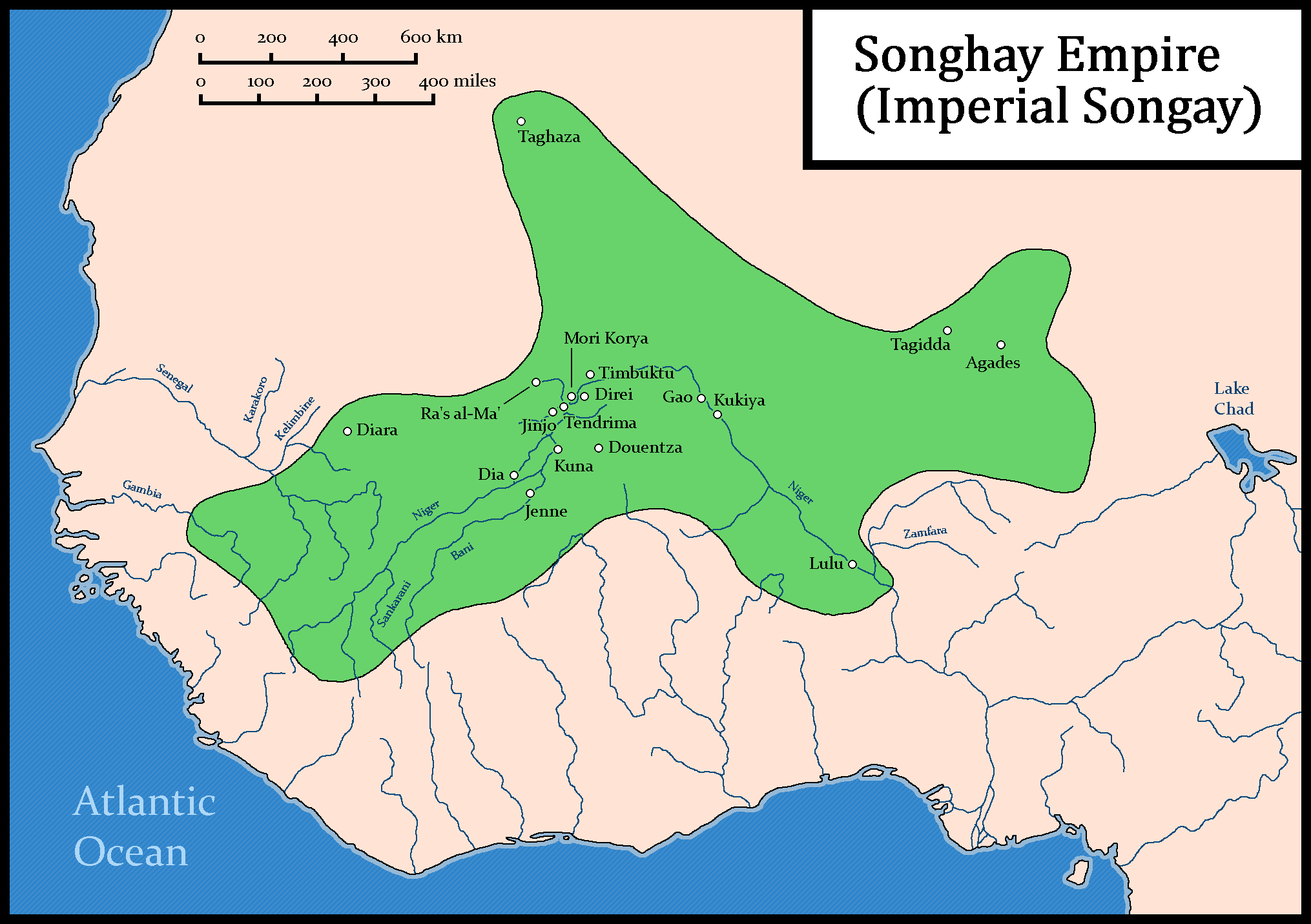
Note
The Songhai Empire's strategic location along the Niger River was crucial to its success. The river served as both a transportation route and a source of fertile land for agriculture, making it the perfect foundation for building a powerful empire.
Sonni Ali's military conquests
Sonni Ali was an exceptional military leader who built a powerful army that dominated the region.
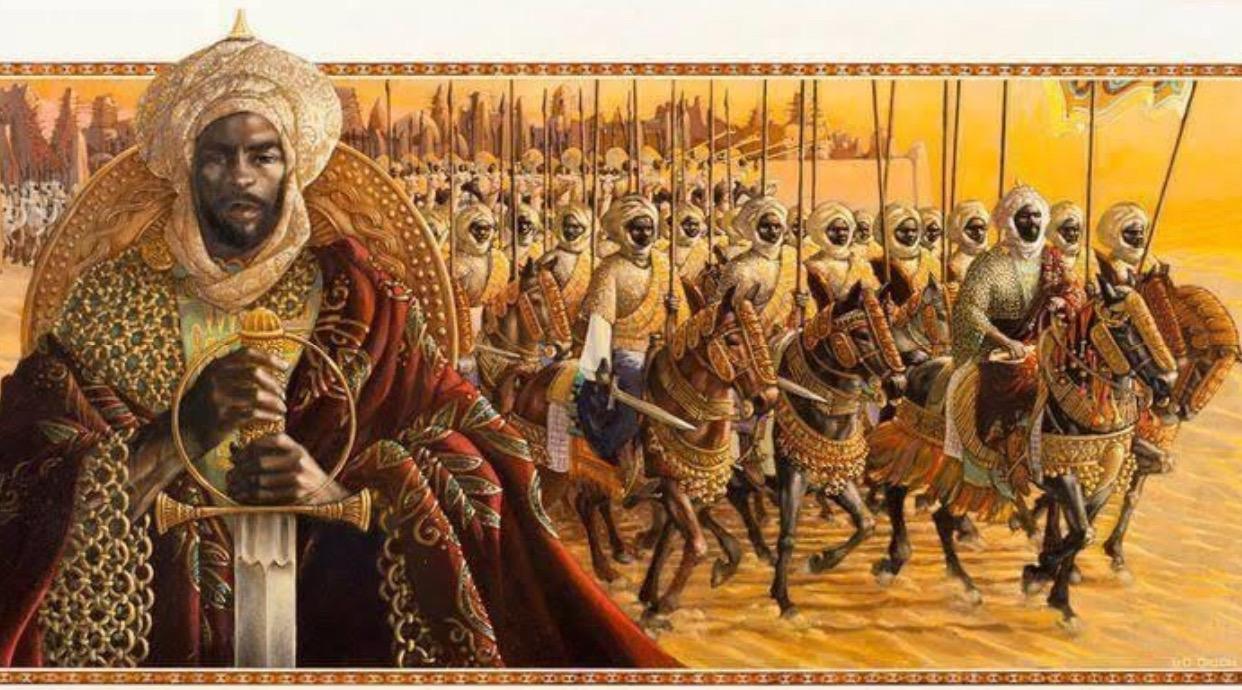
His forces included:
- Naval power - A fleet of canoes for river warfare
- Infantry - Foot soldiers equipped with leather and copper shields
- Cavalry - Horsemen wearing iron armour plates with weapons including lances, swords, and arrows with poisoned tips
This strong military force helped Sonni Ali capture the most important cities in the region. In 1468, his army took control of Timbuktu, which housed the famous University of Sankore. Seven years later, in 1475, they conquered Jenne (also called Djenne), which was a crucial trading centre.
Important
By controlling Gao, Timbuktu, and Jenne, Sonni Ali now had power over the three most important trading cities along the Niger River. This strategic control gave Songhai dominance over the entire trans-Saharan trade network.
Religion in Songhai
The religious situation in Songhai was quite complex. The royal family in Gao had converted to Islam back in the 11th century. Being Muslim was important because it helped rulers gain access to major trade routes that connected Africa with the Middle East and North Africa.
However, Sonni Ali was only a Muslim in name. Most of his people had not converted to Islam and continued practicing their traditional African religions and maintaining connections with their ancestors.
Note
This religious diversity had some interesting social effects. Because the empire wasn't strictly Islamic, women enjoyed much greater freedom than they would have in purely Muslim societies. They could mix freely with men and weren't required to cover their faces.
Government structure
Sonni Ali proved to be not just a great military leader but also a skilled administrator. He created a centralised government system that helped him control the vast empire effectively.
The key changes he made included:
- Replacing traditional rulers with people he trusted - either his servants or members of the royal family
- Dividing the empire into provinces, each with its own governor
- Creating a tax system where each provincial governor had their own army and collected tribute (taxes) from local farmers
Social hierarchy
Songhai society was organised like a pyramid with different social levels:
- Top: Sonni Ali as king, surrounded by 700 eunuchs and praise singers
- Royal family: Including many concubines
- Noblemen: Direct descendants of the original Songhai people
- Freemen: Independent farmers and traders
- Bottom: War captives, slaves, and immigrants
Economy and trade
The Songhai economy was built on several foundations. The most common jobs included metalwork, fishing, and carpentry. Sonni Ali also developed new agricultural methods by introducing slave-based farms.
Example
The Songhai Farming System
The farming system worked like this:
- Each slave village had to produce a specific amount of grain for the king
- Any extra grain could be kept and used by the village
This system helped ensure food security while also generating wealth for the empire.
Mohammed Ture's rule
When Sonni Ali died in 1492, his son briefly took power but was quickly overthrown by Mohammed Ture in 1493.

Mohammed Ture brought significant changes to the empire:
- Strengthened the administration and consolidated Sonni Ali's conquests
- Used Islam more actively to enforce his authority throughout the empire and expand trade relationships
- Extended trade networks further across the Sahara Desert
Trade networks at Songhai's peak
The Songhai Empire became the dominant force controlling the gold and salt trade across the Sahara Desert to Europe. This trade was crucial to the empire's wealth and power.
Key features of Songhai's trade included:
- Military protection of trade routes by the Songhai army
- Three main trading centres: Gao, Timbuktu, and Jenne along the Niger River
- Government income from tribute from provinces, slave farms, and taxes on trade
- Internal currency: Salt was used for local trade
- External currency: Cowrie shells for international trade
- Main export goods: Gold and slaves sent across the Sahara
International merchants
For hundreds of years, Muslims, Christians, and Jews lived together in Timbuktu, making it a centre of racial and religious tolerance. However, after 1492, Mohammed Ture forced Jewish residents to either convert to Islam or leave the city.
Learning and culture
Mohammed Ture transformed Timbuktu into a great centre of Islamic learning. Importantly, he didn't force the Songhai people to convert to Islam - most continued following their traditional religious beliefs.
Timbuktu became famous throughout the Islamic world for education and scholarship:
- Students and scholars travelled from as far away as Cairo, Baghdad, and Persia to study there
- Teachers became known as 'ambassadors of peace'
- University of Sankore offered courses in grammar, law, and surgery
- Great mosques, libraries, and schools were built during this period - many still stand today
Important
Leo Africanus, a famous traveller, left detailed accounts describing the trade and learning that flourished in Timbuktu during the early 1500s. His writings provide some of our most valuable historical evidence about the empire's golden age.
Fall of the Songhai Empire
The decline of Songhai began after Mohammed Ture died in 1538. Several factors contributed to the empire's weakening:
Internal problems
- Civil war broke out within the empire
- Droughts and disease made the empire less wealthy and powerful
- Loss of control over the vast territory became difficult to maintain
External threats
In 1591, Morocco launched a major attack on Songhai's commercial centres. The Moroccans had European firearms, which gave them a significant military advantage. They wanted to gain control of the wealth from the gold trade.
Important
The Technology Gap
The Moroccan invasion succeeded largely because they possessed advanced European firearms while Songhai forces still relied on traditional weapons. This technological disadvantage proved decisive in the empire's defeat.
Destruction of Timbuktu
The Moroccan army successfully captured and plundered Timbuktu. This attack had devastating consequences:
- The 500-year-old university was destroyed
- Lecturers and scholars were exiled to Morocco
- Ahmed Baba, a great scholar who had written 40 books and owned a library of 1,600 books, was among those forced into exile
Although the Moroccans couldn't completely conquer the entire Songhai Empire, their invasion marked the beginning of its final decline and the end of Songhai as a major African power.
Summary
Key Points to Remember:
- Sonni Ali (1464) transformed Songhai into Africa's largest empire through military conquest and smart administration
- Three key cities - Gao, Timbuktu, and Jenne - controlled the Niger River trade routes
- Religious diversity allowed traditional African practices to continue alongside Islam, giving women more freedom
- Trans-Saharan trade in gold and salt made Songhai incredibly wealthy and powerful
- Timbuktu became one of the Islamic world's most important centres of learning and scholarship
- Moroccan invasion (1591) with European firearms ended Songhai's dominance and destroyed much of Timbuktu's intellectual heritage